Band 5.5 IELTS Writing Task 1 Model Answer
Overall Band Score: 5.5 · IELTS Predictions Nov 2026 · 2026-11-26
IELTS Writing Task 1 question
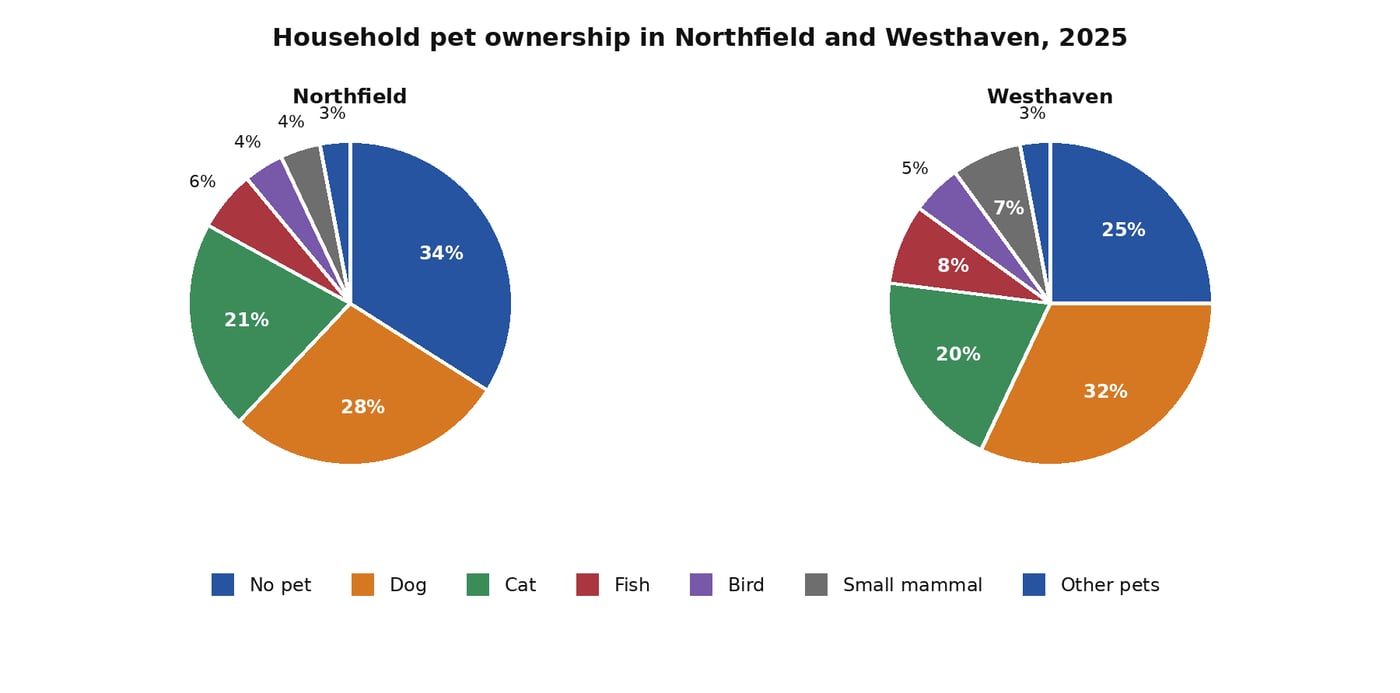
The charts below show the percentage of households in Northfield and Westhaven by the main type of pet they keep in 2025.
Summarise the information by selecting and reporting the main features, and make comparisons where relevant.
Student answer (Band 5.5)
The charts demomnstrate the percentage of different types of houhold pet ownership in Northfields and Westhaven in 2025.
Overall, People had different kinds of pet in their housholds. But, most people in Northfield don't have pet in their house. People like dogs to keep in their houses rather than other animals. On the other hand, in westhaven most of the people have dogs and cats than other pets.25% people did not like the pets in Westhaven.
In Northfield, 34% people did not like pets but they have 28% dogs and 21% cats in their houses. People kept 6% percent fishes in the house because they add the beauty of the house when the children saw the fishes they feel very excited. But, birds and small mammals remained the same and its about 4% only as compared to the other pets its about 3%.
In Westhaven, People like Dogs more than other animals its aproximately 32%, cats were 20% after cats fishes were 8% which were more than birds samall mammal had 7%. They were higher than other pets which people kept in houses in 2025.
AI examiner evaluation
| Criterion | Band |
|---|---|
| Task Achievement / Task Response | 5.5 |
| Coherence and Cohesion | 6.0 |
| Lexical Resource | 5.0 |
| Grammatical Range and Accuracy | 5.0 |
| Overall | 5.5 |
Task Achievement / Task Response: Band 5.5
You report several key figures accurately, including the 34% with no pet in Northfield, the 32% keeping dogs in Westhaven, and the 20–21% keeping cats. You also identify the main contrast between Northfield’s largest no-pet group and Westhaven’s largest dog-owning group. However, the overview is not consistently clear: “People had different kinds of pet” is too general, and saying people in Northfield “don’t have pet” does not clearly distinguish the largest category from the other ownership figures. Some commentary is irrelevant or unsupported by the chart, such as the explanation about fish exciting children. A sharper overview and more selective, chart-focused comparisons would make the response more complete and precise.
Coherence and Cohesion: Band 6.0
The response has a recognisable structure: an introduction, an overview, and separate paragraphs for Northfield and Westhaven. This helps the reader locate the information, and comparisons such as “On the other hand” signal a contrast. However, progression within sentences and paragraphs is sometimes awkward. The overview moves from general pet ownership to dogs and then to the 25% with no pet without a clear organising principle. In the Westhaven paragraph, “after cats fishes were 8%” is difficult to follow, while repeated “But” and “which” links make the writing feel mechanical. Grouping the largest categories first, then the smaller ones, and using clearer transitions would improve the flow.
Lexical Resource: Band 5.0
You use relevant basic vocabulary, including “percentage,” “ownership,” “rather than,” and “compared to,” so the topic is generally understandable. However, the range is limited and several choices are inaccurate or repetitive. “People did not like pets” suggests dislike, whereas the chart means that households had no pet; “kept 6% percent fishes” is also an awkward and imprecise description. Spelling errors such as “demomnstrate,” “houhold,” “samall,” and “aproximately” are noticeable, and repeated use of “people,” “pets,” and “houses” limits precision. Use concise chart language such as “households without pets” and “the proportion keeping fish,” and check spelling carefully.
Grammatical Range and Accuracy: Band 5.0
You attempt both simple and more extended sentences, for example, “People like dogs to keep in their houses rather than other animals.” However, control is inconsistent, and several sentences contain errors in agreement, articles, plurals, or sentence construction. Examples include “most of the people have dogs and cats than other pets,” “birds and small mammals remained the same and its about 4%,” and the run-on sequence “cats were 20% after cats fishes were 8%.” The opening also has inconsistent capitalisation, and punctuation around sentence boundaries is sometimes missing. Practise accurate comparative structures (“more households kept dogs than cats”) and check each sentence for a clear subject, verb, and complete clause.
See this exact question answered at other band scores. The same prompt compared across bands.
Browse more IELTS Writing model answers or get your own writing scored by the same AI examiner.