Band 6.5 IELTS Writing Task 1 Model Answer
Overall Band Score: 6.5 · Cambridge IELTS 19 · 2026-11-08
IELTS Writing Task 1 question
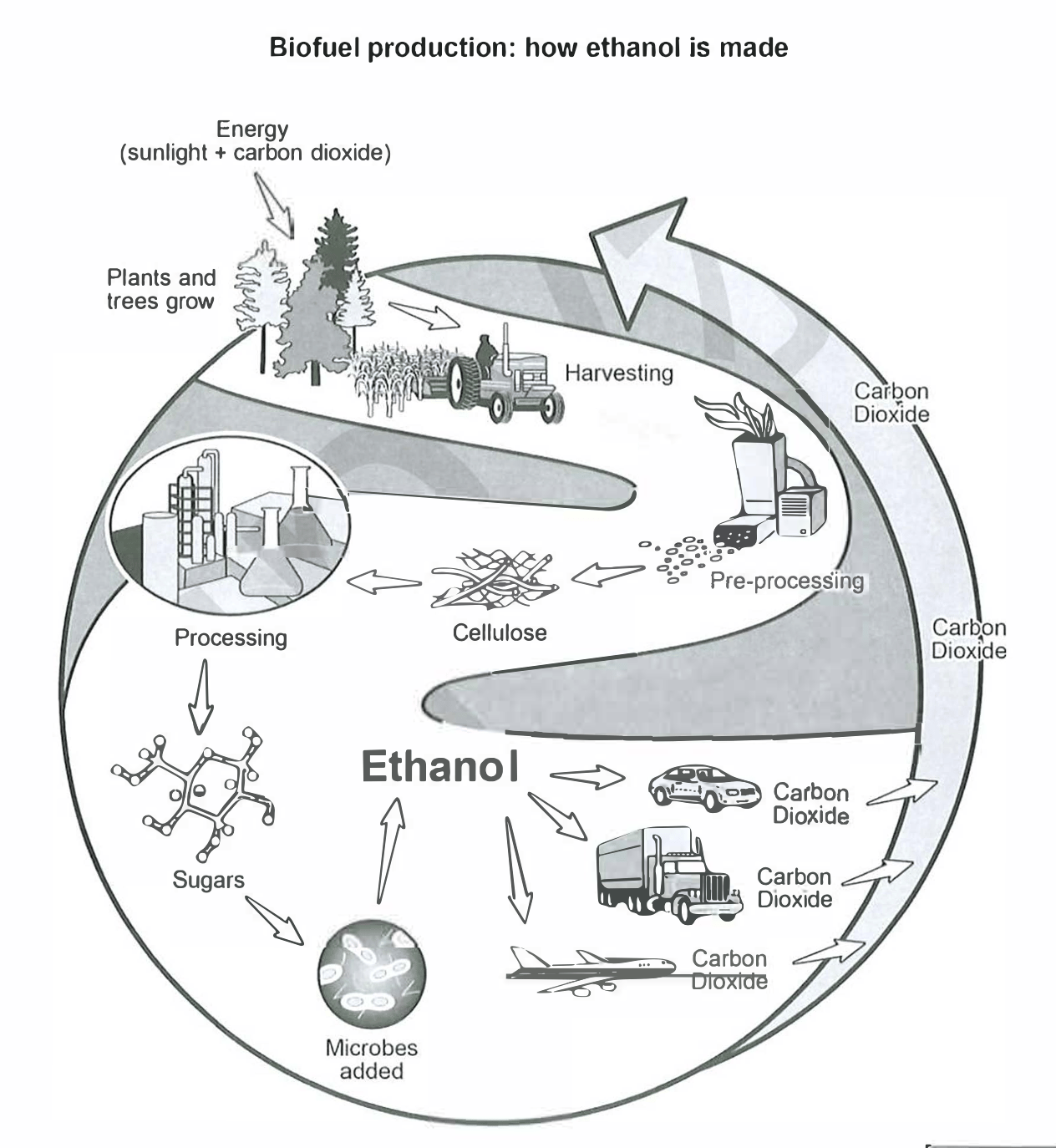
The diagram below shows how a biofuel called ethanol is produced.
Summarise the information by selecting and reporting the main features, and make comparisons where relevant.
Student answer (Band 6.5)
The illustration represents a procedure in which ethanol is produces from the agriculture sources.
Overall, the process have in total ten stages to make end product. This start from different plants and trees which grow using energy and pass through multiple steps and ends with discharge of carbon dioxide and this convert into energy again which use in first step.
To begin with, the sunlight and carbon dioxide use as food for agricultural components such as plants and trees to grow, after that the harvesting process start with the help of machinery. Moreover, the raw material pass through pre-processing which convert it into refined product and the cellulose is made using this material.
After that, in laboratory the cellulose is processed and sugars are built in result. Furthermore, the microbes are added in sugar molecules and finally the ethanol is produced. In addition, different transportation sources (cars,trucks and airplanes) use ethanol as fuel and contributes in the production of carbon dioxide and this cyclic process starts again.
AI examiner evaluation
| Criterion | Band |
|---|---|
| Task Achievement / Task Response | 6.5 |
| Coherence and Cohesion | 7.0 |
| Lexical Resource | 6.0 |
| Grammatical Range and Accuracy | 5.5 |
| Overall | 6.5 |
Task Achievement / Task Response: Band 6.5
The response identifies the diagram as a cyclical process and gives a clear overview from plant growth through ethanol production to carbon dioxide returning to support growth. It also reports the main stages in the correct order, including harvesting, pre-processing, cellulose, processing, sugars and the addition of microbes, and names the three transport modes. This covers the task well, though some details are less fully or precisely described: for example, sunlight and carbon dioxide provide energy for plant growth rather than serving as “food,” and the account does not clearly explain that carbon dioxide released by the vehicles completes the cycle. The description of pre-processing as producing a “refined product” is also vague. More precise reporting of these relationships would strengthen the response.
Coherence and Cohesion: Band 7.0
The information is organised into a brief introduction, an overview and two chronological body paragraphs, so the reader can follow the process from plant growth to transport and the return of carbon dioxide. Sequencing expressions such as “To begin with,” “After that” and “Furthermore” help signal progression, and the final sentence links the transport stage back to the cycle. Cohesion is generally clear, although several transitions are used in a somewhat formulaic way, and the long final sentence joins multiple ideas with “and.” The overview’s reference to “ten stages” is not especially useful because the process is better understood through its main phases. Varying the links and making the cycle’s final connection more direct would improve flow.
Lexical Resource: Band 6.0
The response uses an adequate range of process vocabulary, including “pre-processing,” “cellulose,” “microbes,” “ethanol” and “carbon dioxide,” which allows the stages to be identified. It also attempts more formal wording such as “illustration represents” and “cyclic process.” However, some word choices and collocations are inaccurate or imprecise: “ethanol is produces,” “agriculture sources,” “agricultural components,” and “built in result” do not express the intended meanings naturally. “Refined product” is also too general for the material produced during pre-processing. These choices do not prevent the reader from understanding the overall sequence, but more precise process vocabulary and natural collocations would make the account clearer and more fluent.
Grammatical Range and Accuracy: Band 5.5
There is a mix of simple and complex sentence forms, including clauses linked with “which,” “after that” and “and,” and the overall meaning remains understandable. Some grammatical errors persist, however. In the opening, “ethanol is produces” has an incorrect passive verb form; “the process have” shows subject–verb disagreement; and “This start” should agree with its subject. The phrase “which use in first step” also lacks a clear grammatical construction. In the final paragraph, “different transportation sources … use ethanol … and contributes” has a disagreement between the plural subject and verb. Articles, agreement and sentence boundaries need closer checking. More consistently accurate control of these forms would improve the response.
See this exact question answered at other band scores. The same prompt compared across bands.
Browse more IELTS Writing model answers or get your own writing scored by the same AI examiner.