Band 4.5 IELTS Writing Task 1 Model Answer
Overall Band Score: 4.5 · Cambridge IELTS 19 · 2026-11-10
IELTS Writing Task 1 question
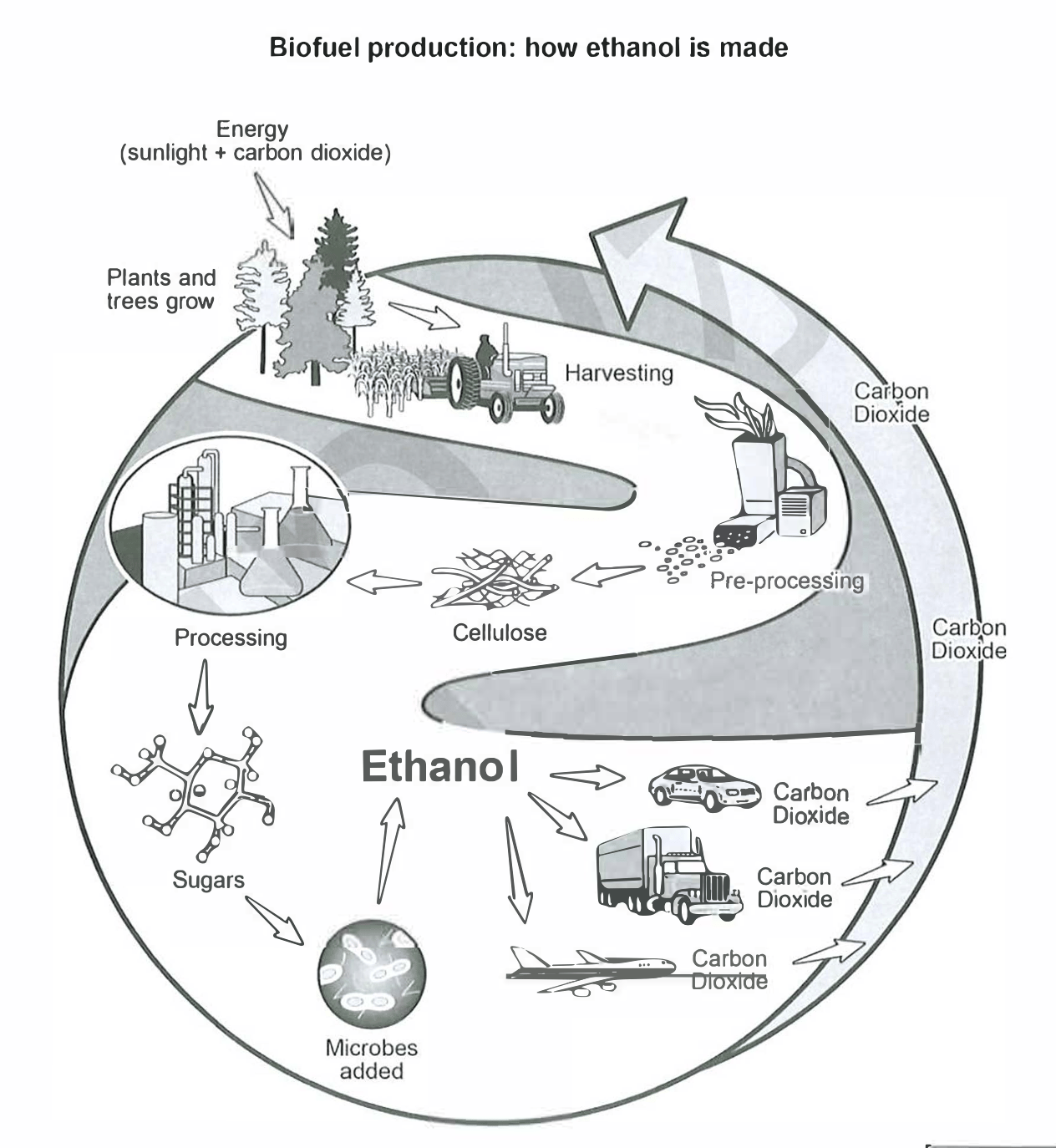
The diagram below shows how a biofuel called ethanol is produced.
Summarise the information by selecting and reporting the main features, and make comparisons where relevant.
Student answer (Band 4.5)
Summarise the information by the selecting and reporting the main features,and make comparisons where relevant.
Starting point all plants and trees grow after some time trees full and final grow then then start a harvesting complete the harvesting and start next point pre-processing complete the process move on the next step start processing all things are process and next make sugars.
Mid point of the process start with microbes added add the microbes and make ethanol then start the third process.
Ending point of the process and complete the process make ethanol and use in engine.
Uses of the ethanol most the engine run with ethanol most of the cars,heavy, trucks and big engine planes, most need ethanol for some vechle most of the machinery are used many times in day for work and most engine use ethanol then start most of the time use in car and some plane and some heavy trucks ethanol are very important for engine.
AI examiner evaluation
| Criterion | Band |
|---|---|
| Task Achievement / Task Response | 4.0 |
| Coherence and Cohesion | 4.5 |
| Lexical Resource | 4.5 |
| Grammatical Range and Accuracy | 4.0 |
| Overall | 4.5 |
Task Achievement / Task Response: Band 4.0
You identify several relevant stages, including plant growth, harvesting, pre-processing, processing, sugar production, microbes and ethanol, so the response is connected to the diagram. However, the account is minimal and does not clearly summarise the complete cycle. The overview is replaced by labels such as “Starting point,” “Mid point” and “Ending point,” and important features are omitted or unclear: cellulose, carbon dioxide released by transport, and its return to the plants. The claim that ethanol is used “in engine” is too general to describe the three transport modes accurately. Focus on the main stages and explain the circular relationship between plant growth, fuel use and carbon dioxide.
Coherence and Cohesion: Band 4.5
The response makes an attempt to group information into three sections—“Starting point,” “Mid point” and “Ending point”—and the stages are presented in roughly the order shown. This gives the reader a basic sense of progression. However, the divisions do not create a clear, connected account: the final paragraph repeats the use of ethanol rather than completing the cycle, and transitions such as “then” and “next” are repetitive. Several ideas run together, particularly the long final sentence, making relationships between stages difficult to follow. Use a short overview followed by logically grouped stages, and connect each stage explicitly without repeatedly restarting the process.
Lexical Resource: Band 4.5
You use some task-related vocabulary, including “harvesting,” “pre-processing,” “microbes” and “ethanol,” which helps identify parts of the process. However, the range is basic and repetitive, especially in the final paragraph, where “most,” “engine” and “ethanol” recur frequently. Some expressions are imprecise for this diagram: “make sugars” and “use in engine” do not describe the stages as clearly as “produce sugars” and “used as fuel for transport.” There are also spelling errors, including “vechle,” and awkward phrases such as “trees full and final grow.” Choose precise process verbs and transport terms, and avoid adding unsupported claims about machinery or how often vehicles are used.
Grammatical Range and Accuracy: Band 4.0
The response mainly uses short, simple clauses and attempts to show sequence, for example, “add the microbes and make ethanol.” However, grammatical control is weak: sentence boundaries are often missing, and the opening contains the fragment-like sequence “Starting point all plants and trees grow after some time.” Verb forms and sentence construction are also unclear in phrases such as “all things are process” and “most of the cars, heavy, trucks and big engine planes.” Punctuation is inconsistent, with missing spaces after commas and full stops. Practise writing complete sentences with a clear subject and verb, and use consistent present simple forms to describe each stage.
See this exact question answered at other band scores. The same prompt compared across bands.
Browse more IELTS Writing model answers or get your own writing scored by the same AI examiner.