Band 4.5 IELTS Writing Task 1 Model Answer
Overall Band Score: 4.5 · Cambridge IELTS 19 · 2026-11-11
IELTS Writing Task 1 question
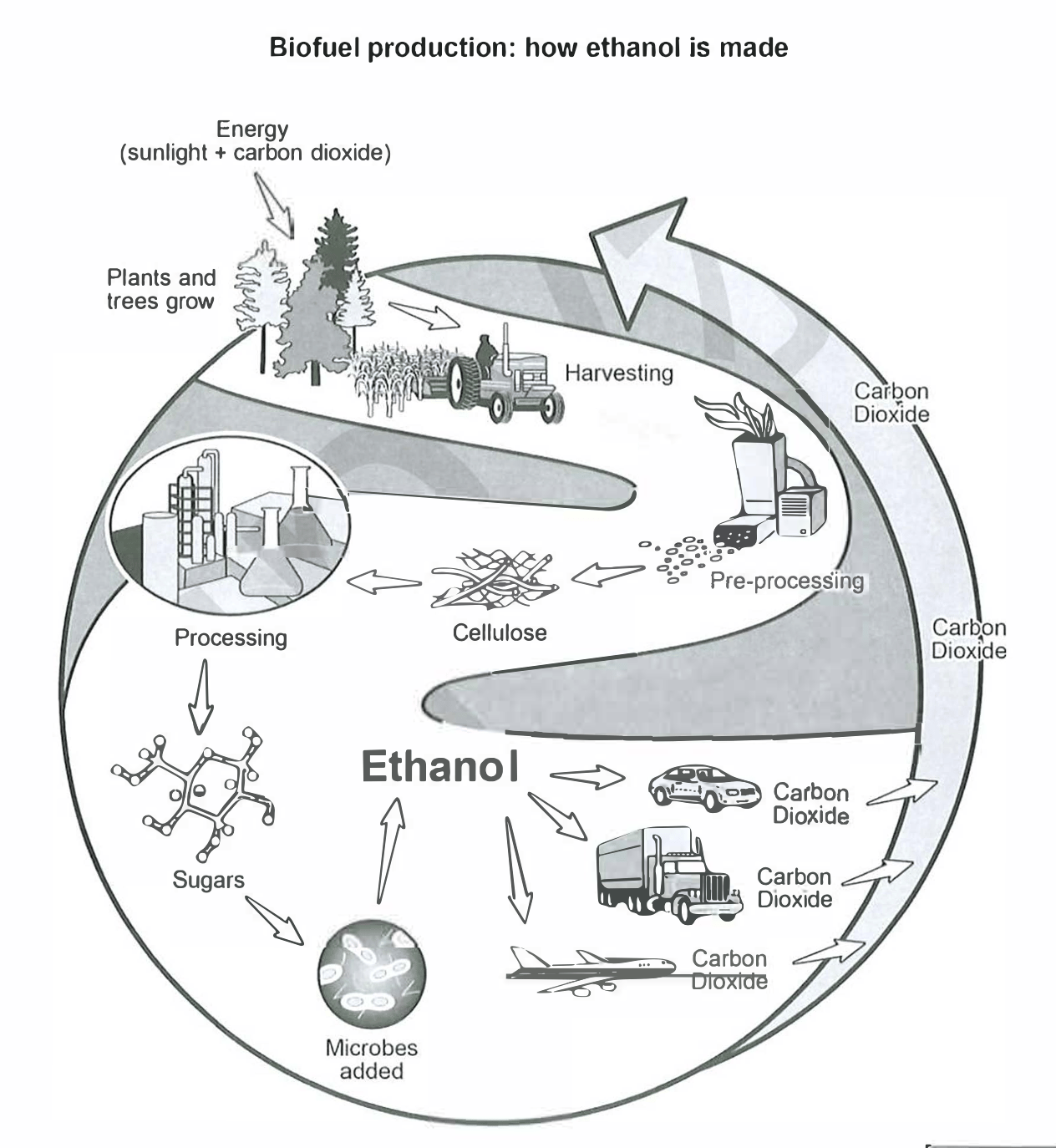
The diagram below shows how a biofuel called ethanol is produced.
Summarise the information by selecting and reporting the main features, and make comparisons where relevant.
Student answer (Band 4.5)
The diagram illustrates that the process of ethanol from biofuel.
The production of biofuel cosists total 10 satages from sunlight enegry to grow plants to carbon dioxide.
From the begining plants and tress grow after that its harvested by machine for pre-processing using another machine.After this stage it is need to cellulose before the processed in lab.On the next stage sugar are prepared from the previous for part of making ethanol.
From this stage microbes are added to ethanol to make it for using different kind of things.used it on airplane,private cars and truck are relesed heavy carbon dioxide to the atmosphare.That can also mixed up with our environment and increased air pollution on sky.Finally,it also go to the plants again from the air and make power,
AI examiner evaluation
| Criterion | Band |
|---|---|
| Task Achievement / Task Response | 4.0 |
| Coherence and Cohesion | 5.0 |
| Lexical Resource | 5.0 |
| Grammatical Range and Accuracy | 4.5 |
| Overall | 4.5 |
Task Achievement / Task Response: Band 4.0
You identify the general subject and mention several stages, including plant growth, harvesting, processing, sugars, microbes, ethanol, transport and carbon dioxide returning to plants. However, the account is incomplete and some relationships are misreported: microbes are added to sugars to produce ethanol, not “to ethanol,” and the diagram shows carbon dioxide being absorbed during plant growth as well as released by transport. The overview that there are ten stages is not a useful summary of the main cycle, and the pollution comment is not shown in the diagram. The response also falls 23 words short of the required minimum. To improve, give a clear overview of the cycle and describe the stages and carbon flow accurately, without adding unsupported effects.
Coherence and Cohesion: Band 5.0
There is some chronological organisation: the response moves from plant growth through processing and fuel use, then returns to the plants. Paragraph breaks also separate parts of the process. However, progression is not consistently clear because several stages are compressed into long, loosely connected sentences, such as “after that its harvested by machine for pre-processing using another machine.” Linking phrases including “After this stage,” “On the next stage,” and “Finally” help signal sequence, but some are awkward or do not clarify the relationship between steps. The final sentence is also difficult to connect to the preceding point. Use one paragraph for an overview and another for the stages, and make each sentence describe a clear step with accurate links.
Lexical Resource: Band 5.0
You use some relevant process vocabulary, including “pre-processing,” “cellulose,” “microbes,” “ethanol,” and “carbon dioxide,” which helps identify the topic. The range is nevertheless limited, and several word-choice or spelling problems make parts difficult to understand: “cosists,” “satages,” “enegry,” and “relesed” are noticeable, while “heavy carbon dioxide” is not an appropriate description. Phrases such as “different kind of things” and “make power” are vague for an academic process report. Aim for precise terms such as “fuel,” “transport,” “emissions,” and “is converted into,” and check spelling carefully. Avoid adding evaluative language about pollution when the diagram only depicts the carbon cycle.
Grammatical Range and Accuracy: Band 4.5
The response attempts some longer sentences and uses sequencing clauses, but grammatical control is inconsistent and errors sometimes obscure the process. For example, “The diagram illustrates that the process of ethanol from biofuel” lacks a complete, correctly formed clause, and “it is need to cellulose before the processed in lab” has faulty verb forms and sentence structure. There are also problems with agreement and articles in “sugar are prepared” and “it also go to the plants.” Punctuation is unreliable, particularly where sentences run together, as in “things.used it.” Build accurate simple sentences first, then add subordinate clauses. Check subject–verb agreement, passive forms for process stages, articles, and sentence boundaries.
See this exact question answered at other band scores. The same prompt compared across bands.
Browse more IELTS Writing model answers or get your own writing scored by the same AI examiner.