Band 5.5 IELTS Writing Task 1 Model Answer
Overall Band Score: 5.5 · Cambridge IELTS 19 · 2026-11-17
IELTS Writing Task 1 question
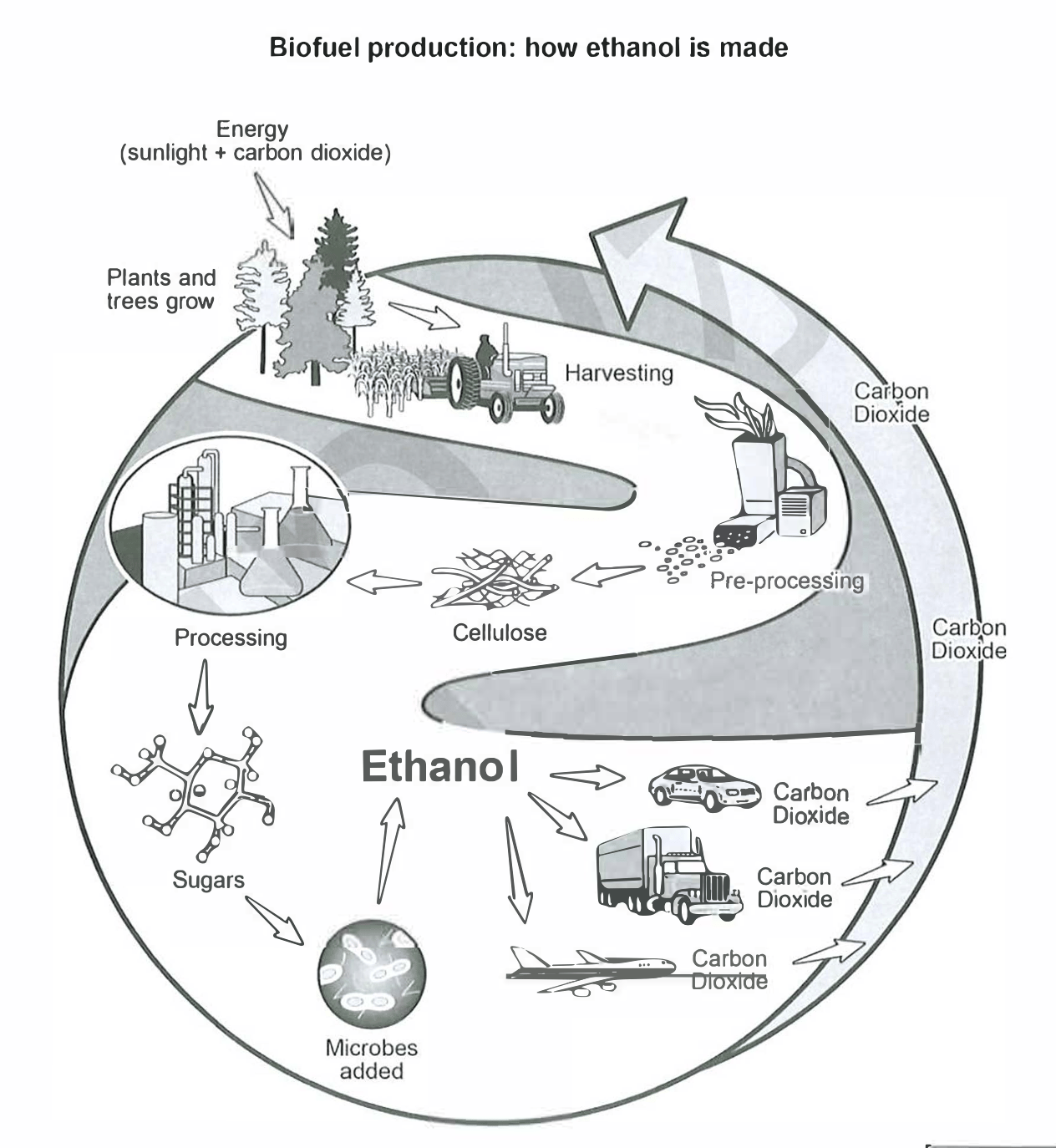
The diagram below shows how a biofuel called ethanol is produced.
Summarise the information by selecting and reporting the main features, and make comparisons where relevant.
Student answer (Band 5.5)
The diagram illustrates, all the steps for formation of ethanol which is used as biofuel.
Overall, the formation of ethanol initiate with plants and tree planting as they are the main source of energy and it ends with different steps formation of biofuel production .
The initial step is plants and trees are used as source of energy because they are packed with carbon dioxide ,plants and trees are harvesting with the help of tracters and then they are cut into smaller pieces with the help of cutter machines it is like the pre processing of plants and trees and they are converted into cellulose.
Cellulose then is processed in industries and sugars are extracted from them ,these sugars molecules are added with microbes which make ethanol as a by product and this ethanol is used as a biofuel in cars airplanes trucks as fuel and then these vehicle emits carbon dioxide after consumption and this returns to nature again.
AI examiner evaluation
| Criterion | Band |
|---|---|
| Task Achievement / Task Response | 6.0 |
| Coherence and Cohesion | 6.0 |
| Lexical Resource | 5.5 |
| Grammatical Range and Accuracy | 5.0 |
| Overall | 5.5 |
Task Achievement / Task Response: Band 6.0
You cover the main stages from plant growth through harvesting, pre-processing, cellulose, sugars and microbes to ethanol, and you correctly note its use in transport and the return of carbon dioxide. This gives the reader a relevant account of the process. However, the overview is not fully accurate: the cycle begins with sunlight and carbon dioxide supporting plant growth, rather than plants being the source of energy, and it does not simply “end” with biofuel production. The diagram’s key feature is the circular carbon cycle, which your final sentence mentions but does not clearly explain as carbon dioxide returning to the plants. Some details, such as cutting the plants into smaller pieces, are not shown. Make the overview more precise and prioritise the cycle.
Coherence and Cohesion: Band 6.0
The response follows the process in a generally logical order, moving from plant growth to fuel use, and the final sentence connects transport emissions back to nature. The opening overview also helps signal the topic. However, most of the stages are packed into two long body sentences, so the relationships between steps are sometimes difficult to follow. For example, the sentence beginning “Cellulose then is processed” contains several stages joined mainly by “and” and commas. The overview’s claim that the process “ends” with biofuel production also conflicts with the later explanation of the carbon cycle. Use clearer paragraphing and divide the sequence into manageable sentences, with linking expressions that show the stages and the cycle distinctly.
Lexical Resource: Band 5.5
You use relevant process vocabulary, including “pre processing,” “cellulose,” “microbes,” “by product” and “carbon dioxide,” which allows you to describe the main stages. There is some variety in how you refer to the material and the fuel. However, several choices are imprecise or awkward for an academic process description, such as “formation of ethanol,” “packed with carbon dioxide,” and “these sugars molecules.” “Tracters” is also misspelled, and “cutter machines” is not a natural term here. Aim for accurate collocations and consistent technical wording; for instance, describe plants as absorbing carbon dioxide and sunlight, and say that microbes are added to the sugars. This would make the account more precise and fluent.
Grammatical Range and Accuracy: Band 5.0
You attempt both simple and more complex sentence forms, including clauses linked with “because,” “which” and “after,” and the sequence is usually understandable. However, control is uneven, particularly in long sentences that combine several stages. There are errors in verb forms and agreement, as in “the formation of ethanol initiate” and “this ethanol … and then these vehicle emits.” Articles and plurals are also inconsistent, while comma spacing and punctuation make some sentences hard to parse. For example, the sentence beginning “The initial step” runs through harvesting, cutting and conversion without clear sentence boundaries. Use present simple consistently for process descriptions, check subject–verb agreement, and separate each major stage into a complete sentence.
See this exact question answered at other band scores. The same prompt compared across bands.
Browse more IELTS Writing model answers or get your own writing scored by the same AI examiner.