Band 5.0 IELTS Writing Task 1 Model Answer
Overall Band Score: 5.0 · Cambridge IELTS 19 · 2026-11-23
IELTS Writing Task 1 question
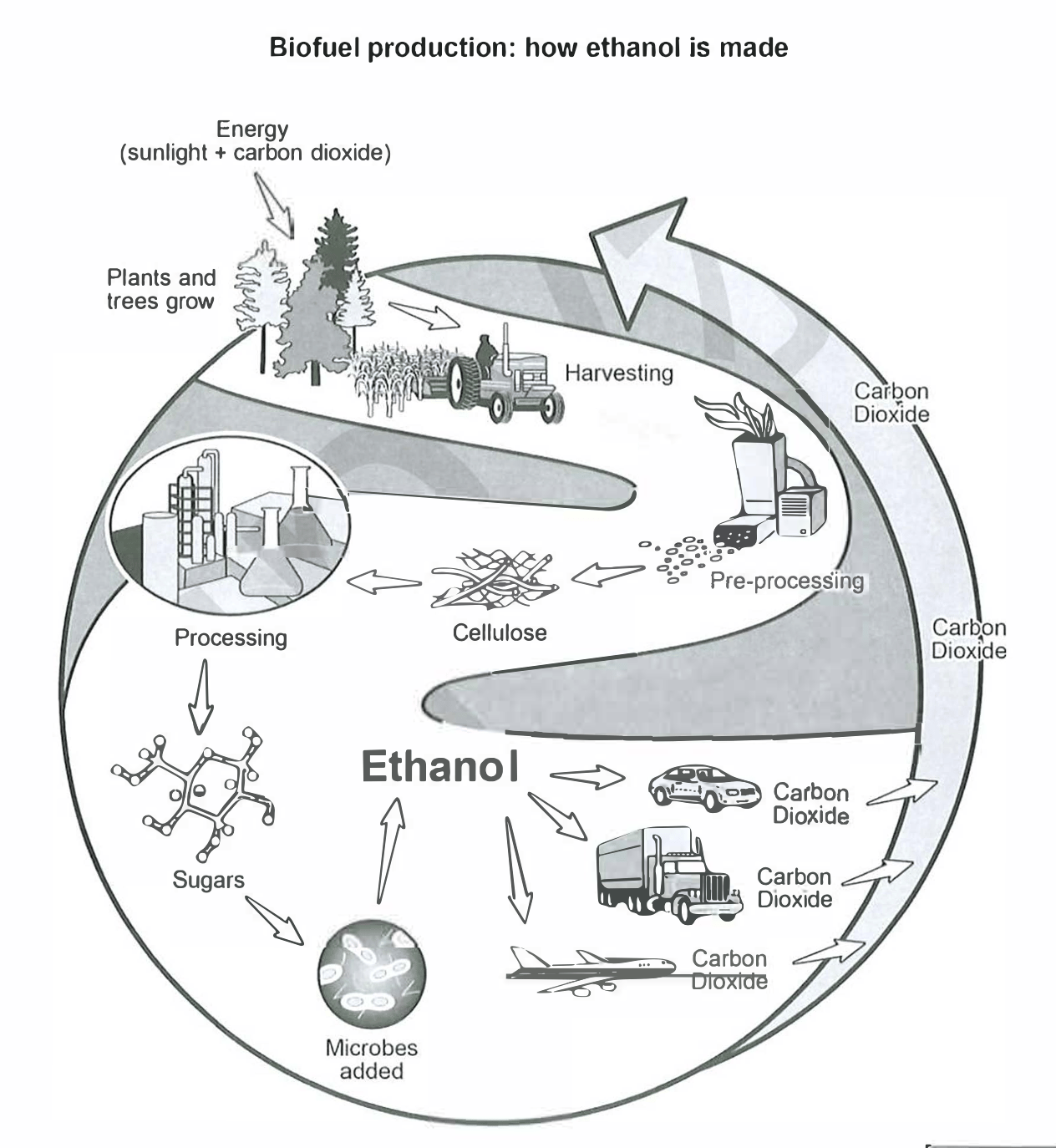
The diagram below shows how a biofuel called ethanol is produced.
Summarise the information by selecting and reporting the main features, and make comparisons where relevant.
Student answer (Band 5.0)
The diagram illustrate the 6 stages on how to create ethanol by Biofuel production and how ethanol is made.
overall, ethanol to produce it combines agriculturals for farming to harvesting and industrial and a lot of stages to be able in to create a sugar down to microbes to become ethanol and become a fuels in transportations.
Basically, sugar cane is harvested in agricultural people through the help of indutrial it transfer to pre-prcosessing where it crushed in to a machine and became a juice and move to cellulose and processing again for removing any bacterials and move into sugars and added microbes to help more become ethanol. after that its ready for distributing in any gas station to be fueled in different cars or transportations.
In conclusion, Its gives us and idea how ethanol are created and the uses of it. it always a cycle in the end and become a carbon and carbon is one of vitamins in plants to become a three.
AI examiner evaluation
| Criterion | Band |
|---|---|
| Task Achievement / Task Response | 5.0 |
| Coherence and Cohesion | 5.5 |
| Lexical Resource | 5.0 |
| Grammatical Range and Accuracy | 4.5 |
| Overall | 5.0 |
Task Achievement / Task Response: Band 5.0
You identify the general subject and mention several relevant stages, including harvesting, pre-processing, cellulose, processing, sugars, microbes and ethanol. However, the account only partially represents the diagram and does not clearly explain its defining feature: the circular carbon-dioxide cycle, in which emissions from transport return to support plant growth. The overview is vague, and some details are invented or inaccurate: the diagram does not specify sugar cane, crushing into juice, removing bacteria, or distribution to gas stations. The reference to ethanol becoming “a fuels” also obscures the transport-use stage. To strengthen the response, give a concise overview of the cycle, then describe the stages in their actual order without adding unsupported processes.
Coherence and Cohesion: Band 5.5
The response has some organisation: it begins with an introduction, gives a broad overview, and then describes stages before ending with a conclusion. The sequence from harvesting through processing to ethanol is partly traceable. However, progression is weakened by unclear links and repeated or loosely connected ideas. For example, “and move to cellulose and processing again” does not make the relationship between these stages clear, while the final paragraph introduces the carbon cycle without explaining how it connects to transport emissions. “Basically” and “In conclusion” provide basic signposting, but the stages would be easier to follow if grouped into a clear process paragraph and linked with precise sequence markers such as “next” and “finally.”
Lexical Resource: Band 5.0
You use some relevant process vocabulary, including “harvested,” “pre-processing,” “cellulose,” “microbes” and “ethanol,” which helps identify the subject. However, the range is limited and several word choices or spellings make the meaning difficult to follow. Examples include “agriculturals,” “indutrial,” “bacterials,” and “transportations”; these are not natural forms in this context. Phrases such as “a sugar” and “become a fuels” are also imprecise. Aim to use accurate terms from the diagram and natural collocations, such as “the resulting sugars,” “microorganisms are added,” and “used as fuel in vehicles.” Proofreading spelling and word forms would make your meaning clearer.
Grammatical Range and Accuracy: Band 4.5
The response attempts both simple and longer sentence forms, but control is inconsistent, and errors frequently make relationships between ideas hard to understand. The opening, “The diagram illustrate the 6 stages,” has subject–verb disagreement, while “overall, ethanol to produce it combines…” has an unclear sentence structure. In “where it crushed in to a machine,” the passive verb form is incomplete, and several clauses joined with “and” lack clear grammatical links. Capitalisation and punctuation are also inconsistent, as in “overall” and “In conclusion, Its.” Practise building accurate sentences with a clear subject and verb, especially passive process descriptions: for example, “The plants are harvested and then pre-processed.”
See this exact question answered at other band scores. The same prompt compared across bands.
Browse more IELTS Writing model answers or get your own writing scored by the same AI examiner.