Band 5.0 IELTS Writing Task 1 Model Answer
Overall Band Score: 5.0 · Cambridge IELTS 19 · 2026-11-24
IELTS Writing Task 1 question
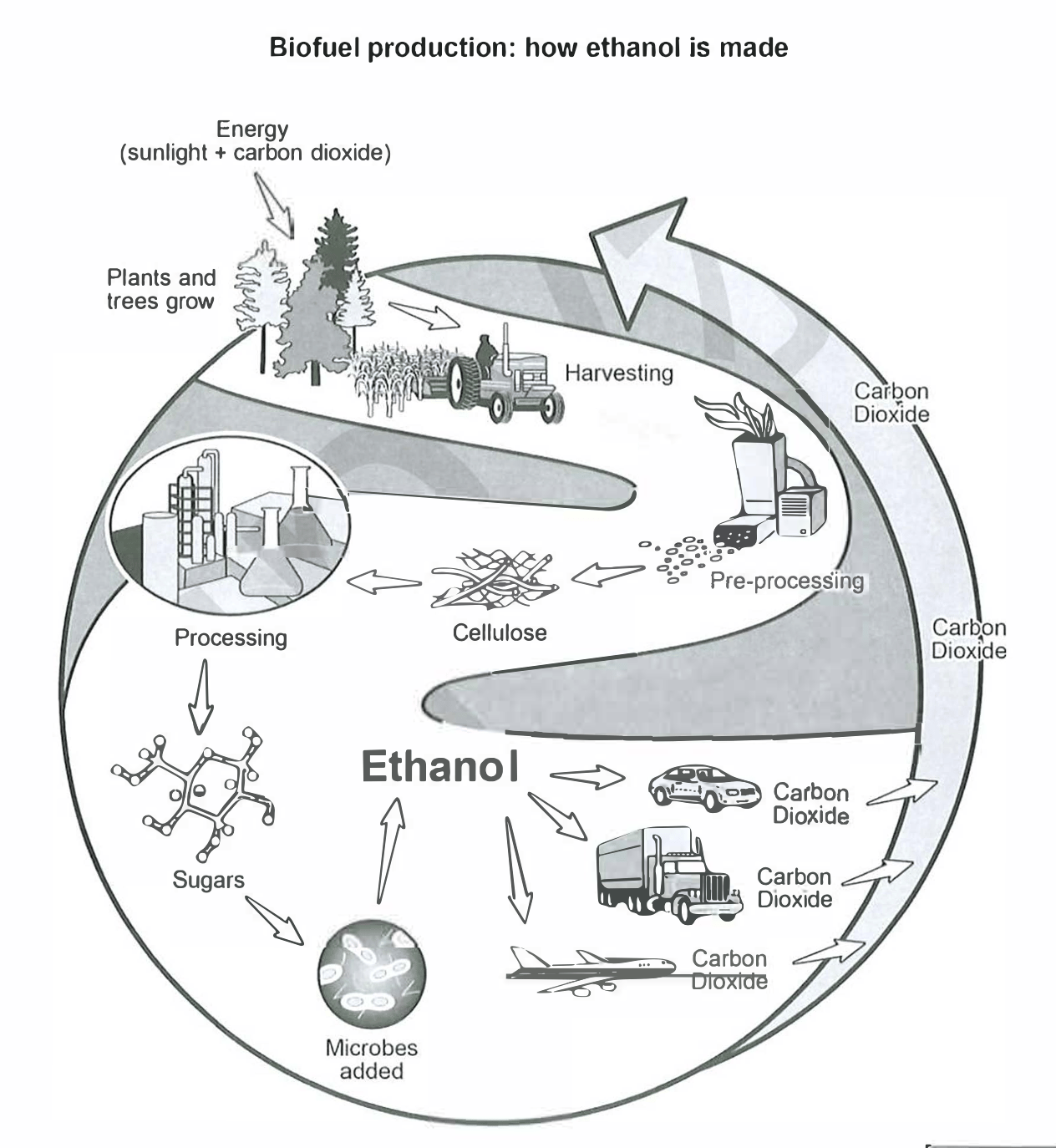
The diagram below shows how a biofuel called ethanol is produced.
Summarise the information by selecting and reporting the main features, and make comparisons where relevant.
Student answer (Band 5.0)
The bar under illustrate to which method a biofuel depend ethanol is release. overall, the structure show that the recycle things and material and explain reprocessing method. ethanol made things harvesting,reprocessing,cellulose,processing,suger Ethanol releasing from first sunlight + carbon dioxide to grow planys and trees. After the tractor cut crop and preprocessing in small piceses show in cellulose.Morover cellulose to make processing chemical thus chemical to make sugars furthermore sugar added in microbes to make ethanol. Ethanol used in different vehicle car,truck,airoplane. So, these vehicle release carbon dioxide. Thus the carbon dioxide go to from start method plant and tree. For intrance carbon dioxide again to face the recycle. This is not ended method
AI examiner evaluation
| Criterion | Band |
|---|---|
| Task Achievement / Task Response | 5.0 |
| Coherence and Cohesion | 5.0 |
| Lexical Resource | 4.5 |
| Grammatical Range and Accuracy | 4.5 |
| Overall | 5.0 |
Task Achievement / Task Response: Band 5.0
You identify the main stages, including plant growth, harvesting, processing, the addition of microbes, ethanol production and its use in transport. You also recognise the central feature that carbon dioxide returns to the plants, so the process is cyclical. However, the response only partially covers the diagram: it gives little explanation of how cellulose becomes sugars, and the overview (“the structure show that the recycle things and material”) is unclear. Some details are inaccurate or imprecise, such as saying the tractor “cut crop” and describing the process as “reprocessing.” The response is also 37 words below the required minimum, limiting the detail you can provide. Develop a clear overview and explain the stages more fully and accurately.
Coherence and Cohesion: Band 5.0
There is a basic sequence that a reader can follow: plants grow, crops are harvested and processed, ethanol is produced, and carbon dioxide returns to the plants. This gives the response some organisation. However, the ideas are compressed into one paragraph, and there is no clear separation between an overview and the stage-by-stage description. Linking words such as “After,” “Moreover,” “thus” and “furthermore” are attempted, but their use is sometimes awkward or repetitive, and the relationships between ideas are not always clear. For example, “Thus the carbon dioxide go to from start method plant and tree” is difficult to follow. Use distinct paragraphs and connect each stage with clear, accurate transitions.
Lexical Resource: Band 4.5
You use some relevant process vocabulary, including “harvesting,” “cellulose,” “processing,” “microbes” and “carbon dioxide,” which helps identify key parts of the diagram. However, the range is limited and several word choices or spellings make the description difficult to understand. “The bar under” does not describe a process diagram, “recycle things and material” is vague, and “Ethanol releasing” is not a natural way to describe production. There are also spelling errors such as “suger,” “planys,” “piceses” and “airoplane.” Aim for precise process terms and check spelling; for example, describe the diagram as a “production process” and say that ethanol is “produced” before being used as fuel.
Grammatical Range and Accuracy: Band 4.5
You attempt to describe a sequence using both short statements and linked clauses, for example, “After the tractor cut crop and preprocessing in small piceses…” However, the range of sentence structures is limited, and frequent errors in verb forms, agreement, articles and sentence construction sometimes make the meaning hard to follow. Examples include “the structure show,” “Ethanol made things,” and “the carbon dioxide go.” Several clauses are joined without a clear grammatical structure, as in “Morover cellulose to make processing chemical thus chemical to make sugars.” Practise forming complete sentences with a clear subject and verb, and use consistent present simple passive forms for the process, such as “The crops are harvested” and “The cellulose is processed into sugars.”
See this exact question answered at other band scores. The same prompt compared across bands.
Browse more IELTS Writing model answers or get your own writing scored by the same AI examiner.