Band 5.5 IELTS Writing Task 1 Model Answer
Overall Band Score: 5.5 · Cambridge IELTS 19 · 2026-11-24
IELTS Writing Task 1 question
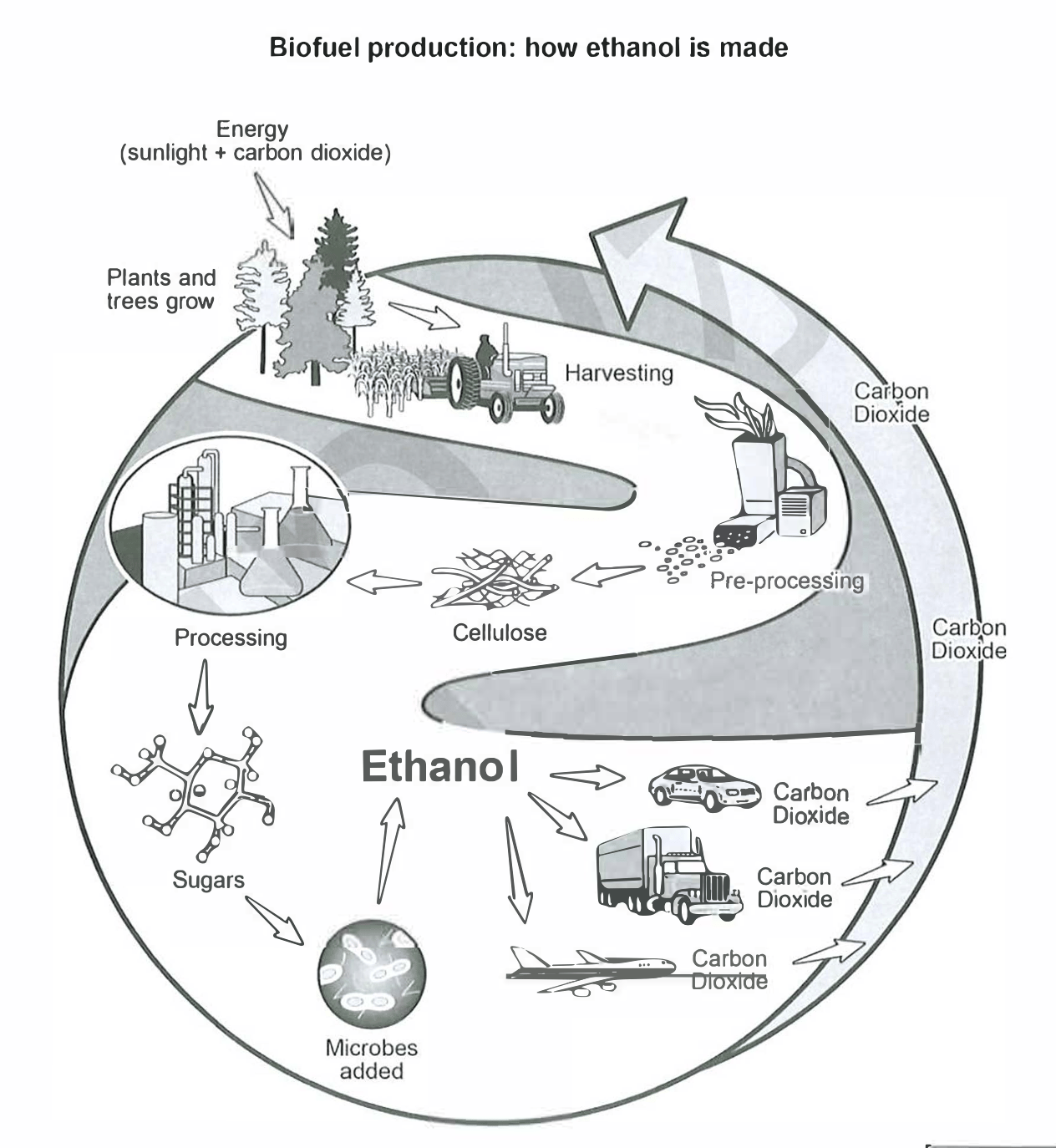
The diagram below shows how a biofuel called ethanol is produced.
Summarise the information by selecting and reporting the main features, and make comparisons where relevant.
Student answer (Band 5.5)
The diagram illustrates how to made biofuel from plant well know as ethanol.
Overall, The ethanol produced through the several steps . The formation starts with plant and tree and ending with the ethanol made that is used in vechical andthen generate carbon dioxide.
First the plant and tree are grow by sunlight and carbon dioxide. after that these plants are harvesting through machines afterward these leaves are pre processing and make cellulose . The fourth step starts then processing is begining with cellulose and all process did in the lab.
After sugar is made in fifth step through processing this producer mat take a lot of time however in this sugar are added the microbes for making biogas. which is also called the ethanol. Futhmore this ethanol is used in our daily lives. ethanol is used in vechicals such as cars, trucks and airoplane . and these vehicals makes carbon dioxide. which is speard in envirnment and useful for plant.
AI examiner evaluation
| Criterion | Band |
|---|---|
| Task Achievement / Task Response | 6.0 |
| Coherence and Cohesion | 6.0 |
| Lexical Resource | 5.0 |
| Grammatical Range and Accuracy | 5.0 |
| Overall | 5.5 |
Task Achievement / Task Response: Band 6.0
You cover the main stages, from plant growth and harvesting through processing, sugar production, the addition of microbes, and the use of ethanol in transport. You also identify the cycle’s return of carbon dioxide to plants, giving the response a relevant overall summary. However, some details are unclear or inaccurate: the diagram shows ethanol, not biogas, being produced after microbes are added, and it does not say that processing takes place in a laboratory or that sugar production takes a long time. The overview also says the process ends with ethanol, although the diagram’s cycle continues through transport and carbon dioxide returning to plants. Clarifying these points and describing the cycle more precisely would make the account more complete.
Coherence and Cohesion: Band 6.0
The response has a recognisable structure: an introduction and overview are followed by descriptions of the early and later stages. Sequencing expressions such as “First,” “after that,” and “After sugar is made” help the reader follow the process. However, some links are mechanical or unclear, and the stages are not always connected accurately. For example, “The fourth step starts then processing is begining” is difficult to follow, while the sentence beginning “Futhmore” shifts from production to everyday use without a clear transition. Several sentences also run together or begin with a fragment, such as “which is also called the ethanol.” Use clearer paragraph progression and connect each stage with precise references to the preceding material.
Lexical Resource: Band 5.0
You use relevant process vocabulary, including “harvesting,” “cellulose,” “processing,” “microbes,” and “carbon dioxide,” so the topic is generally understandable. However, the range is limited and several word choices or forms are inaccurate, sometimes making the meaning less clear. “Biogas” is not the product shown; the diagram identifies ethanol. Phrases such as “plants are harvesting” and “these leaves are pre processing” also show difficulty selecting natural forms for describing stages. Spelling errors, including “vechicals,” “airoplane,” and “envirnment,” further reduce precision. Build a bank of accurate process verbs and technical terms, and check spelling and collocations before finishing.
Grammatical Range and Accuracy: Band 5.0
You attempt both simple and more extended sentences, and the overall sequence can usually be understood. However, errors in verb forms, agreement, articles, and sentence boundaries are noticeable. Examples include “how to made,” “plants and tree are grow,” and “these plants are harvesting,” where the verb patterns do not fit the intended meaning. In “The ethanol produced through the several steps,” the main verb is missing, and “which is also called the ethanol” is an incomplete sentence. Capitalisation and punctuation are also inconsistent, particularly after full stops. Practise accurate passive forms for process descriptions—for example, “the plants are harvested”—and check that each sentence has a complete subject and verb.
See this exact question answered at other band scores. The same prompt compared across bands.
Browse more IELTS Writing model answers or get your own writing scored by the same AI examiner.