Band 5.0 IELTS Writing Task 1 Model Answer
Overall Band Score: 5.0 · Cambridge IELTS 20 · 2026-11-05
IELTS Writing Task 1 question
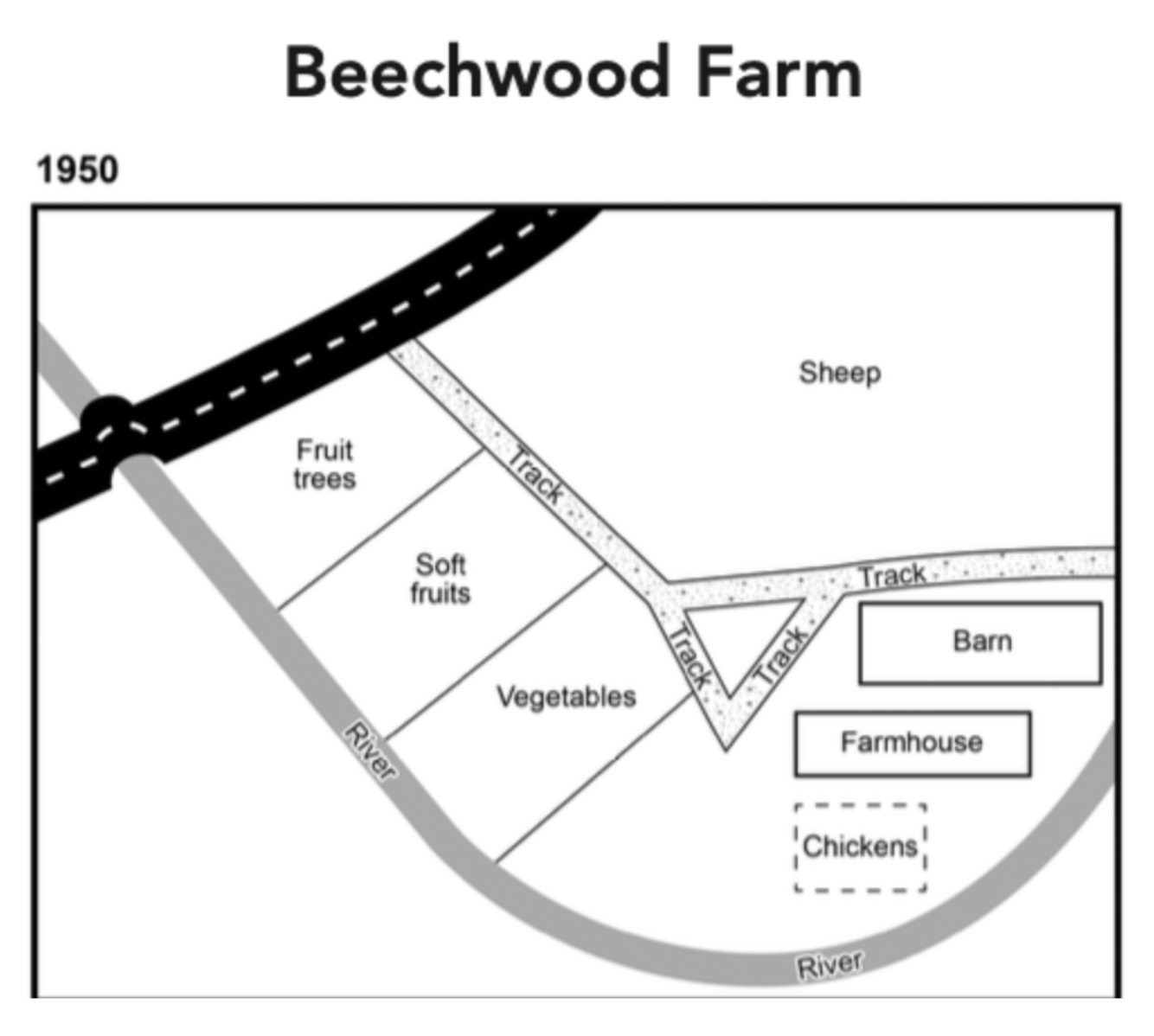
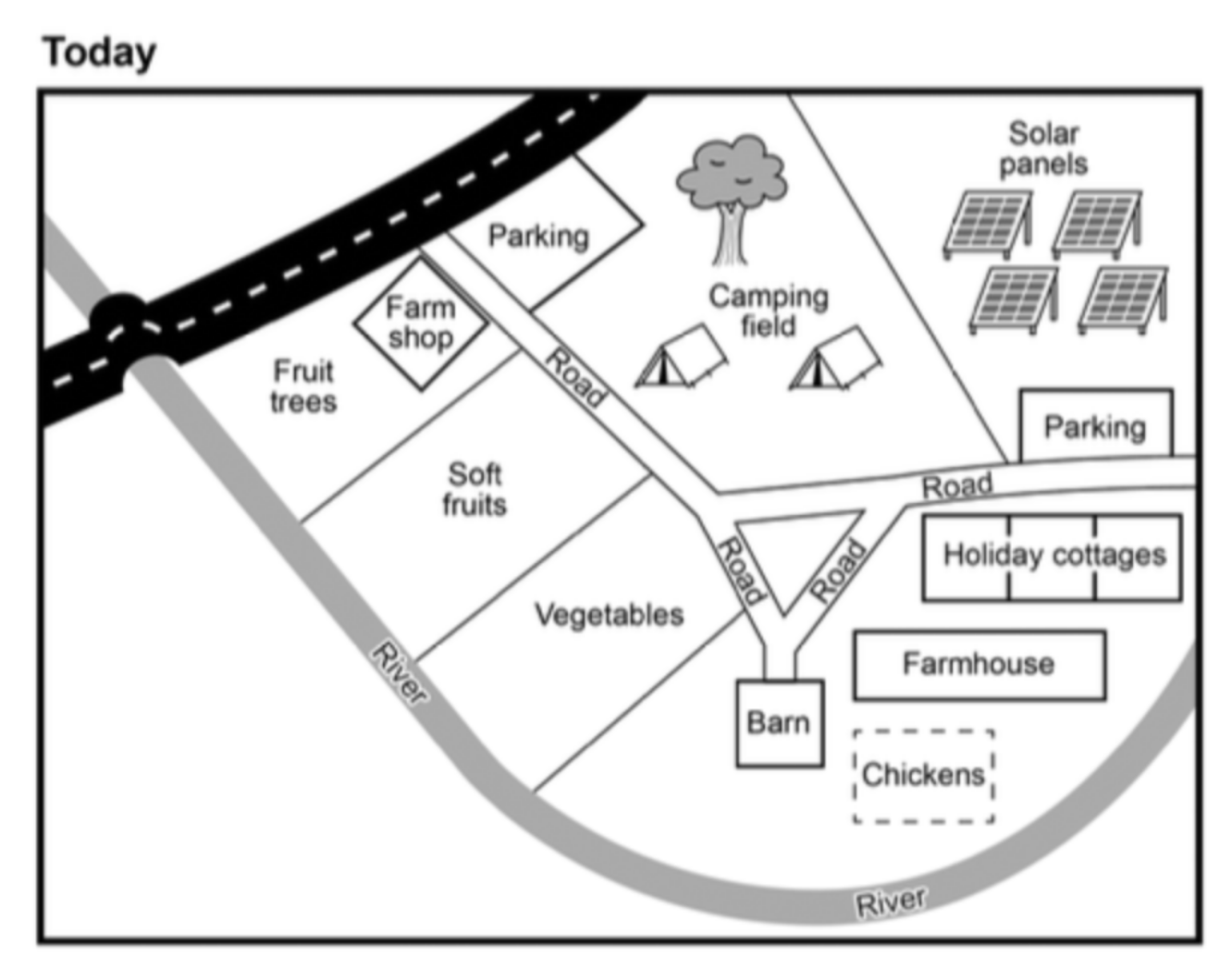
The plans below show the site of a farm in 1950 and the same site today.
Summarise the information by selecting and reporting the main features, and make comparisons where relevant.
Student answer (Band 5.0)
The comparison of a Beechwood farm site in 1950 and the same site lately.
In 1950 there are tracks and no parking is available in the farm and many more things like camping field, solar panels, holiday cottages, are not present in 1950.
Common things which present in the farms like fruit trees, soft fruits, Barn. These all are present in 1950 too but after 76 years of time periods the farm is developed. Developing in technology like installment of solar panels which is most useful for the farms for watering plants by the motor using electricity by solar panels. Camping field is also useful for relaxing.
In the 76 years of long time periods chickens are not present in the farm and the loss of sheep.
final conclusion is; farm is far developed and better then 1950. tracks are change into road and some trees also grows it looks better than before
AI examiner evaluation
| Criterion | Band |
|---|---|
| Task Achievement / Task Response | 5.0 |
| Coherence and Cohesion | 5.0 |
| Lexical Resource | 5.0 |
| Grammatical Range and Accuracy | 5.0 |
| Overall | 5.0 |
Task Achievement / Task Response: Band 5.0
You identify the two time periods and mention several genuine changes, including the addition of parking, camping, solar panels and holiday cottages, as well as the conversion of tracks into roads. However, the account only partially summarises the plans: it does not clearly describe the overall layout or explain the main changes to the farm’s facilities and land use. Some details are inaccurate or unsupported: chickens remain on the site today, and the maps do not establish that sheep have been lost. The claim that solar panels power irrigation is also speculation rather than information shown. To strengthen the response, give a concise overview of the site’s development, then compare key locations and features accurately, including what remained and what was added or removed.
Coherence and Cohesion: Band 5.0
The response has some organisation: it begins by contrasting 1950 with today, then discusses shared features and later changes. This gives the reader a basic sense of the comparison. However, the progression is not consistently clear, and ideas are grouped loosely rather than developed in a planned sequence. For example, the paragraph about common features shifts to technology, the usefulness of camping, and then chickens and sheep. Linking phrases such as “Common things” and “In the 76 years” do not clearly show how each point relates to the maps, while the final conclusion repeats the general claim that the farm is better. Organise the response into a clear overview and focused comparison paragraphs, using precise references such as “by contrast” and “while” to connect changes.
Lexical Resource: Band 5.0
You use some relevant vocabulary for describing maps, including “tracks,” “parking,” “solar panels,” “holiday cottages,” and “fruit trees,” so the reader can recognise several features. However, the range is limited and some expressions are imprecise or unnatural, which makes parts of the comparison difficult to interpret. For instance, “the same site lately” is not a suitable way to refer to the present, and “many more things” is too vague for an academic summary. Phrases such as “long time periods” and “farm is far developed” also lack natural collocation. Aim for concise, map-focused language such as “the site today,” “additional facilities,” and “the farm has undergone considerable development,” while avoiding unsupported descriptions of usefulness.
Grammatical Range and Accuracy: Band 5.0
The response communicates its basic meaning through mostly simple statements, but the range of sentence structures is limited and errors occur frequently. Examples include “Common things which present in the farms,” where the verb is missing, and “chickens are not present in the farm,” which conflicts with the map and also needs more accurate sentence construction. In “tracks are change into road,” the verb form and singular/plural agreement are incorrect. Articles and sentence boundaries are also inconsistent, as in “final conclusion is;”. These errors sometimes make relationships between ideas unclear. Practise forming complete sentences with accurate present and past forms, for example, “The tracks have been replaced by roads, while the farmhouse and barn remain.” Check articles, agreement and punctuation during revision.
See this exact question answered at other band scores. The same prompt compared across bands.
Browse more IELTS Writing model answers or get your own writing scored by the same AI examiner.