Band 5.5 IELTS Writing Task 1 Model Answer
Overall Band Score: 5.5 · Cambridge IELTS 20 · 2026-11-09
IELTS Writing Task 1 question
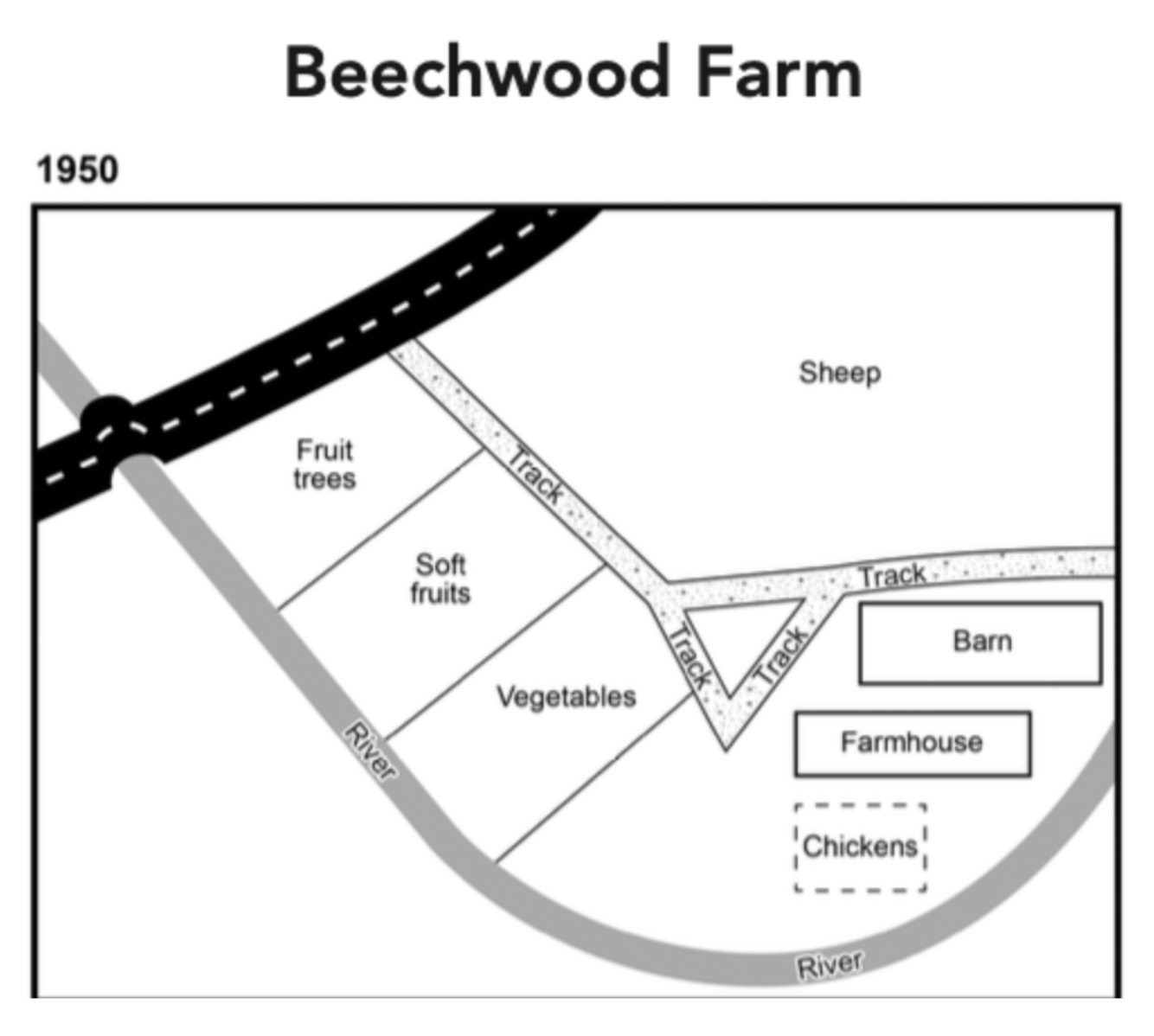
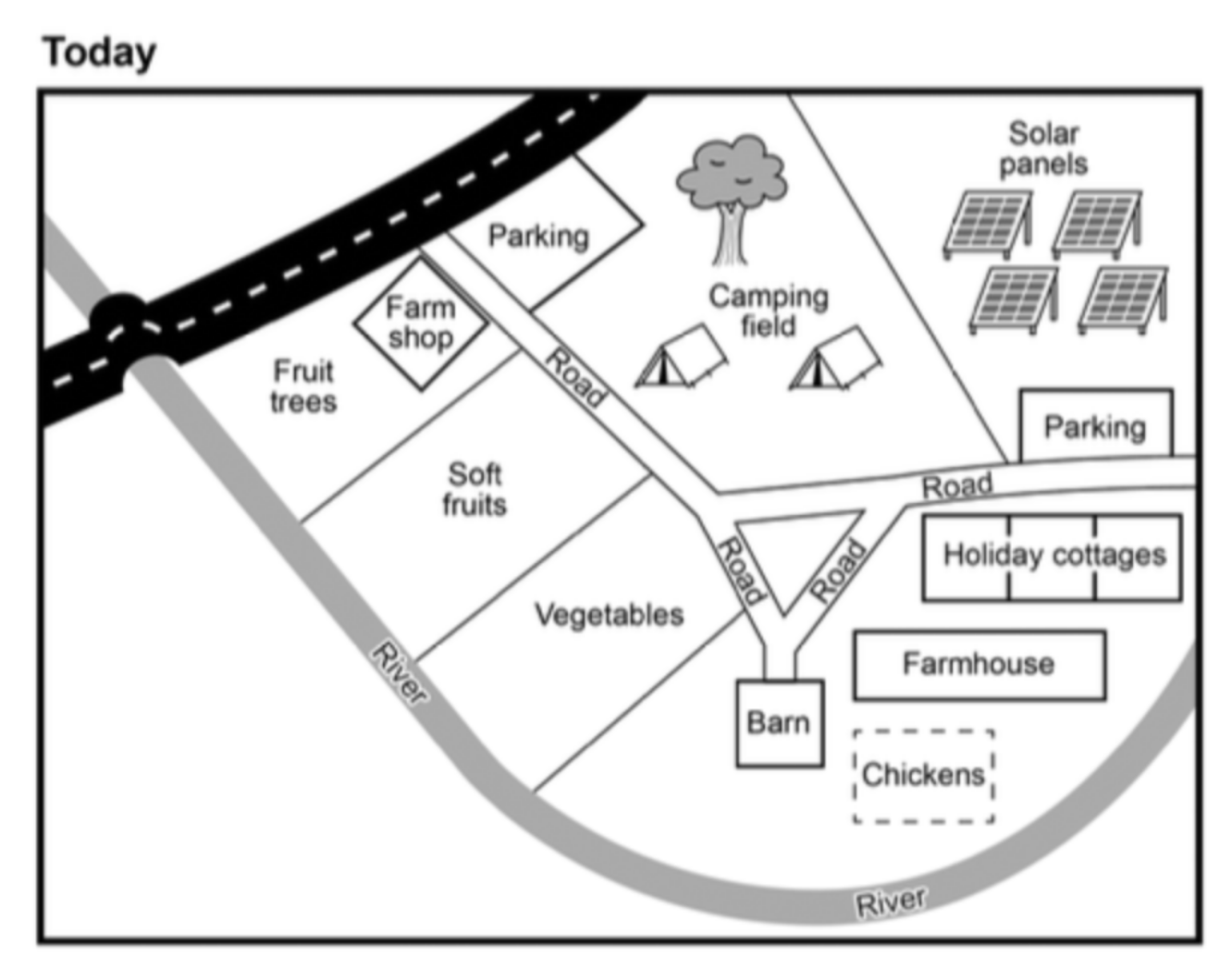
The plans below show the site of a farm in 1950 and the same site today.
Summarise the information by selecting and reporting the main features, and make comparisons where relevant.
Student answer (Band 5.5)
The maps illustrates about the differenciate in beechwood farm site in 1950 and the same site today.
Overall, the farm has changed significantly over the years, with several new facilities being added, while the main farming areas, river and farmhouse have remained largely unchanged.
In the year 1950 . there are hug sheep area on the north-east side of farm with along with the tracks for partition . And the tracks start with the north-west side on road connetivity and ended with eastern side of area. whereas on the other side of the track there are mainly three more farm such as fruit trees , soft fruits and lastly for vegetables It begins from the side of the road. Moreover , on the easter side of site there huge space of three houses such as barn house , farmhous , and last for chickens , along ith the big river follow with the north-west side and ended with the south to easter side.
Now in modern day , there are considerable changes in the farm site. firstly , the sheep farm is replaced by the camping field and parking areas and there are the number of solar panels have placed in the north-east side. Moreover, the tracks has been replaced by the roads. there are no changes in fruit trees , soft fruits and vegetables farms , famrhouse and chickens house. Whereas, the barn house is replaced by the holiday cottaves. and the barnhouse is moved in the right side of vegetables farm.
AI examiner evaluation
| Criterion | Band |
|---|---|
| Task Achievement / Task Response | 6.0 |
| Coherence and Cohesion | 6.0 |
| Lexical Resource | 5.0 |
| Grammatical Range and Accuracy | 5.0 |
| Overall | 5.5 |
Task Achievement / Task Response: Band 6.0
You provide a clear overview that identifies substantial change while noting that the river, farmhouse and main growing areas remain. You also report several key developments, including the camping field, solar panels, roads and holiday cottages. However, some comparisons are inaccurate or unclear: the sheep area is replaced by a camping field, but the parking areas are additional facilities rather than replacements; the barn has not been replaced by cottages, as it remains on the site in a different position. The statement that the farmhouse and chickens are unchanged is broadly supported, but the description of the 1950 layout as “three houses” misidentifies the barn, farmhouse and chicken enclosure. More precise descriptions of what stayed, moved or was added would make the main features clearer and better supported.
Coherence and Cohesion: Band 6.0
The response has a recognisable structure: an introduction, an overview, and separate paragraphs for 1950 and today. This gives the reader a basic chronological progression, and linking expressions such as “Overall,” “Moreover” and “Whereas” show an effort to connect ideas. However, the body paragraphs often combine several locations and changes in long, loosely connected sentences, so relationships between features are not always clear. For example, the sentence beginning “In the year 1950” moves from the sheep area to tracks, crop plots, buildings and the river without clear grouping. Some transitions, including “Now in modern day,” are repetitive or mechanical. Organise each period by location or by what changed, and use shorter sentences with clear references to improve the flow.
Lexical Resource: Band 5.0
You use some relevant map vocabulary, including “north-east side,” “replaced,” “solar panels,” “holiday cottages” and “remained largely unchanged.” This shows an adequate attempt to describe locations and developments. However, noticeable spelling, word-form and collocation errors sometimes make the meaning difficult to follow, such as “differenciate,” “connetivity,” “famrhouse” and “cottaves.” Several phrases are also imprecise for a site plan: “three more farm” and “three houses” do not accurately name the plots and buildings, while “tracks for partition” is unclear. Aim for accurate, conventional terms such as “plots,” “buildings,” “road junction” and “enclosure,” and check spelling and singular/plural forms carefully.
Grammatical Range and Accuracy: Band 5.0
You attempt both simple and more complex sentence forms, including clauses linked with “while,” “whereas” and “with,” and the overall meaning can usually be understood. However, some errors in sentence structure, agreement, articles and punctuation reduce clarity. For example, “The maps illustrates” has a subject–verb agreement error, and “there are the number of solar panels have placed” combines incompatible structures. The sentence beginning “In the year 1950” contains fragments and awkward clause connections, while punctuation around full stops and commas is inconsistent. Practise building complete sentences with a clear subject and verb, and use one reliable pattern for describing locations and changes, such as “The sheep area was replaced by a camping field.”
See this exact question answered at other band scores. The same prompt compared across bands.
Browse more IELTS Writing model answers or get your own writing scored by the same AI examiner.