Band 6.0 IELTS Writing Task 1 Model Answer
Overall Band Score: 6.0 · Cambridge IELTS 20 · 2026-11-10
IELTS Writing Task 1 question
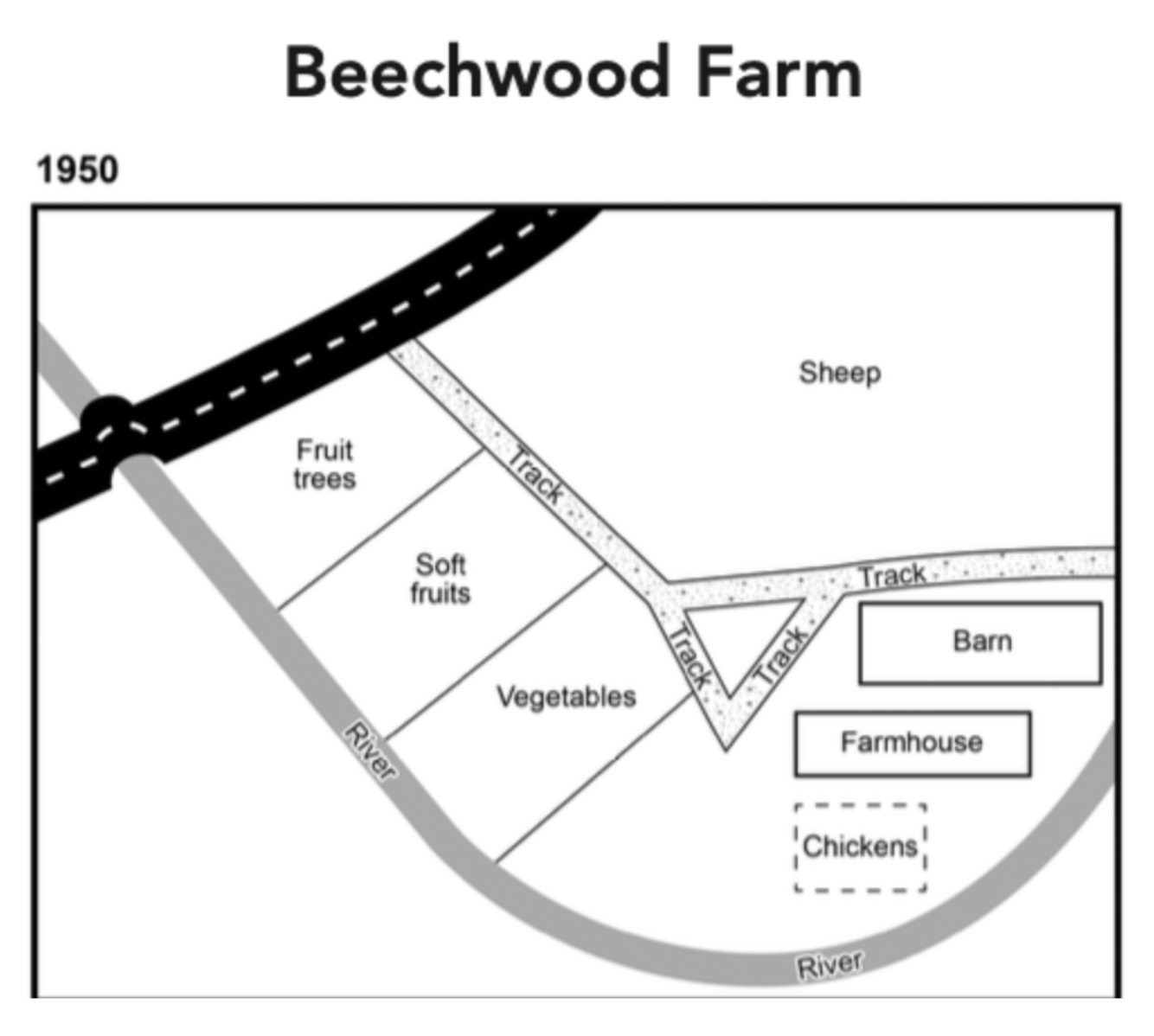
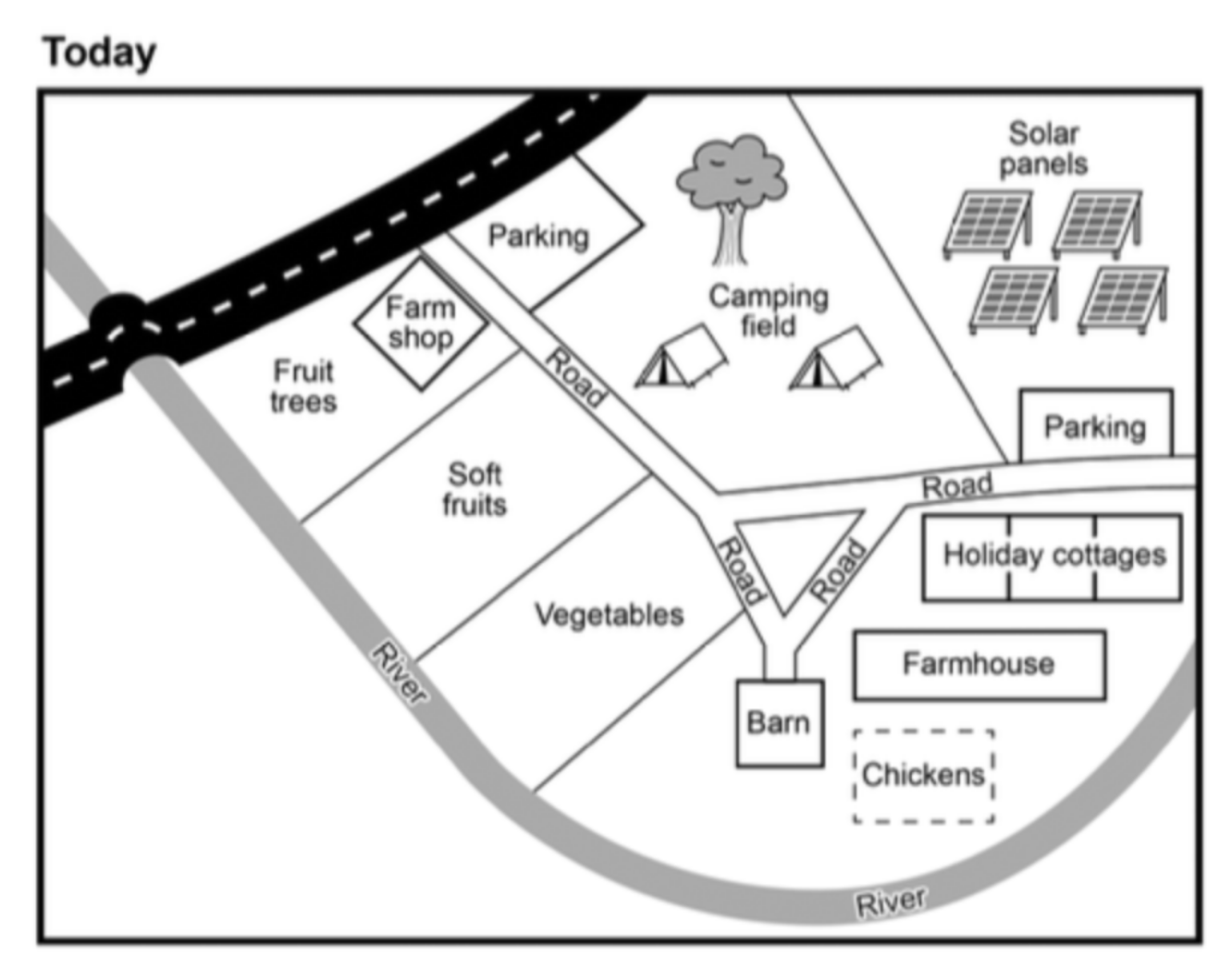
The plans below show the site of a farm in 1950 and the same site today.
Summarise the information by selecting and reporting the main features, and make comparisons where relevant.
Student answer (Band 6.0)
The maps demonstrates the changes of Beechwood farm in 1950 and today. Major shifting can be seen between this two maps.
Overall, it can be seen that the major changes happend in sheep area as it is completely renovated and new areas are constructed inside it. Conversation of a new road can also be seen.
In 1950 the Beechwood Farm had an entire area build only for the sheeps. The sheep area used to cover half of the farm. On the other hand today this area is divided into many parts. New trees are planted inside it. Four solar panels were also attached, beside the solar panels a parking area for the public were also built. The solar panel and parking area is separated from the camping field. Another huge parking area is also constructed by the road and beside the trees. In 1950 the sheep area sides were covered by track which is now converted into a road.
In today's map we can also see that a new barn has been made, it's entrance is by the new converted road. In 1950 the farm had a huge barn which is now switched into a holiday cottages. The main road area is still the same, and also fruit trees,soft fruits, vegetables area, farmhouse, chickens is still in the same area. Beside the main road a new farm shop has been opened. These are the changes that had been made.
AI examiner evaluation
| Criterion | Band |
|---|---|
| Task Achievement / Task Response | 6.5 |
| Coherence and Cohesion | 6.0 |
| Lexical Resource | 5.5 |
| Grammatical Range and Accuracy | 5.5 |
| Overall | 6.0 |
Task Achievement / Task Response: Band 6.5
You identify the main transformation from a sheep area to a more developed site, and you report several relevant changes, including the new road, camping field, solar panels, parking, farm shop and holiday cottages. The overview also recognises that the site has been substantially redeveloped. This gives the response a clear, relevant focus. However, some details are inaccurate or unclear: the original barn was not converted into cottages; the barn remains, while the cottages are a new feature. The solar panels and camping field are also separate additions, rather than the panels and parking being described as a single area. The claim that the main road is unchanged is not fully supported, since its depiction and internal access have changed. More precise comparisons of the buildings and land use would strengthen the account.
Coherence and Cohesion: Band 6.0
The response has a recognisable structure: an introduction, an overview, and two paragraphs describing changes. This makes the main direction of the comparison easy to follow, and phrases such as “On the other hand” help signal contrast. However, progression within the detail paragraphs is sometimes uneven. The first body paragraph moves from sheep to trees, solar panels, parking and tracks without a clear spatial or thematic order. The second combines building changes, unchanged features and the farm shop, so the reader must work to connect the comparisons. Some linking is mechanical, and references such as “this area” and “it” are not always precise. Grouping changes by location or by land use, and using clearer references, would improve cohesion.
Lexical Resource: Band 5.5
You use a relevant range of vocabulary for describing map changes, including “divided,” “constructed,” “converted,” “parking area” and “holiday cottages.” These choices help communicate the broad redevelopment. However, several word choices and collocations are inaccurate or unnatural, which limits precision: “Major shifting,” “entire area build only for the sheeps,” “Conversation of a new road,” and “switched into” do not express the intended meanings naturally. “Sheep” is also the same in singular and plural, so “sheeps” is incorrect. Spelling errors such as “happend” and “beside” used where “besides” is intended further reduce control. Aim for standard map-description phrases such as “major changes,” “was used for sheep,” and “was replaced by.”
Grammatical Range and Accuracy: Band 5.5
You attempt both simple and more complex sentence forms, including contrast clauses and relative information, as in “as it is completely renovated” and “which is now converted into a road.” The overall meaning is usually recoverable, but some errors in agreement, articles, tense and sentence construction remain. For example, “The maps demonstrates” should use a plural verb, while “this two maps” needs a plural demonstrative. In “a parking area … were also built,” the singular subject requires “was.” The account also shifts between past and present forms when describing the maps, and “it's entrance” uses a possessive incorrectly. Review subject–verb agreement and use past forms for 1950 and present forms for today; this will make your comparisons more accurate and controlled.
See this exact question answered at other band scores. The same prompt compared across bands.
Browse more IELTS Writing model answers or get your own writing scored by the same AI examiner.