Band 5.5 IELTS Writing Task 1 Model Answer
Overall Band Score: 5.5 · Cambridge IELTS 20 · 2026-11-11
IELTS Writing Task 1 question
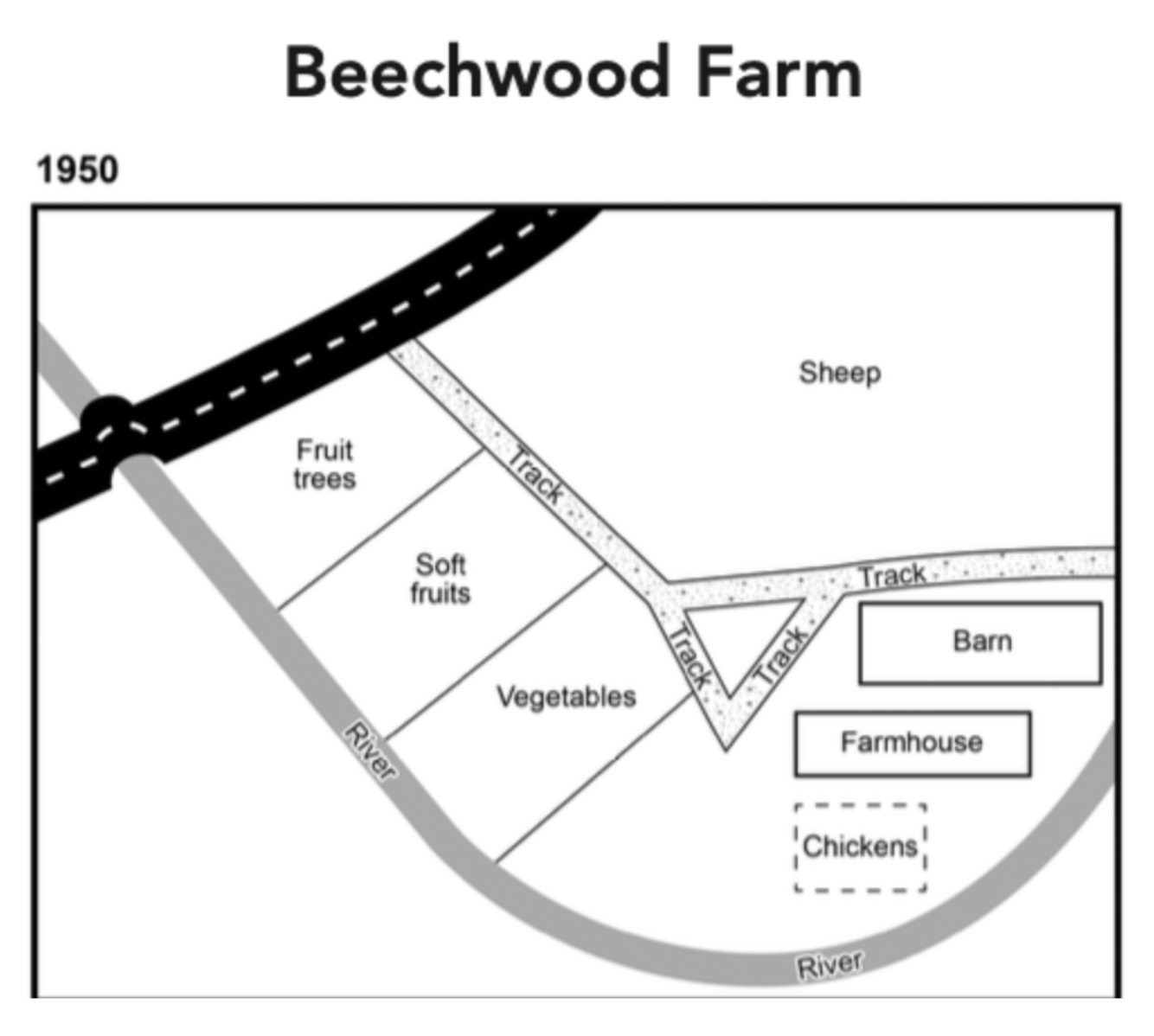
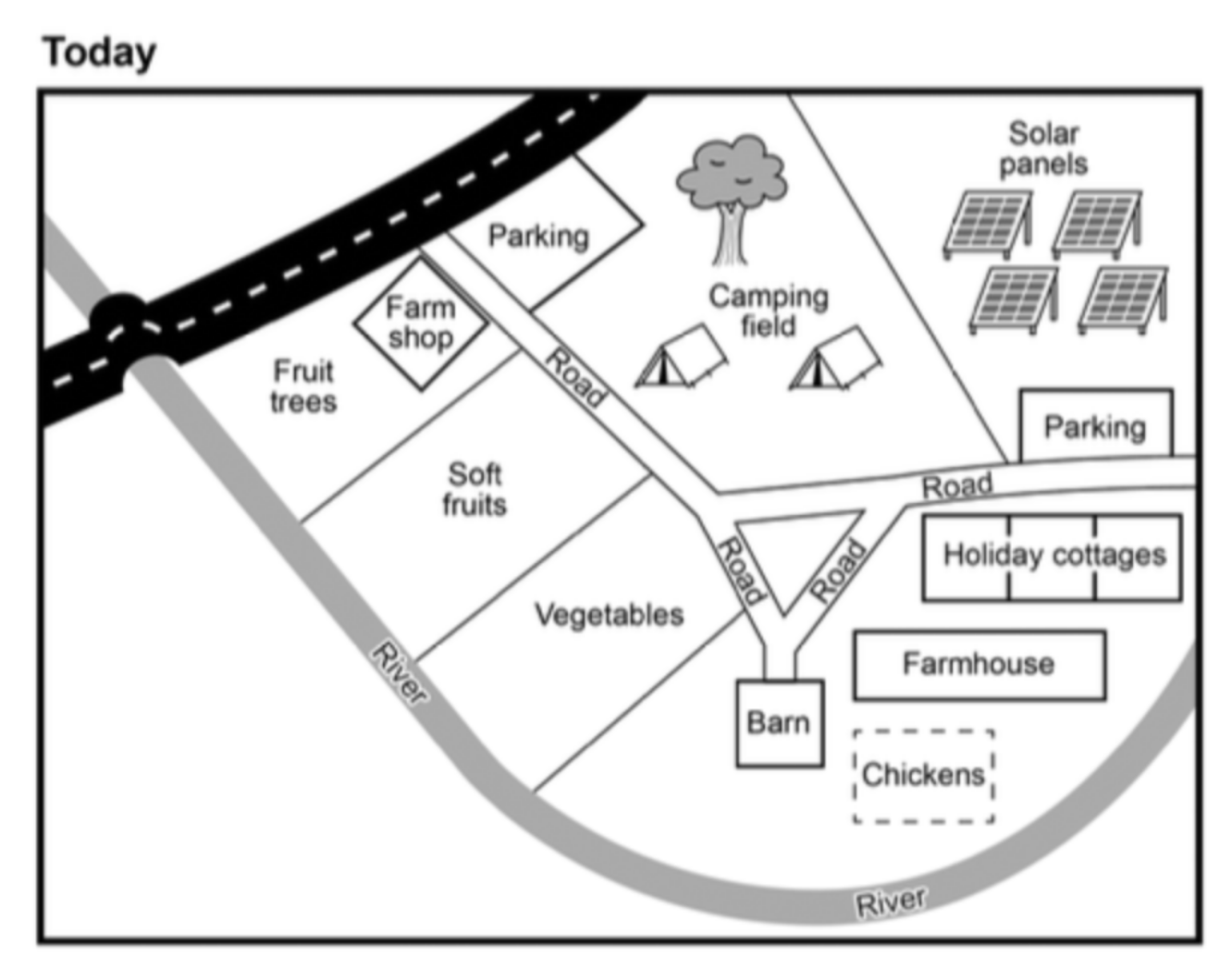
The plans below show the site of a farm in 1950 and the same site today.
Summarise the information by selecting and reporting the main features, and make comparisons where relevant.
Student answer (Band 5.5)
The Beechwood farm plan shows how it was changed over the decade. In 1950's plan was totally diffrent from the today's plan. It was changed many things with time.
In 1950's the plan was very suitable and spacious. It had been categerised spacious three section of fruit trees,soft fruits, and vegetables beside the river. There was Farmhouse, chickens, and barn in between of track and river. On the other side of track there was sheep. The track and river had connected each other and all the things were placed in them.
Today's plan was totally changed and occupied. Moreover, the road and river was still on the same place. It looks like well organized and maintained plan. There had been brought lot of new things on the other side of road. Farm shop had been placed at the fruit trees section. Barn, was slightelly moved down towards the river and on that place Holiday cottages were buit. On the other side of road there were sepreate parking section with attached camping field. Solar panels alos had sepreate parking section.
In sumup of the 1950's plan was spacious and suitable with few section and short of development. However, the toda's plan had well organized and well developed.
AI examiner evaluation
| Criterion | Band |
|---|---|
| Task Achievement / Task Response | 5.5 |
| Coherence and Cohesion | 6.0 |
| Lexical Resource | 5.0 |
| Grammatical Range and Accuracy | 5.0 |
| Overall | 5.5 |
Task Achievement / Task Response: Band 5.5
You identify the two plans and make a relevant overall comparison, noting that the river and road remain while the site becomes more developed. You also report several key changes, including the farm shop, camping field, solar panels, parking and holiday cottages. However, some important details are inaccurate or unclear: the barn is not described as moving down towards the river; it remains in the eastern part of the site, while the cottages occupy the area south of the eastbound road. The claim that the farmhouse, chickens and barn were “in between of track and river” does not clearly match their positions. The overview also relies on vague judgements such as “spacious” and “well organized” rather than summarising the main land-use changes. Select and compare locations more precisely.
Coherence and Cohesion: Band 6.0
The response has a recognisable structure: an introduction, a paragraph about 1950, a paragraph about today, and a concluding summary. This gives the reader a coherent overall route through the comparison. Time markers such as “In 1950’s” and “Today’s plan” help distinguish the two maps, and “Moreover” and “However” attempt to connect ideas. At times, though, the progression is weakened by unclear references, as in “all the things were placed in them,” where “them” has no clear referent. The final “In sumup” repeats the earlier contrast rather than adding a concise overview. Group features by location or by what changed and what remained, and use linking expressions more selectively.
Lexical Resource: Band 5.0
You use some relevant map vocabulary, including “fruit trees,” “soft fruits,” “vegetables,” “river,” “parking section” and “camping field,” so the reader can identify several features. However, the range is limited and some word choices or combinations are inaccurate, which makes parts of the description difficult to interpret. For example, “the plan was very suitable” and “the plan was spacious” are not precise ways to describe a site plan, while “the track and river had connected each other” does not express their relationship clearly. Spelling errors such as “diffrent,” “categerised,” “slightelly” and “buit” also reduce accuracy. Build a more precise set of verbs for map changes, such as “remained,” “was replaced by,” and “was converted into.”
Grammatical Range and Accuracy: Band 5.0
You attempt both simple and more extended sentences, and the response is generally understandable. However, grammatical errors occur frequently and sometimes make relationships between features unclear. Examples include “In 1950’s plan” (missing article and possessive form), “It was changed many things” (incorrect sentence structure), and “the road and river was still on the same place” (subject–verb agreement and preposition). The sentence “There had been brought lot of new things” also uses an incorrect passive construction and lacks an article. Tense and sentence patterns need more consistent control when describing past and present maps. Practise clear forms such as “In 1950, the site contained…” and “Today, the river remains in the same position.”
See this exact question answered at other band scores. The same prompt compared across bands.
Browse more IELTS Writing model answers or get your own writing scored by the same AI examiner.