Band 6.0 IELTS Writing Task 1 Model Answer
Overall Band Score: 6.0 · Cambridge IELTS 20 · 2026-11-11
IELTS Writing Task 1 question
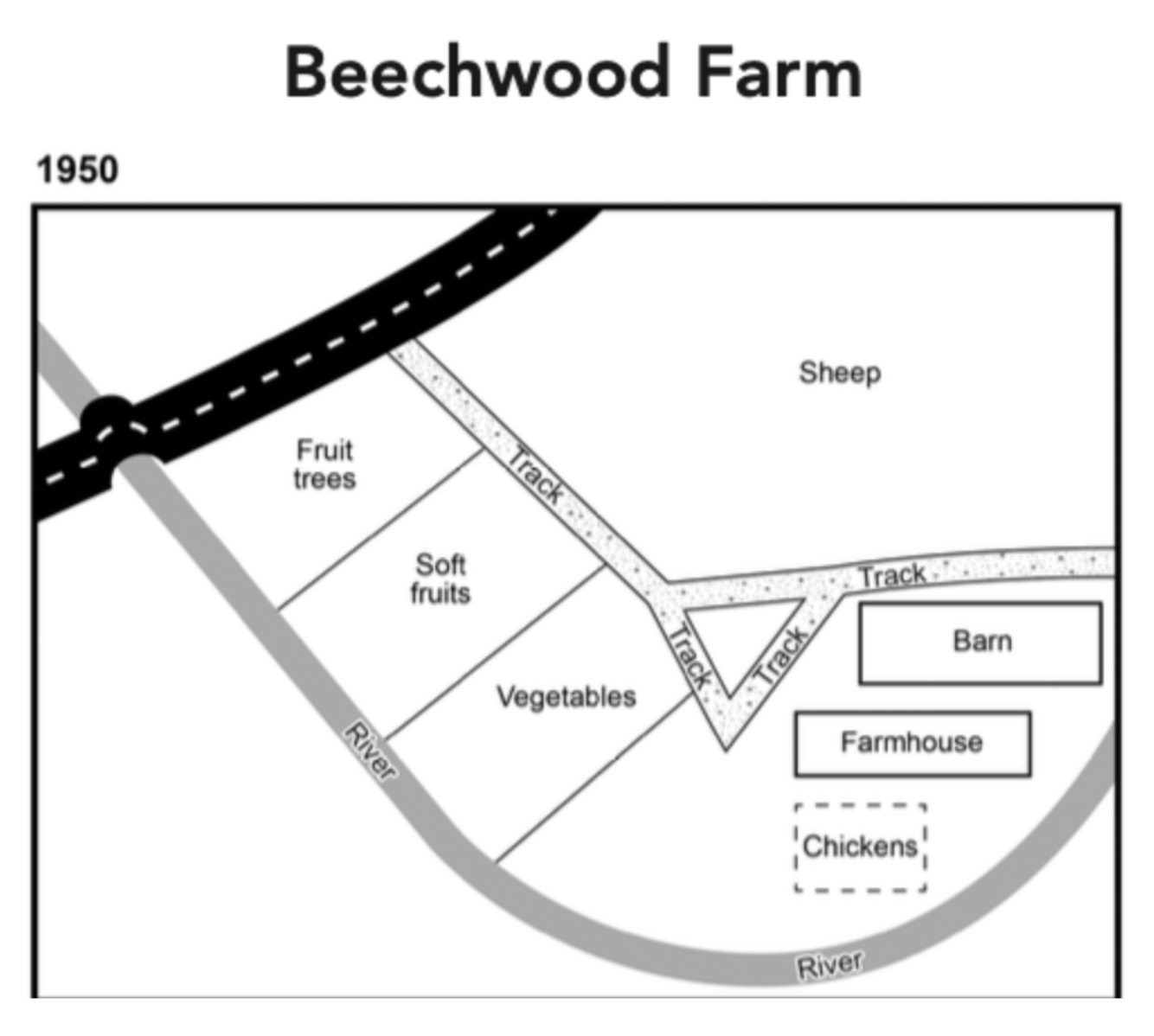
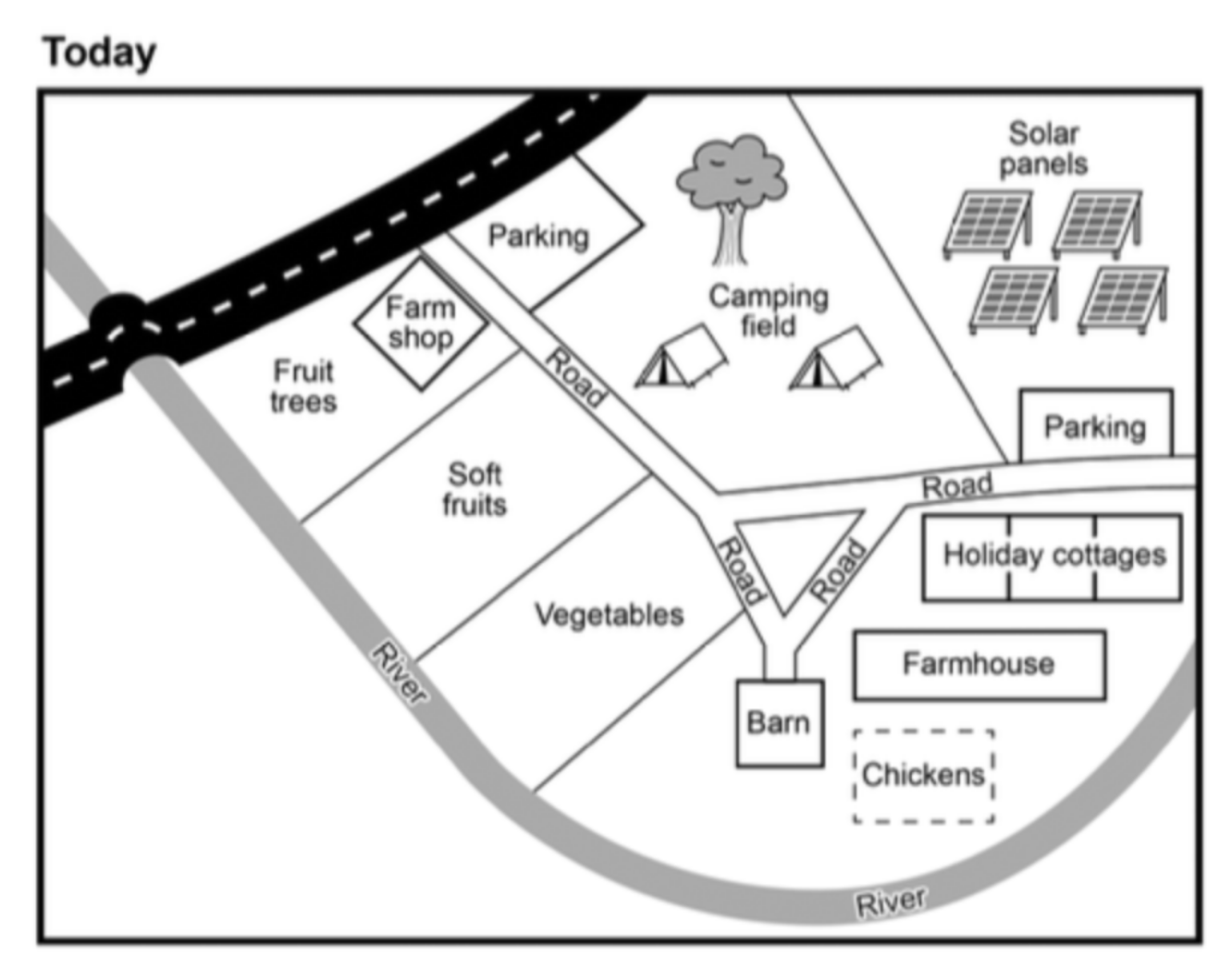
The plans below show the site of a farm in 1950 and the same site today.
Summarise the information by selecting and reporting the main features, and make comparisons where relevant.
Student answer (Band 6.0)
The diagram illustrates a Beechwood farm layout from 1950 to today.
Overall, the farm layout undergone various transformations. The major change is that farm became more commercial by adding campings fields, parking lots and solar panels. While some remained same on its place such as fruit trees, soft fruits and vegetables.
In 1950, it can be seen that along with a main road there was a track which divided the farm into two parts. In the north side of farm there is large area for sheep. On the other side, there were fields for fruit tress, soft fruits and vegetables. Furthermore, there was also area for chicken, farmhouse and a barn was also situated in east side of the farm.
Nowadays, farm has many developments. There is a road instead of track from the main road towards the eastern side of the farm. The sheep area is converted into a camping area with a parking lot. In addition to this, there are solar panels installed for the source of energy. However, field with fruit has added a farm shop. But soft fruits and vegetables remained its place. Besides this, a barn has moved and linked with road, while holiday cottages were added. The farmhouse and chickens area were on the same place.
AI examiner evaluation
| Criterion | Band |
|---|---|
| Task Achievement / Task Response | 6.5 |
| Coherence and Cohesion | 6.0 |
| Lexical Resource | 5.5 |
| Grammatical Range and Accuracy | 5.5 |
| Overall | 6.0 |
Task Achievement / Task Response: Band 6.5
You give a clear overview of the main shift towards a more commercial farm, identifying the new camping area, parking, solar panels and holiday cottages, while noting that the fruit and vegetable areas largely remain. Most key locations are also covered, including the river-side fields and the farmhouse and chicken enclosure. This addresses the task well, and the comparison between the two plans is generally grounded in the maps. Some details are less fully or precisely reported: the sheep area is described as converted into camping, although the camping field is a new use in the north-east and the original sheep area is not clearly identified as its exact location. The barn is said to have moved without specifying its new position. More precise descriptions of these changes would make the account more complete.
Coherence and Cohesion: Band 6.0
The response has a sensible overall structure: an introduction and overview are followed by a description of the 1950 plan and then the present-day changes. This makes the comparison easy to follow, and linking phrases such as “In addition to this” and “Besides this” help connect points. However, some connections are mechanical or unclear. For example, “On the other side” does not clearly identify which side of the track is meant, and “However” introduces the fruit-shop point without a clear contrast. The final paragraph also moves quickly from the road and camping area to the fields, barn and cottages. Grouping features by location or by what changed and what remained would create smoother progression and clearer referencing.
Lexical Resource: Band 5.5
You use a relevant range of map vocabulary, including “layout,” “converted,” “installed,” “remained” and “situated,” and the reader can generally understand the changes you describe. There are, however, noticeable errors in word choice, form and spelling that limit precision. “Campings fields” is not a natural phrase; “camping field” is appropriate here. “Fruit tress” is a spelling error, and “for the source of energy” is an awkward way to describe the solar panels. Some expressions are also vague, such as “on its place” and “moved and linked with road.” Aim for accurate collocations and specific location language, such as “in the same location,” “relocated beside the road,” and “along the eastern road.”
Grammatical Range and Accuracy: Band 5.5
You attempt both simple and more complex sentence forms, including the contrast in “While some remained same on its place” and the clause beginning “which divided the farm into two parts.” The main ideas remain understandable, but some grammatical errors recur. The overview needs a finite verb and article: “the farm layout undergone” should be “the farm layout has undergone,” and “the farm became more commercial” needs an article. There are also tense inconsistencies when describing the maps: “there is large area” should be “there was a large area,” while the present-day description should consistently use present tense. Agreement and sentence construction need attention in “soft fruits and vegetables remained its place.” Practise accurate articles, verb forms and plural agreement while retaining your attempts at complex sentences.
See this exact question answered at other band scores. The same prompt compared across bands.
Browse more IELTS Writing model answers or get your own writing scored by the same AI examiner.