Band 5.5 IELTS Writing Task 1 Model Answer
Overall Band Score: 5.5 · Cambridge IELTS 20 · 2026-11-11
IELTS Writing Task 1 question
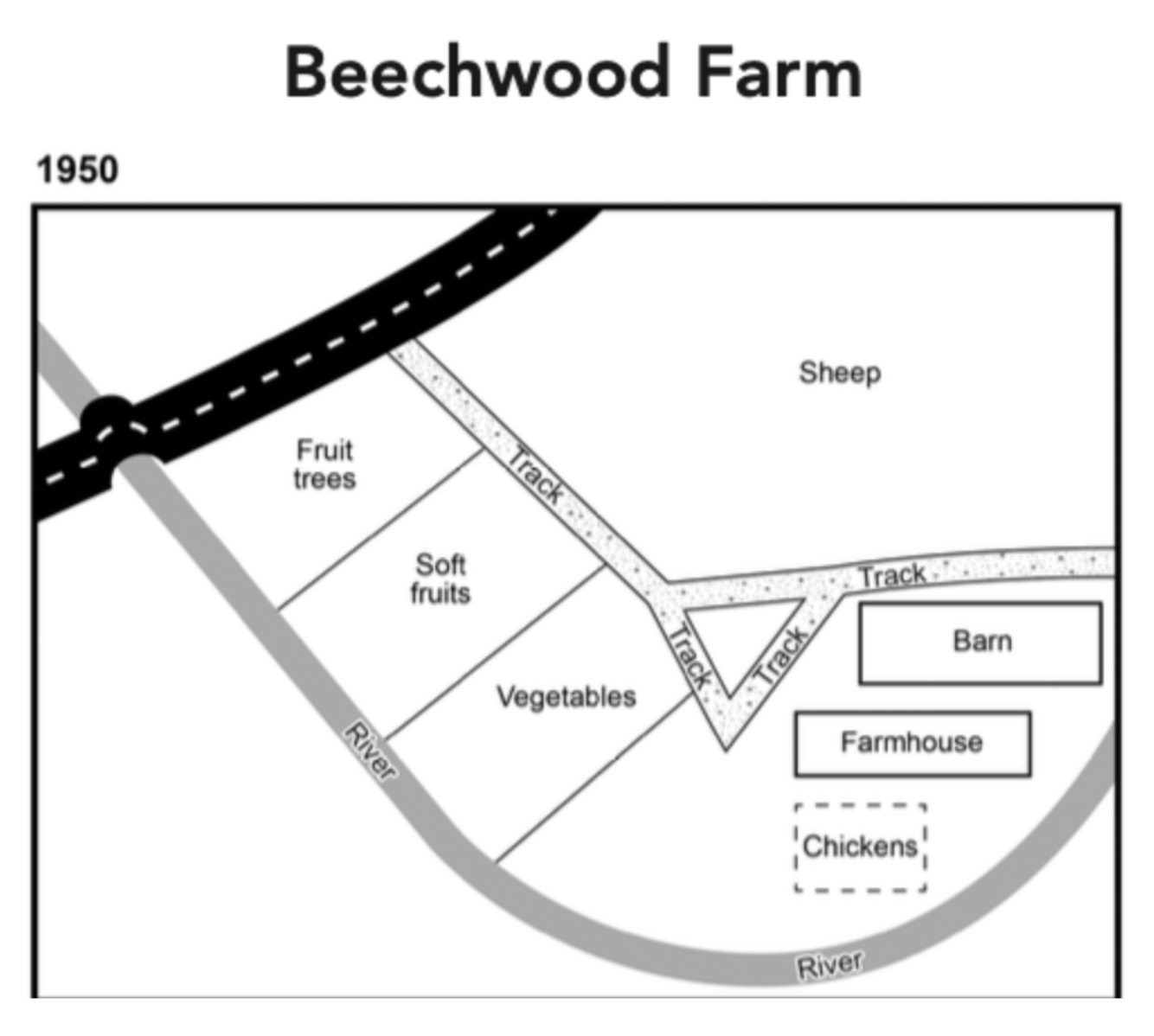
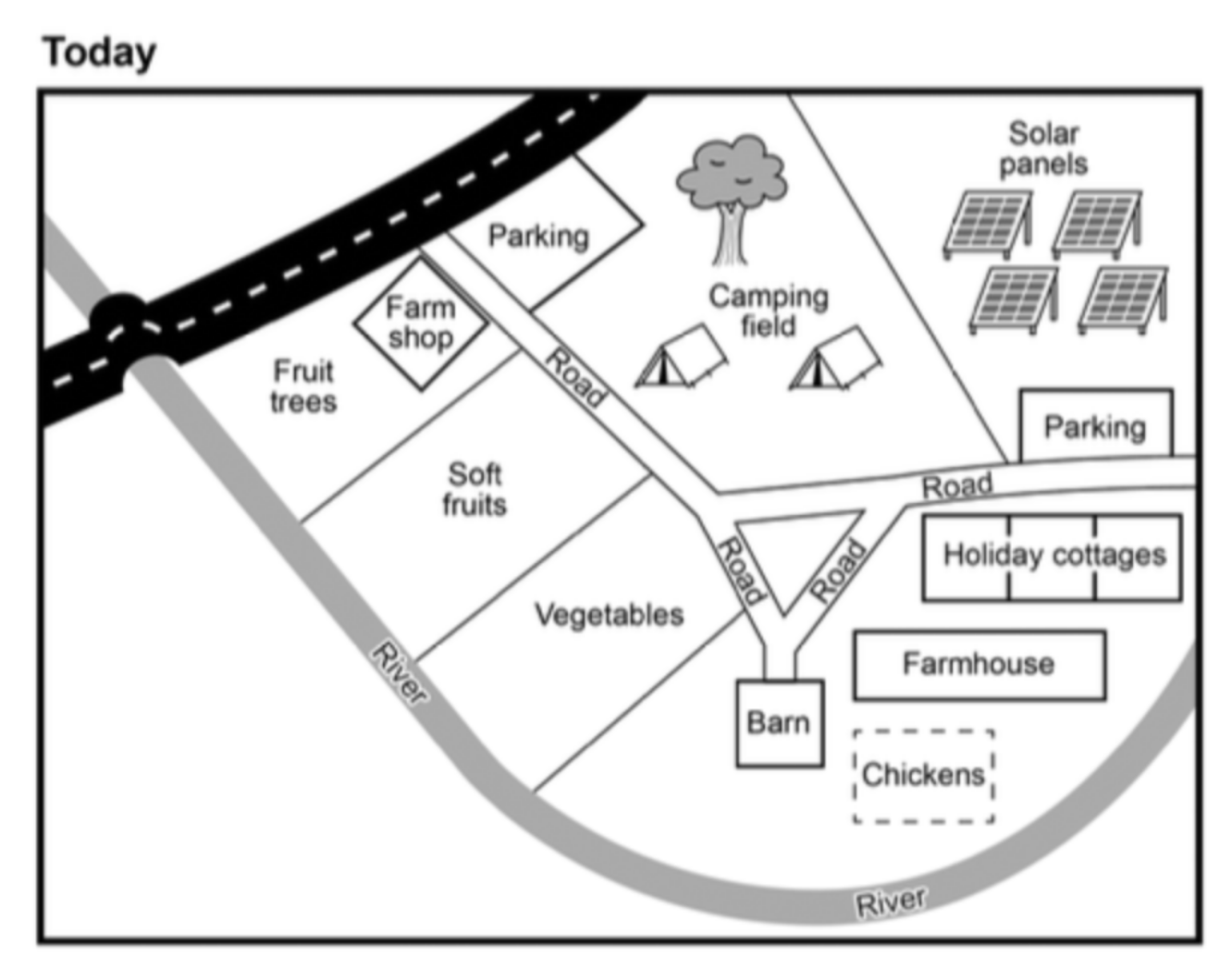
The plans below show the site of a farm in 1950 and the same site today.
Summarise the information by selecting and reporting the main features, and make comparisons where relevant.
Student answer (Band 5.5)
THE PROVIDED MAPS ILLUSTRATE THE LAYOUT OF THE FARM IN 1950 AND TODAY
AFTER SEVERAL CHANGES.
OVERALL,THE ROAD,SOFT FRUITS,VEGETABLES,CHICKENS,FARMHOUSE AND RIVER ARE SAME IN BOTH WHILE SHEEP ARE REPLACED WITHCAMPING FIELDS,PARKING AND SOLAR PANELS AND FRIUT TREES IS DECREASES AND FARM SHOP IS BUILD AND BARN IS DECLINE AND CHANGED ITS POSITION.
IN 1950,THE FARM DID NOT WELL ADAPTED AND WAS IN A SIMPLE WAY.RIVER WAS FLOOTING OUTSIDE THE FARM,ON THE LEFT SIDE OF THE FARM BETWEEN THE RIVER AND THE TRACK THERE WAS SOME FRUIT TREES,SOFT FRUITS AND VEGETABLES ALSO A BARN ,FARMHOUSE AND CHICKENS AND ON THE OTHER SIDE,SHEEP WAS FOUNDED.
THESE DAYS,THE RIVER AND TRACK ARE SAME WHILE SOFT FRUITS,VEGETABLES,FARMHOUSE,CHICKENS ARE ALSO IDENTICAL.FRUIT TREES IS DECLINE IN ITS LENGTH AND FORM A FARM SHOP.SHEEP IS TOTALLY DECLINE AND PARKING AND CAMPING FIELD ARE INTRODUCED WHILE IN THE PLACE OF BARN HOLIDAY COTTAGES ARE INTRODUCED AND DECREASE THE BARN AND TOTALLY DE
AI examiner evaluation
| Criterion | Band |
|---|---|
| Task Achievement / Task Response | 6.0 |
| Coherence and Cohesion | 6.0 |
| Lexical Resource | 5.0 |
| Grammatical Range and Accuracy | 4.5 |
| Overall | 5.5 |
Task Achievement / Task Response: Band 6.0
You identify the main contrast between the simpler 1950 farm and its present-day additions, including camping, parking, solar panels and a farm shop. You also mention several features that remain, such as the river, farmhouse, chickens and some crop areas. However, some comparisons are inaccurate or unclear: the barn has not simply declined; it remains on the site, while holiday cottages have been added south of the eastern road. The fruit-tree area is not described as forming the shop—the shop is a separate feature beside it. The overview also says the road is unchanged, although the internal track has become a road and the layout has been altered. Develop these key changes more precisely and distinguish retained features from relocated or newly added ones.
Coherence and Cohesion: Band 6.0
The response has a recognisable structure: an opening, an overview, a paragraph about 1950 and a paragraph about today. This gives the reader a basic chronological route through the maps, and linking expressions such as “while” and “in 1950” help signal comparisons. However, the progression is weakened by long, crowded sentences that combine several locations and changes without clear boundaries. For example, the overview strings together many features, while the final sentence ends abruptly at “totally de,” leaving the comparison incomplete. Some references, such as “in the place of barn,” are difficult to follow. Use shorter sentences organised by area or by retained versus changed features, and ensure each comparison is completed.
Lexical Resource: Band 5.0
You use some relevant map vocabulary, including “layout,” “river,” “track,” “soft fruits,” “introduced” and “position,” so the reader can identify many of the features being discussed. However, word choice and spelling are often inaccurate enough to make parts of the description unclear. Examples include “flooting” for the river’s location, “founded” for the sheep, “decline” where you mean removed or reduced, and “friut.” Phrases such as “did not well adapted” and “in a simple way” are also not natural descriptions of a farm plan. Build a more precise set of verbs for map changes—such as remain, be converted, be added and be relocated—and check spelling and collocations before submitting.
Grammatical Range and Accuracy: Band 4.5
You attempt both simple statements and longer comparative sentences, including structures with “while,” which shows some range. However, grammatical control is inconsistent, and errors sometimes make relationships between features hard to understand. Examples include “the road…are same,” “fruit trees is decreases,” “sheep was founded,” and “the farm did not well adapted”; these involve agreement, verb forms and sentence construction. Several sentences also lack clear punctuation, particularly the overview and the final paragraph, and the response ends with an unfinished clause. Practise forming complete sentences with a clear subject and verb, and use consistent present or past forms when describing each map. Breaking complex comparisons into two accurate sentences would improve clarity.
See this exact question answered at other band scores. The same prompt compared across bands.
Browse more IELTS Writing model answers or get your own writing scored by the same AI examiner.