Band 5.5 IELTS Writing Task 1 Model Answer
Overall Band Score: 5.5 · Cambridge IELTS 20 · 2026-11-12
IELTS Writing Task 1 question
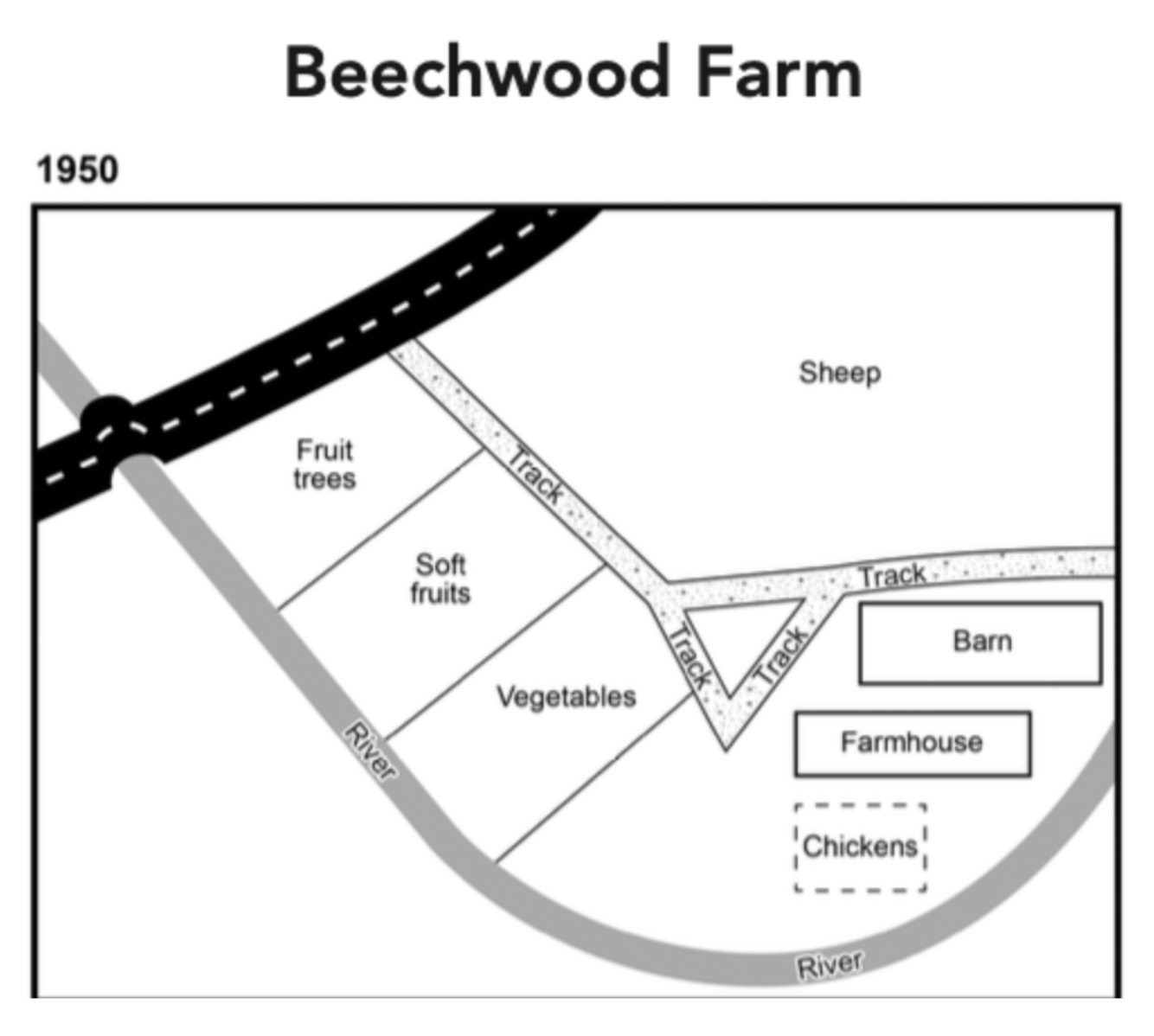
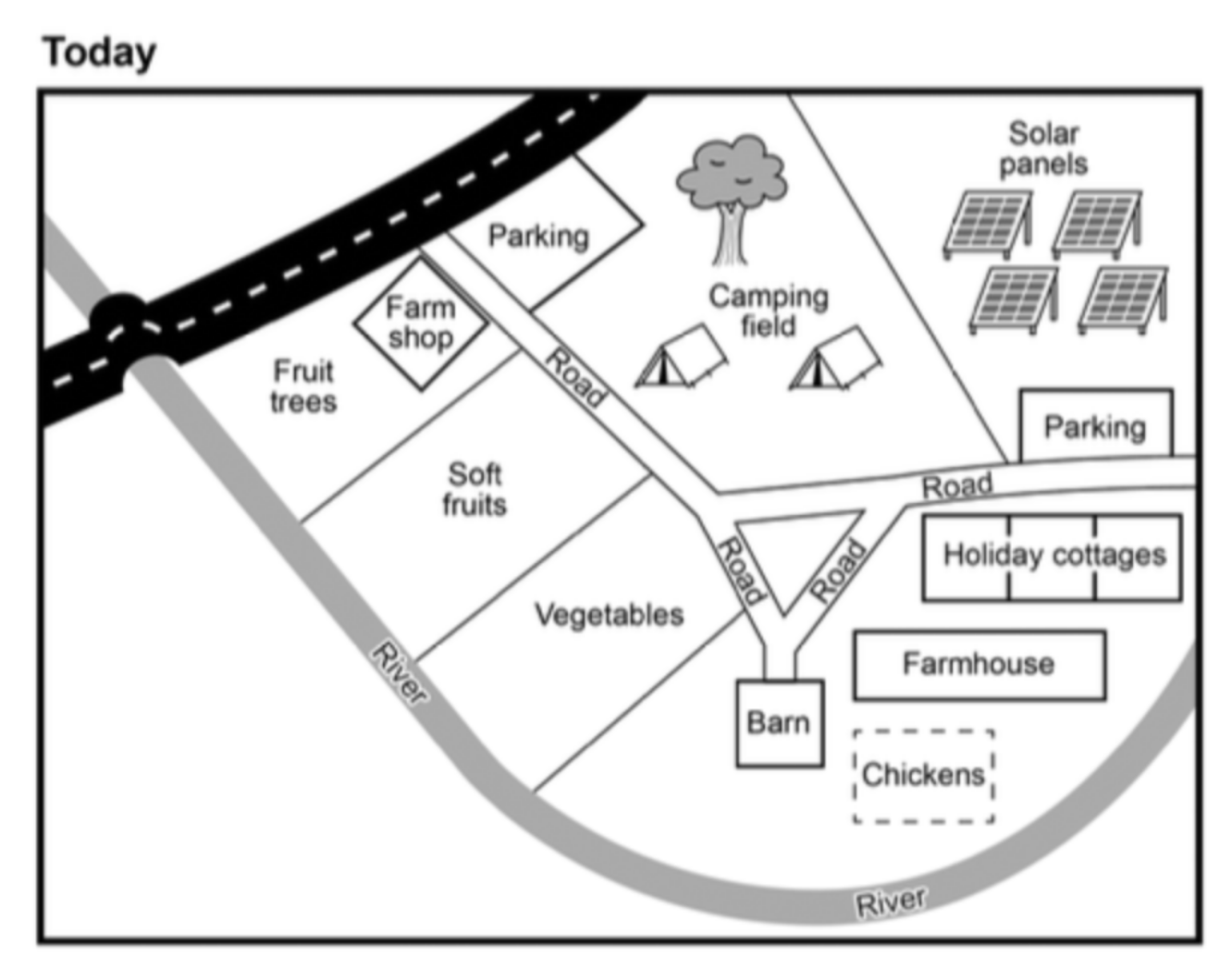
The plans below show the site of a farm in 1950 and the same site today.
Summarise the information by selecting and reporting the main features, and make comparisons where relevant.
Student answer (Band 5.5)
The map illustrate information about the Beechwood farm from in 1950 to present time.
Overall, Beechwood farm change considerably, it has some new places such a solar panels, holiday cottages, caming field and so on.
In 1950 Beechwood farm had large area of Sheep,it had three locations of fruits and vegitables.The main road was not active , at the end of the soth part had chikens farm. The river is the same first and current map.
Today the farm have parking space which is the new one. The Sheep place changed and more extra place take place Solar panels. Have some picnic area, camping field, which is near to parking place. The main road is active now . Holiday cottages is new buildings, which is close to the road. The farm shop is new where guesters can buy easily gifts, vegetables and fruits. To some up, the Beechwood transformed more relaxing and friendly farm, where people can enjoy camping or even spend holiday in cottages.
AI examiner evaluation
| Criterion | Band |
|---|---|
| Task Achievement / Task Response | 6.0 |
| Coherence and Cohesion | 6.0 |
| Lexical Resource | 5.0 |
| Grammatical Range and Accuracy | 5.0 |
| Overall | 5.5 |
Task Achievement / Task Response: Band 6.0
You identify the broad change from a working farm to a site with visitor facilities, mentioning the solar panels, camping field, holiday cottages and farm shop. You also note that the river remains unchanged and refer to the original sheep area and crop plots. These are relevant features and provide an overall comparison. However, several details are unclear or inaccurate: the main road was present in 1950, rather than becoming active today, and the map does not show a picnic area. The description also gives little account of what happened to the barn, farmhouse and chickens, which remain on the site, or how the crop areas are arranged. A more precise overview and fuller comparison of retained and added features would strengthen the response.
Coherence and Cohesion: Band 6.0
The response has a recognisable structure: an introduction, an overview, a paragraph about 1950 and one about today. This gives the reader a basic chronological route through the maps, and phrases such as “Overall” and “Today” help signal the sections. However, progression within the paragraphs is sometimes difficult to follow because several features are listed without clear spatial relationships. For example, the sentence about the sheep, fruit and vegetable areas combines separate details, while the present-day paragraph moves from parking to camping, the road, cottages and the shop without a consistent route around the site. Some linking is also mechanical, particularly “To some up.” Grouping features by location and using clearer references to north, south and adjoining areas would make the comparison easier to follow.
Lexical Resource: Band 5.0
You use some relevant map vocabulary, including “river,” “solar panels,” “holiday cottages,” “camping field” and “farm shop,” so the reader can identify many of the main features. However, the range is limited and several word choices or spellings reduce precision: “caming,” “vegitables,” “chikens” and “guesters” are inaccurate, while “picnic area” is not an appropriate label for the camping field. Phrases such as “more extra place take place” and “the new one” are vague or unnatural, and “active” does not clearly describe the road’s presence. Aim for accurate, map-specific terms and natural collocations, such as “was converted into” or “was added.” This would make the description more precise and fluent.
Grammatical Range and Accuracy: Band 5.0
You attempt both simple statements and longer sentences, including a relative clause in “Holiday cottages is new buildings, which is close to the road.” However, errors in verb forms, agreement, articles and sentence construction are frequent enough to make some relationships unclear. For example, “The map illustrate” needs subject–verb agreement, “the farm have” should agree with the singular subject, and “Beechwood farm change considerably” needs an appropriate past or present-perfect form. The opening overview also joins two independent ideas with a comma: “Beechwood farm change considerably, it has some new places.” Practise forming accurate past-versus-present comparisons and checking each sentence for a clear subject and verb. More controlled complex sentences would improve clarity.
See this exact question answered at other band scores. The same prompt compared across bands.
Browse more IELTS Writing model answers or get your own writing scored by the same AI examiner.