Band 5.5 IELTS Writing Task 1 Model Answer
Overall Band Score: 5.5 · Cambridge IELTS 20 · 2026-11-13
IELTS Writing Task 1 question
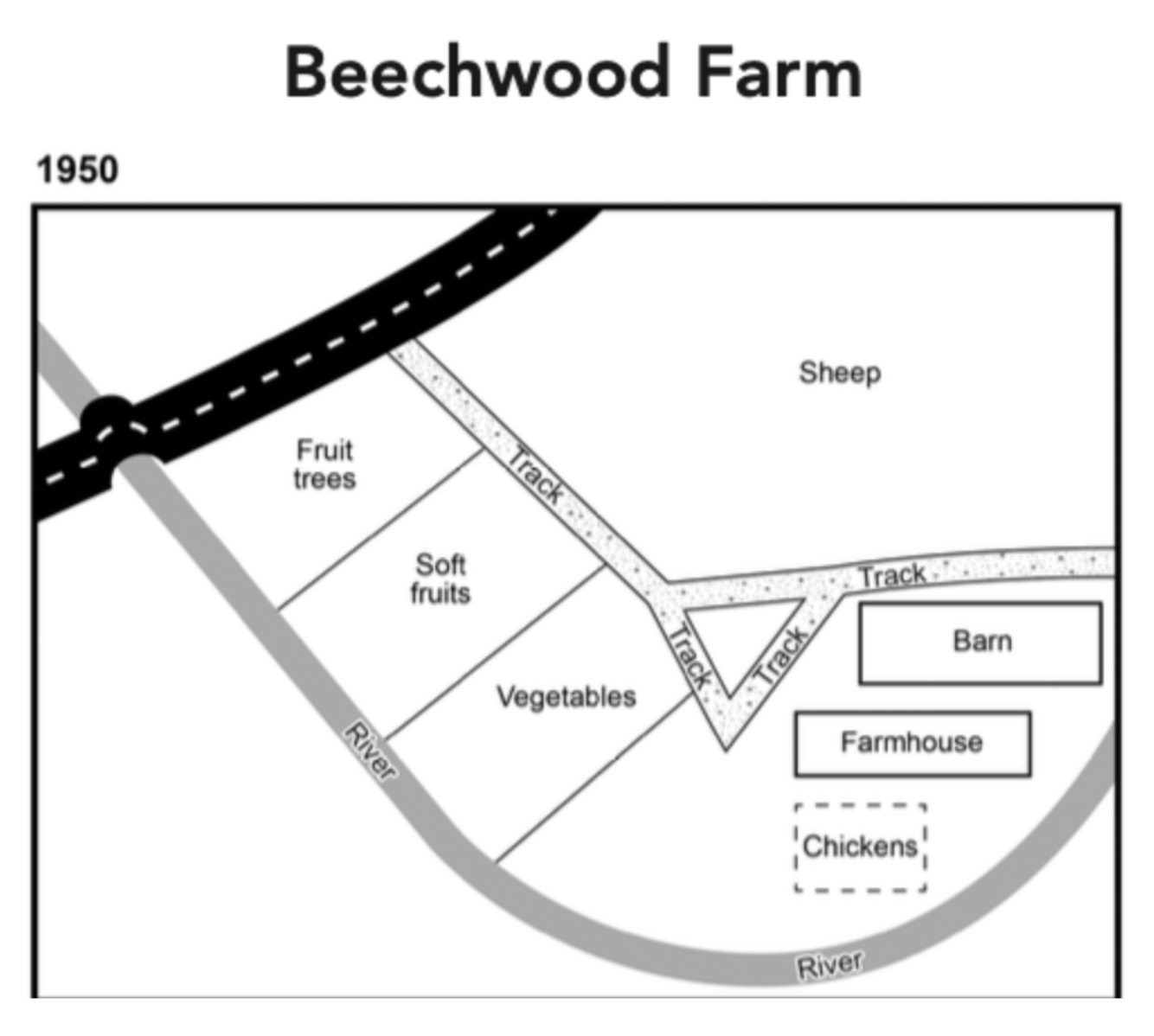
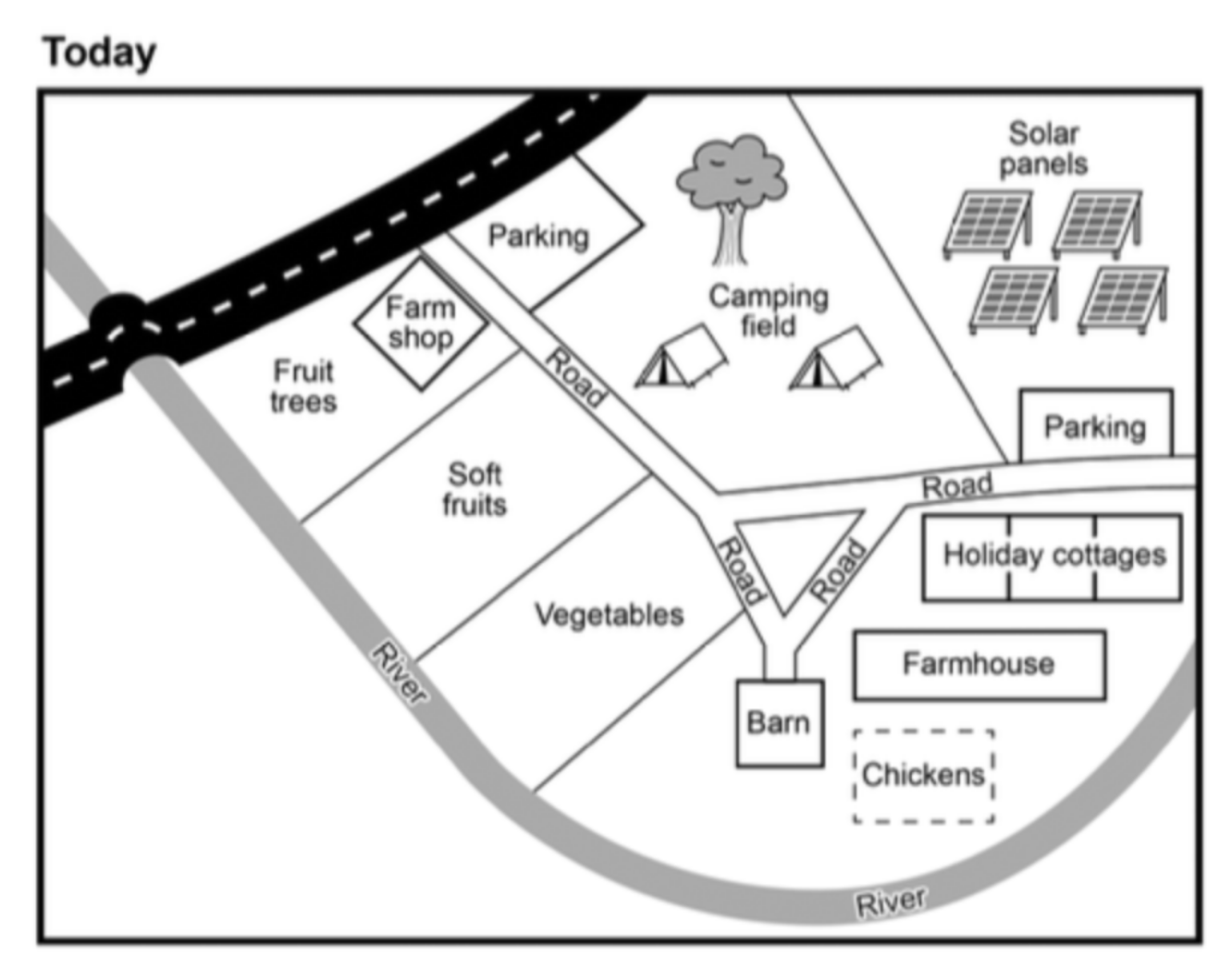
The plans below show the site of a farm in 1950 and the same site today.
Summarise the information by selecting and reporting the main features, and make comparisons where relevant.
Student answer (Band 5.5)
The given chart shows information about the changes in a site of a Beechwood farm in 1950 and after redevelopment at the present day.
In general, it can be clearly seen that there are several changes in a farm. Sheep area has been replaced by parking, camping field and solar panels. Barn has been replaced by holiday cottages.
Looking at the chart in more detail, druit trees, soft fruits, and vegetables have been on the same place and farm shop has been added in the area of fruit trees. Sheep area has been vanished by solar palels which has been added in the northren side and camping field. Two car parks have been added. Barn has been replaced by holiday cottages and the barn was placed where the dual roads met.
What is more, chickens and farmhouse have been on the same place. The Beechwood farm was srounded by a river and a main road.
AI examiner evaluation
| Criterion | Band |
|---|---|
| Task Achievement / Task Response | 5.5 |
| Coherence and Cohesion | 6.0 |
| Lexical Resource | 5.5 |
| Grammatical Range and Accuracy | 5.5 |
| Overall | 5.5 |
Task Achievement / Task Response: Band 5.5
You identify several important changes, including the addition of parking, a camping field, solar panels and a farm shop, and you note that the farmhouse and chicken area remain. However, the overview is incomplete and includes a key inaccuracy: the barn has not been replaced by cottages; it remains, while the cottages are added near the eastern road. The detail that the barn is “where the dual roads met” is also unclear and does not accurately describe its position. Your claim that the fruit trees, soft fruits and vegetables are “on the same place” is too broad: their general areas remain, but the farm shop is added and the fields’ arrangement is not fully explained. A clearer overview of what stayed and what changed, followed by precise location comparisons, would make the response more complete.
Coherence and Cohesion: Band 6.0
The response has a recognisable structure: an introduction, a general overview, and two paragraphs of details. This gives the reader a basic route through the comparison, and phrases such as “Looking at the chart in more detail” and “What is more” signal progression. However, the overview and detail paragraphs repeat some points, especially the replacement of the sheep area and the cottages, while the final sentence about the river and main road feels detached from the main comparison. Some references are also unclear, such as “the area of fruit trees” and “where the dual roads met.” Grouping retained features together and then describing new developments by location would create a more logical progression and make the links between ideas clearer.
Lexical Resource: Band 5.5
You use relevant map vocabulary, including “replaced,” “added,” “northren side,” and “surrounded by a river,” so the reader can understand the general subject and several changes. However, the range is limited and some word choices or spelling errors reduce precision: “chart” is not the best term for a pair of plans, “druit” and “palels” are misspellings, and “car parks” is less precise than “parking areas” here. “Barn has been replaced by holiday cottages” also uses a strong verb inaccurately, rather than describing the cottages as a new addition. Aim for accurate location language such as “to the north-east of” and “alongside,” and check spelling and collocations before finishing.
Grammatical Range and Accuracy: Band 5.5
You use a mix of simple statements and some longer structures, including “Looking at the chart in more detail” and the compound sentence beginning “Sheep area has been vanished.” The main message is usually understandable, but some grammatical errors affect clarity. For example, “Sheep area has been replaced” needs an article (“The sheep area”), while “has been vanished” uses an incorrect passive form; write “has disappeared” or “has been replaced.” In “druit trees, soft fruits, and vegetables have been on the same place,” the preposition should be “in,” and the tense is awkward for describing unchanged map features. “The Beechwood farm was srounded” also shifts to past tense without a clear reason. Practise accurate passive forms and consistent present-tense descriptions of the current plan.
See this exact question answered at other band scores. The same prompt compared across bands.
Browse more IELTS Writing model answers or get your own writing scored by the same AI examiner.