Band 6.0 IELTS Writing Task 1 Model Answer
Overall Band Score: 6.0 · Cambridge IELTS 20 · 2026-11-14
IELTS Writing Task 1 question
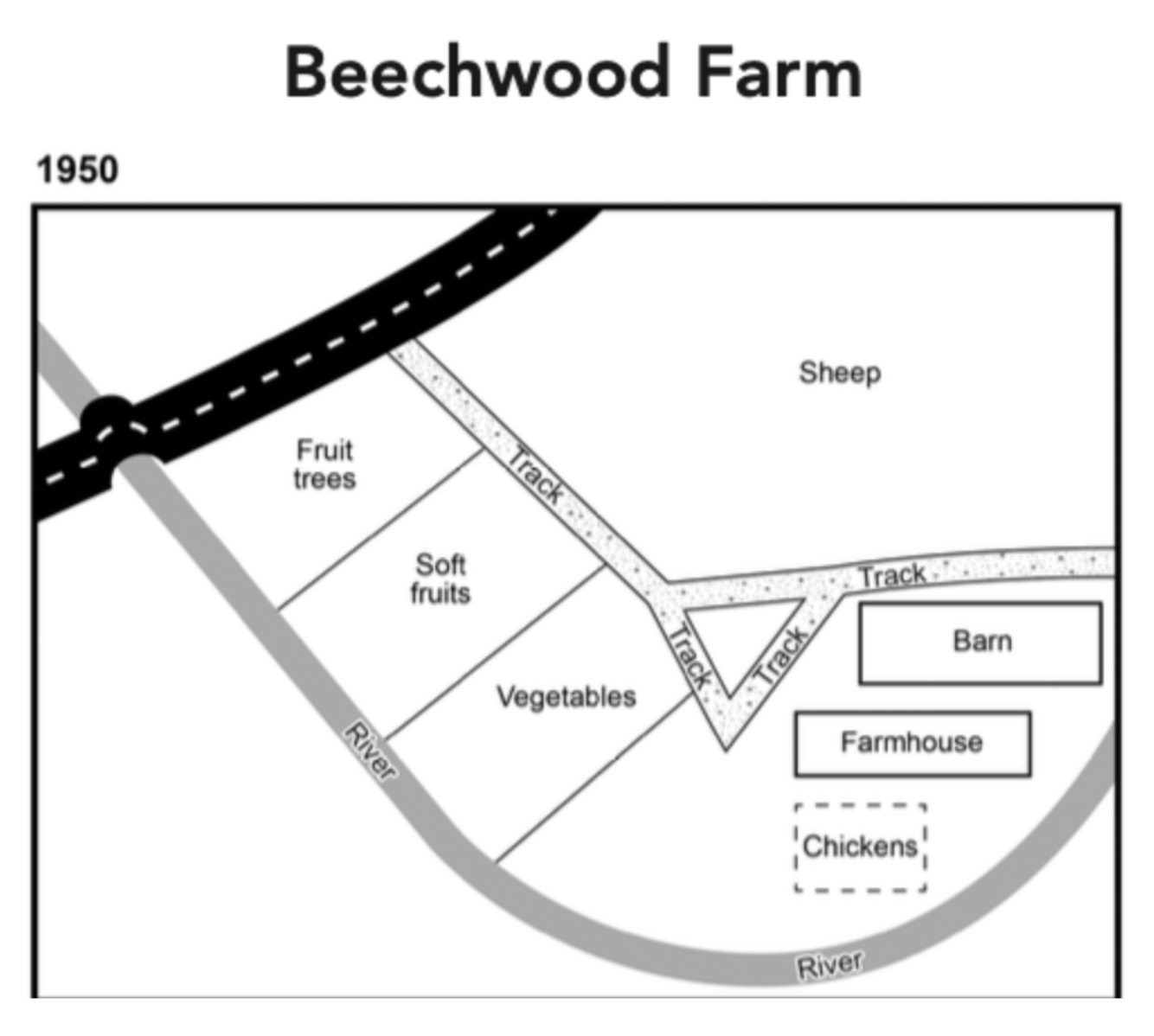
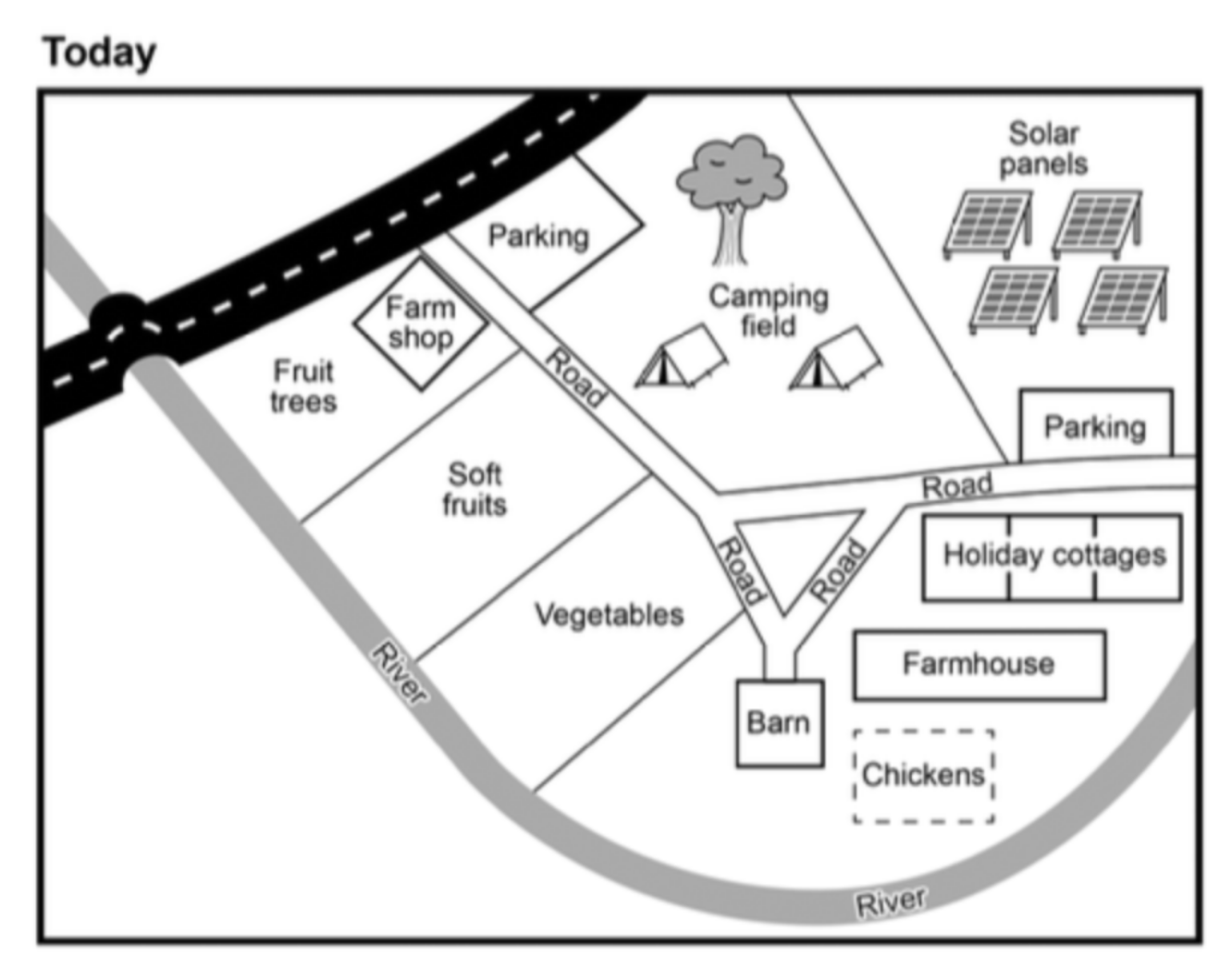
The plans below show the site of a farm in 1950 and the same site today.
Summarise the information by selecting and reporting the main features, and make comparisons where relevant.
Student answer (Band 6.0)
The figure illustrates the design of Beechwood farm in 1950 and at present.
Overall, the areas beside the river, almost remain the same. But, the place on the right side of the track which is now known as road, changed a lot from previous.
In 1950s, there were places for fruit trees, soft fruits, and vegetables and they remained same till now. But there is a small addition of a farm shop in the fruit trees field. Moreover, the farmhouse and chickens stay in the same position but the barn was shifted from its place and build at the end of a trianlge section. The place which was used for barn previously is now used for holiday cottages.
There was a track at the middle of the map, which is now converted into a road. The right side of the road was used for sheeps only but now this place is used for various things. At the end of the two side of the road, there are two parking areas. Moreover, a camping field is introduced in there and also there is a place now dedicated for electricity generation by using solar panels.
AI examiner evaluation
| Criterion | Band |
|---|---|
| Task Achievement / Task Response | 7.0 |
| Coherence and Cohesion | 6.5 |
| Lexical Resource | 5.5 |
| Grammatical Range and Accuracy | 5.5 |
| Overall | 6.0 |
Task Achievement / Task Response: Band 7.0
The response gives a clear overview of the main transformation, contrasting the largely retained river-side fields with substantial changes to the eastern part of the farm. It also identifies several accurate details: the fruit, soft-fruit and vegetable areas remain, a farm shop is added, the track becomes a road, and the former sheep area gains new uses. The comparison of the barn and holiday cottages is also relevant. To make the account more fully developed, describe the new features and their positions more precisely—for example, the camping field and solar panels are in the north-east, while the cottages are south of the eastbound road. The claim that the barn was “shifted” is understandable, but explaining its new position more clearly would strengthen the comparison.
Coherence and Cohesion: Band 6.5
The response has a clear overall structure: an introduction, an overview, and two paragraphs comparing the fields and the eastern area. Ideas generally progress from what stayed the same to what changed, and linking expressions such as “Moreover” and “But” help signal relationships. This provides a coherent account, while the overview gives the reader a useful map of the main changes. However, some links are mechanical or imprecise, and references such as “there” and “the place on the right side” make locations less clear. The final paragraph also groups several new features together without a clear spatial sequence. Organise details by location and use more precise references, such as “north-east of the road” or “south of the cottages,” to improve cohesion and progression.
Lexical Resource: Band 5.5
The vocabulary is sufficient to communicate the main comparisons, with relevant terms such as “farmhouse,” “fruit trees,” “parking areas,” and “solar panels.” The writer also attempts to describe change using phrases such as “converted into a road” and “dedicated for electricity generation.” However, several choices are imprecise or unnatural, including “the design,” “the place on the right side,” and “used for sheeps only.” There are also spelling and word-form errors, notably “trianlge” and “sheeps,” which reduce accuracy. Aim for more precise map vocabulary and natural collocations, such as “layout,” “the eastern section,” and “reserved for sheep.” This would make the description clearer and more appropriately formal.
Grammatical Range and Accuracy: Band 5.5
The response uses both simple statements and some more complex structures, including “which is now converted into a road” and “The place which was used for barn previously is now used for holiday cottages.” The main meaning is usually clear, but errors in tense, agreement, articles and sentence construction are noticeable. For example, “the areas beside the river, almost remain the same” has an unnecessary comma and an awkward verb form; “the farmhouse and chickens stay” does not maintain the past-to-present comparison consistently; and “the barn was shifted from its place and build” has an incorrect verb form. There are also missing articles in phrases such as “for barn.” Review past and present forms when comparing maps, and check articles and agreement in each sentence.
See this exact question answered at other band scores. The same prompt compared across bands.
Browse more IELTS Writing model answers or get your own writing scored by the same AI examiner.