Band 5.5 IELTS Writing Task 1 Model Answer
Overall Band Score: 5.5 · Cambridge IELTS 20 · 2026-11-16
IELTS Writing Task 1 question
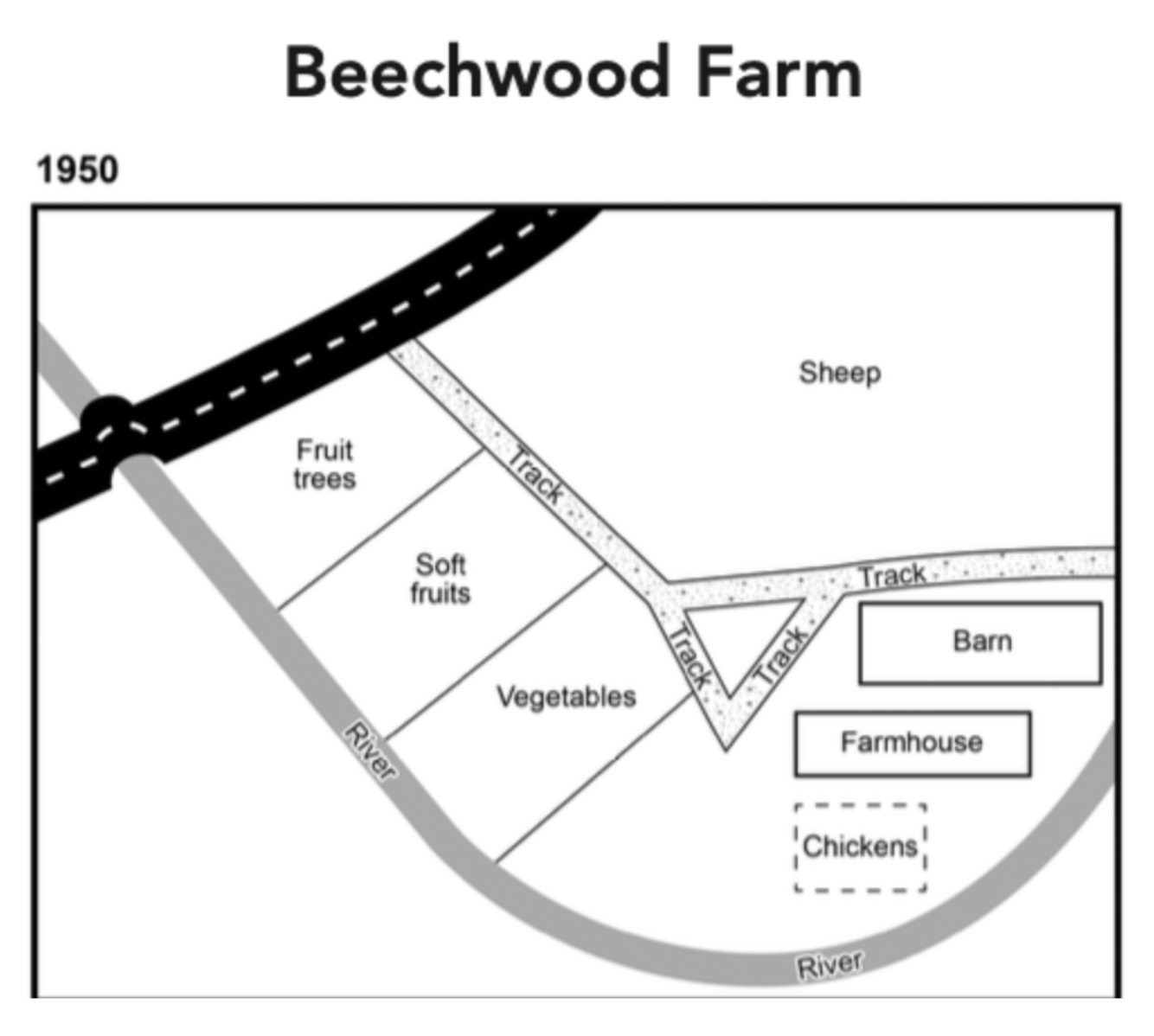
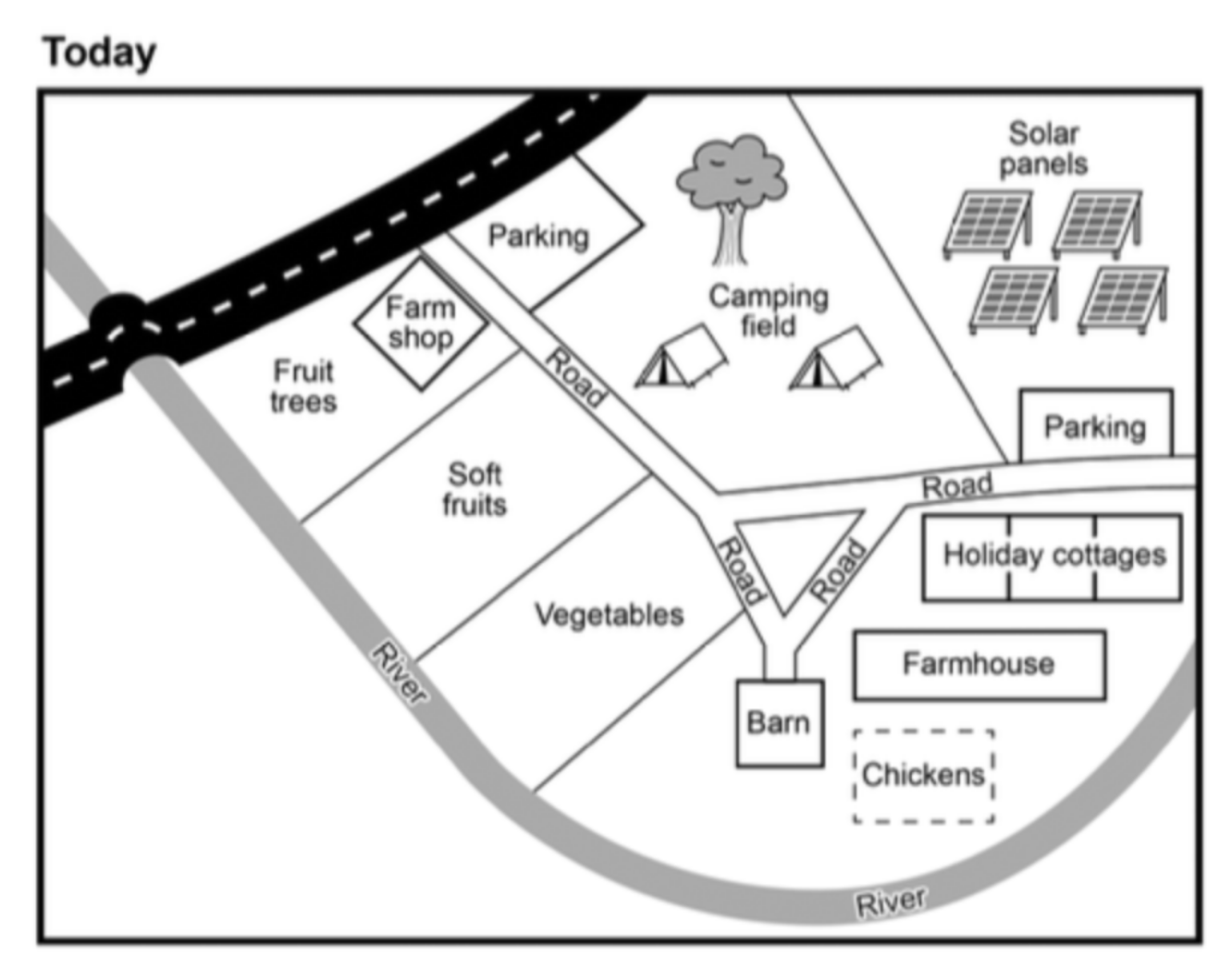
The plans below show the site of a farm in 1950 and the same site today.
Summarise the information by selecting and reporting the main features, and make comparisons where relevant.
Student answer (Band 5.5)
The diagram shows the beechwood farm in 1950 and the same site today. We have to make comparisn between them.
Overall, In the first diagram shows track, river, farmhouse, barn, chickens fruit trees vegetables, and sheep while, the second diagram shows some changings like parking, holiday cottages, camping field and solar panels are added.
The first diagram shows few things in beechwood farm. The river was flowing on the side of farm whereas, the fruit trees, soft fruit and vegetable farm was along the river. While in farmhouse chickens and barn was exist. There is a track also along the farmhouse and fruits and vegetable farm. The one last thing was sheep along the track.
On the other hand, The second diagram shows some changes and added new things now. The track is converted into road while in the place of sheep added new things like camping field, some parkings and solar panel. Some changes are also in farmhouse holiday cottages is added in the place of barn and barn is shift at the end of road. Farm shop is added near the fruit trees while, the river is on the same place.
AI examiner evaluation
| Criterion | Band |
|---|---|
| Task Achievement / Task Response | 6.0 |
| Coherence and Cohesion | 5.5 |
| Lexical Resource | 5.5 |
| Grammatical Range and Accuracy | 5.0 |
| Overall | 5.5 |
Task Achievement / Task Response: Band 6.0
You identify the two time periods and give a general overview of the main change: the farm has gained facilities such as parking, cottages, a camping field and solar panels. You also correctly note that the river remains in the same place and that the track has become a road. However, some comparisons are inaccurate or unclear. In 1950, the barn was north of the farmhouse; today it is to the south-west, while the holiday cottages are directly south of the eastbound road and north of the farmhouse—not in place of the barn. The claim that new facilities were added where the sheep were is also too broad: the camping field and solar panels occupy the north-eastern area, but parking is elsewhere. Describe these locations more precisely and include the retained fruit, soft-fruit and vegetable plots.
Coherence and Cohesion: Band 5.5
The response has a recognisable structure: an introduction, an overview, and separate paragraphs for the earlier and current plans. This helps the reader follow the basic comparison. However, progression within paragraphs is sometimes difficult to track because several features are listed without a clear spatial order. For example, the sentence beginning “Some changes are also in farmhouse” combines the cottages, farmhouse and relocated barn without explaining their positions. Linking words such as “while” and “on the other hand” are used, but sometimes awkwardly or repetitively, and “The first diagram” is repeated. Organise each map from one area to another, and use clear references such as “to the north-east” or “south of the farmhouse” to connect details.
Lexical Resource: Band 5.5
You use relevant vocabulary for describing maps, including “river,” “track,” “farmhouse,” “holiday cottages” and “solar panels,” so the main subject is generally clear. The range is nevertheless limited, and several word choices or forms are inaccurate: “comparisn,” “changings,” “parkings,” and “barn is shift” do not express the intended meaning naturally. “Along the river” is also imprecise for plots that border it, while “some new things” is too vague for an academic summary. Use a wider set of precise location and change terms, such as “bordering,” “replaced by,” “relocated,” and “converted into.” Check spelling and use standard forms such as “changes” and “parking” to make the description more fluent and exact.
Grammatical Range and Accuracy: Band 5.0
You attempt both simple and more complex sentences, and the reader can usually understand the broad comparison. However, errors in sentence construction, tense and agreement are evident in examples such as “In the first diagram shows,” “chickens and barn was exist,” and “barn is shift at the end of road.” These need structures such as “The first diagram shows,” “the barn and chicken enclosure existed,” and “the barn has been moved to the end of the road.” Some sentences also join ideas without a complete grammatical link, as in “Some changes are also in farmhouse holiday cottages is added.” Practise accurate past-tense descriptions for 1950 and present or present-perfect forms for current changes, while varying sentence patterns and checking articles and subject–verb agreement.
See this exact question answered at other band scores. The same prompt compared across bands.
Browse more IELTS Writing model answers or get your own writing scored by the same AI examiner.