Band 5.5 IELTS Writing Task 1 Model Answer
Overall Band Score: 5.5 · Cambridge IELTS 20 · 2026-11-17
IELTS Writing Task 1 question
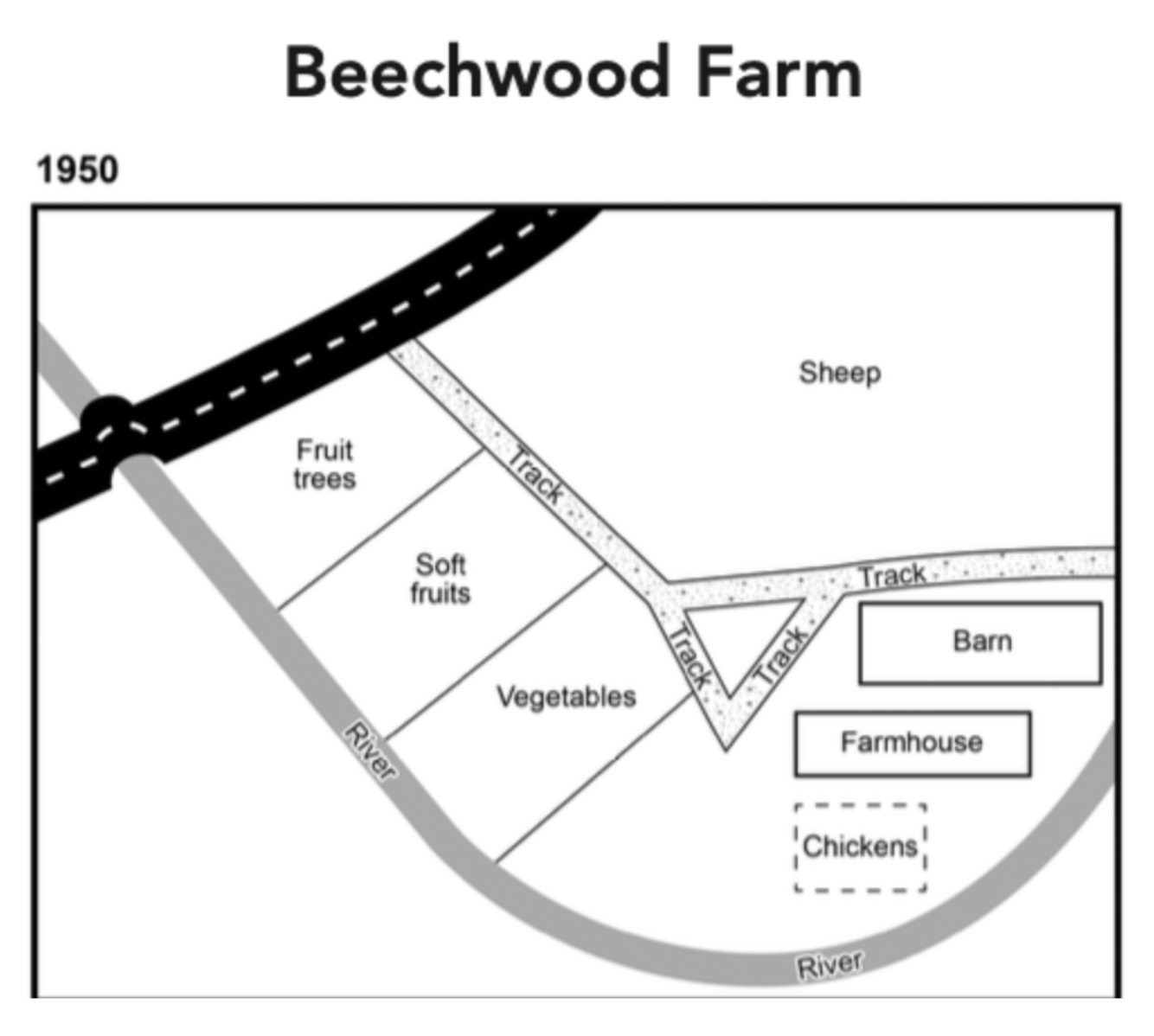
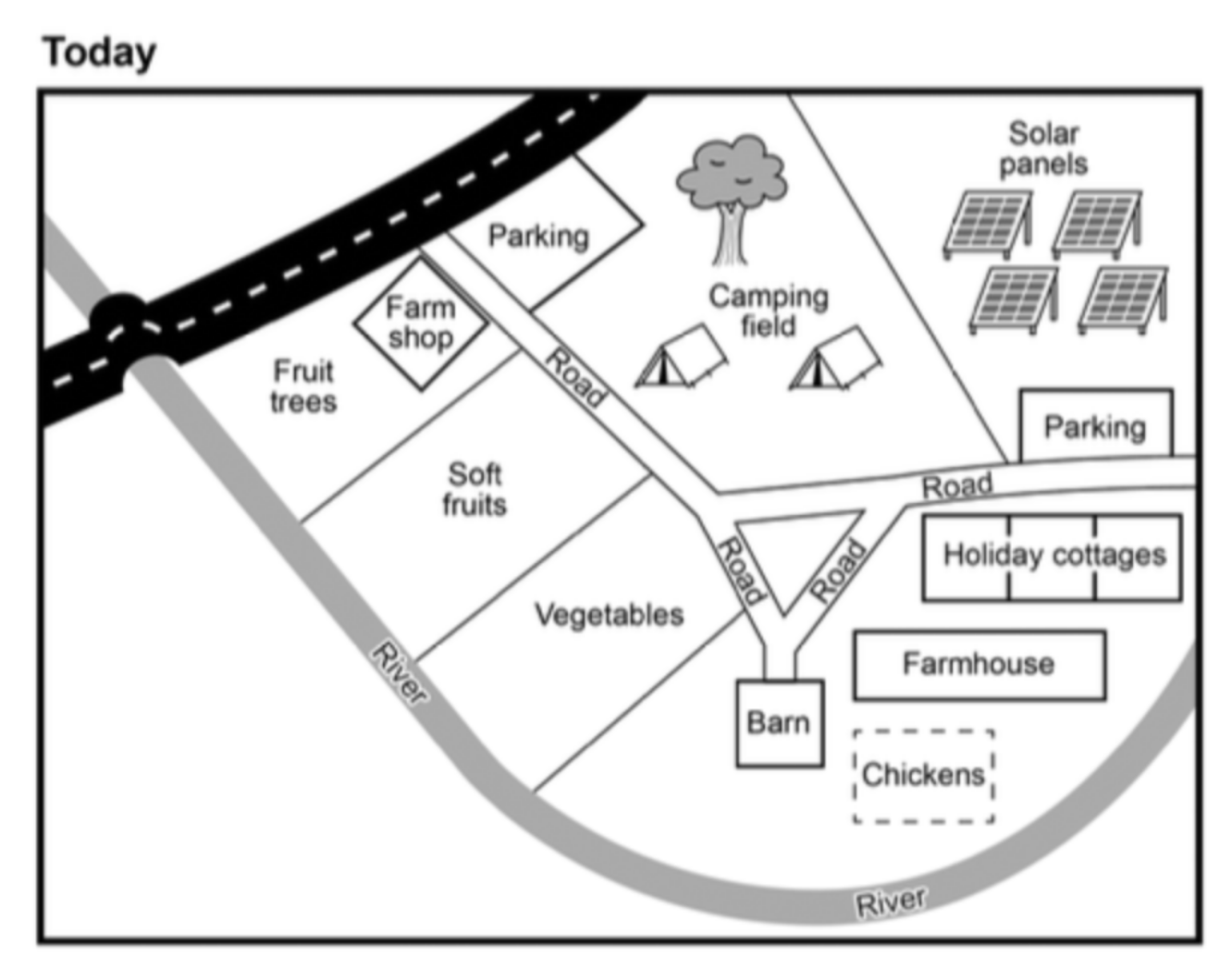
The plans below show the site of a farm in 1950 and the same site today.
Summarise the information by selecting and reporting the main features, and make comparisons where relevant.
Student answer (Band 5.5)
The map illustrates the differences between a site of a farm in 1950 and the same site today.
Overall, the main area remains the same along with the road and river stayed as it was before. The main features changes inside the area where sheep wards turns into different section like solar panels,camping field and two parkings. However, road tract remains as it is where the barn area newly developed in the down side of the corner in triangle road.
In 1950, the river and small track connected with the road which is unchanged in today. There was a big sheep area along with the track and the river is connected with every sections in the farm. Where 3 section called fruit trees, soft fruits, vegetables both are attached with the river and track. The track had triangle shaped in the middle and barn, framhouse and chicken stayed one after another.
In today, parking is situated in the corner where main road and track connected, followed by the camping field and solar panel and extra more parkings. The track turns into and slim road. There is new fram shop in the corner of the fruit trees.However, chickens and framhouse stayed the same conditions only barn replached into holiday cottages.
AI examiner evaluation
| Criterion | Band |
|---|---|
| Task Achievement / Task Response | 6.0 |
| Coherence and Cohesion | 5.5 |
| Lexical Resource | 5.0 |
| Grammatical Range and Accuracy | 5.0 |
| Overall | 5.5 |
Task Achievement / Task Response: Band 6.0
You identify the key change from a sheep area to new uses, and mention several relevant features, including the parking, camping field, solar panels and farm shop. The comparison also notes that the farmhouse and chicken area remain. However, some details are inaccurate or unclear: the barn was not replaced by holiday cottages; the cottages are south of the eastbound road, while the barn remains in a different position. The claim that the river is connected with every section is also not supported by the plan. Your overview recognises substantial development, but saying the road and river stayed unchanged overlooks the internal road’s conversion from a track and the new road layout. Select the main changes more precisely and describe their locations clearly.
Coherence and Cohesion: Band 5.5
The response has a recognisable structure: an introduction, an overview, and separate paragraphs for 1950 and today. This gives the reader a basic chronological route through the maps. However, progression within paragraphs is sometimes difficult to follow, particularly in the overview, where the sheep area, new facilities, road and barn are combined in one sentence. Linking phrases such as “However” are used where the relationship between ideas is not clear, and “Where 3 section…” creates a fragment rather than a connected comparison. Group related changes together—for example, land use, access and buildings—and use clear location references to guide the reader. This would make the organisation more coherent and reduce the need to infer connections.
Lexical Resource: Band 5.0
You use some relevant map vocabulary, including “river,” “track,” “camping field,” “solar panel” and “fruit trees,” so the topic is generally understandable. However, the range is limited and several word choices or forms make descriptions imprecise: “sheep wards” is unclear, “extra more parkings” is unnatural, and “stayed in the same conditions” does not accurately express that features remained in place. There are also spelling errors in “framhouse,” “replached” and “tract,” which reduce clarity. Aim for precise terms for land use and change, and check spelling and collocations. For example, describe facilities as being “added” or “introduced,” and say that a feature “remained unchanged” when appropriate.
Grammatical Range and Accuracy: Band 5.0
You attempt both simple and more complex sentences, including comparisons and clauses introduced by “where” and “however.” Some basic meaning is conveyed, but sentence construction is often faulty, and these errors can make relationships between features difficult to understand. For example, “the main area remains the same along with the road and river stayed as it was before” combines incompatible verb structures; “The main features changes” has a subject–verb agreement error; and “In today” is not a correct time expression. The sentence beginning “Where 3 section…” is also incomplete. Practise forming complete sentences with a clear subject and verb, and use consistent past and present tenses when comparing the two maps.
See this exact question answered at other band scores. The same prompt compared across bands.
Browse more IELTS Writing model answers or get your own writing scored by the same AI examiner.