Band 6.0 IELTS Writing Task 1 Model Answer
Overall Band Score: 6.0 · Cambridge IELTS 20 · 2026-11-17
IELTS Writing Task 1 question
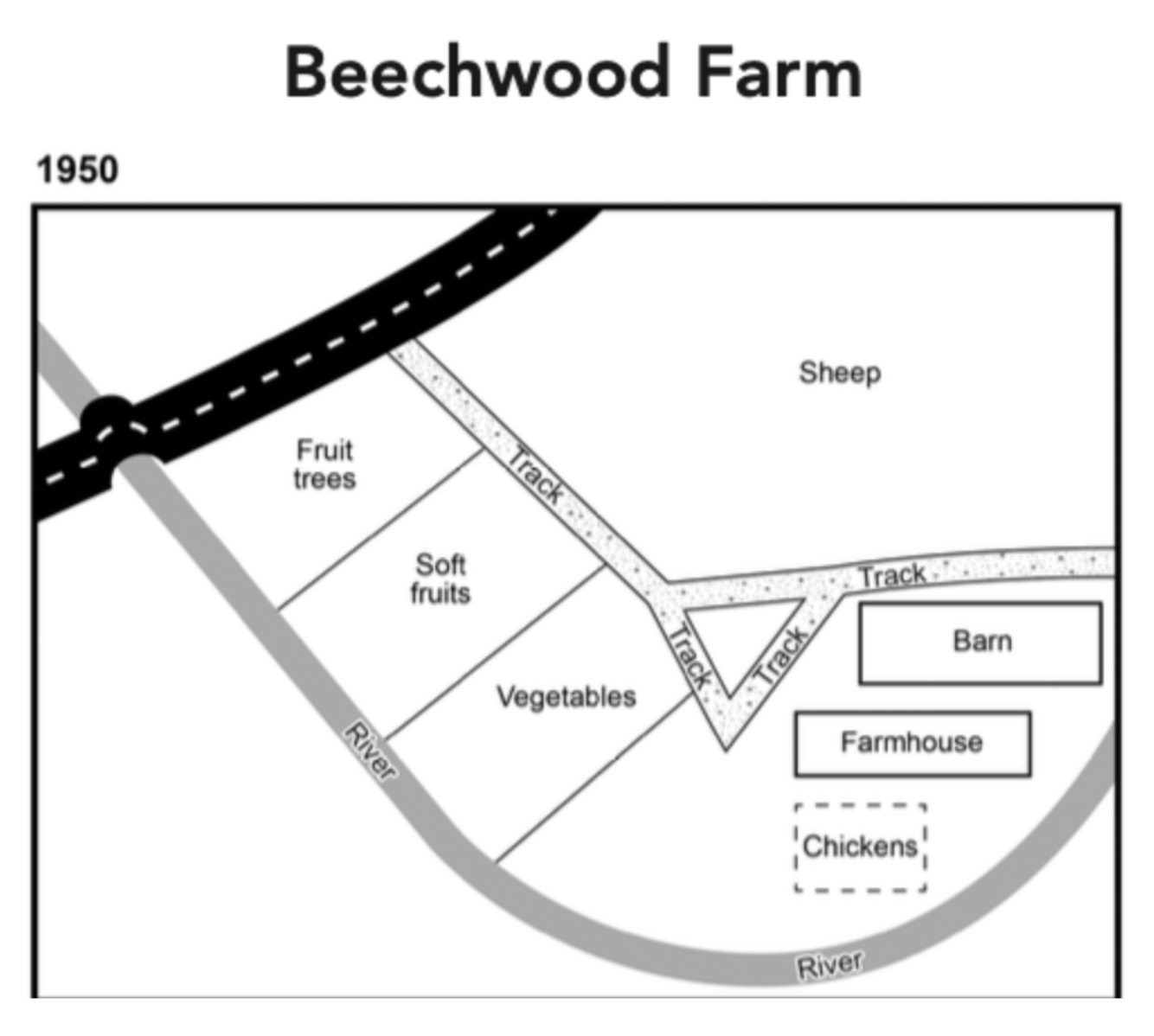
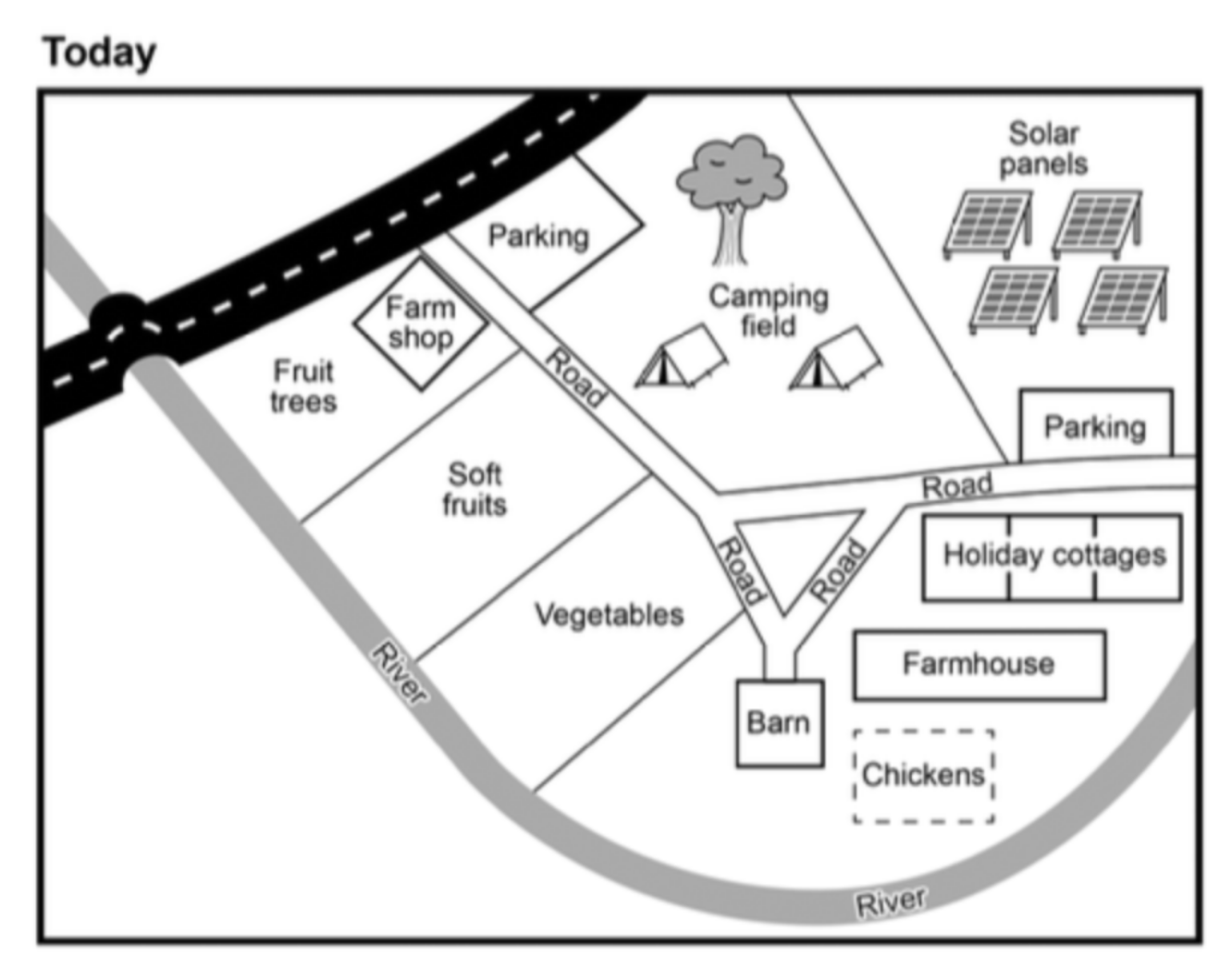
The plans below show the site of a farm in 1950 and the same site today.
Summarise the information by selecting and reporting the main features, and make comparisons where relevant.
Student answer (Band 6.0)
The maps compare the present structure of a farm with it's structure in 1950.
overall, the sturcture of the farm has significantly changed and the area become more developed than past. A lot of new sections have been added there now, such as solar panels, parking area, holiday cottages and camping fields etc.
In 1950, the field was simpler than now, in the north east corner of the field, a large area was for sheep and a track was throughout the field. On the left side of sheep area after the track there was a barn area, next to it there was a farmhouse. On the left side of farmhouse there was an area for chickens. Further, there was three areas in a queue, which contains vegetables, soft fruits and fruit trees.
In contrast, at present the field has developed a lot. In the south east corner the sheep area has convertedinto solar panel area. on the east of this there is parking area and track has changed into road. Next to the road on the left side there are three holiday cottages and the farmhouse and chickens are on same place, while the barn has placed next to the chicken area. Barn is conected with road through a junction. Next to the bran there are three areas at thesame place for vegetables, soft fruits and fruit trees.
AI examiner evaluation
| Criterion | Band |
|---|---|
| Task Achievement / Task Response | 5.5 |
| Coherence and Cohesion | 6.5 |
| Lexical Resource | 5.5 |
| Grammatical Range and Accuracy | 5.5 |
| Overall | 6.0 |
Task Achievement / Task Response: Band 5.5
You identify the broad change from a simpler farm to a more developed site and mention several new facilities, including parking, cottages, solar panels and camping. You also note that the farmhouse and chicken area remain in place. However, some key locations and changes are misreported: the sheep area was in the north of the 1950 plan, not the north-east, and it is replaced by a camping field, while the solar panels are in the north-east corner. The barn is not next to the chicken area in the present plan; it lies to the south-west of the farmhouse. The fruit trees, soft fruits and vegetables largely remain in their original areas, rather than being described as newly positioned. Give a clearer overview and compare the main features accurately to strengthen coverage of the task.
Coherence and Cohesion: Band 6.5
The response has a recognisable progression: an introduction and overview are followed by a description of 1950 and then a comparison with today. Time markers such as “In 1950” and “In contrast” help the reader follow the change, and the main information is grouped into paragraphs. This coherent arrangement is a strength. However, the descriptions rely heavily on repeated location phrases such as “on the left side” and “next to,” which can make spatial relationships difficult to track, especially when the map orientation is not stated. Some links are also awkward, as in “Further, there was three areas in a queue.” Use clearer directional references and organise each map description around consistent landmarks to make the progression more precise and less repetitive.
Lexical Resource: Band 5.5
You use relevant map vocabulary, including “track,” “junction,” “holiday cottages,” “solar panels” and “farmhouse,” and you attempt to describe change with phrases such as “has developed.” This gives you enough vocabulary to communicate the general topic. However, several choices are imprecise or unnatural: “structure of a farm,” “a track was throughout the field,” and “three areas in a queue” do not clearly describe the plan. There are also spelling errors, including “sturcture,” “conected” and “bran,” and “convertedinto” is incorrectly joined. Repeated use of “area” and “next to” limits precision. Build a wider set of accurate terms for map locations and changes, and check spelling and word forms carefully.
Grammatical Range and Accuracy: Band 5.5
You attempt both simple and longer sentences, and the response is generally understandable. However, control is uneven, particularly in longer descriptions. Examples include “the area become more developed than past,” “there was three areas,” and “the farmhouse and chickens are on same place,” which show problems with verb forms, agreement and articles. The opening also uses “it's” where the possessive “its” is needed. Sentence boundaries and capitalisation are inconsistent, for example the sentence beginning “on the east” after a full stop. These errors sometimes make relationships harder to understand, although the overall message remains recoverable. Practise accurate past and present forms, singular/plural agreement, and articles, then proofread each sentence for punctuation and capital letters.
See this exact question answered at other band scores. The same prompt compared across bands.
Browse more IELTS Writing model answers or get your own writing scored by the same AI examiner.