Band 5.0 IELTS Writing Task 1 Model Answer
Overall Band Score: 5.0 · Cambridge IELTS 20 · 2026-11-18
IELTS Writing Task 1 question
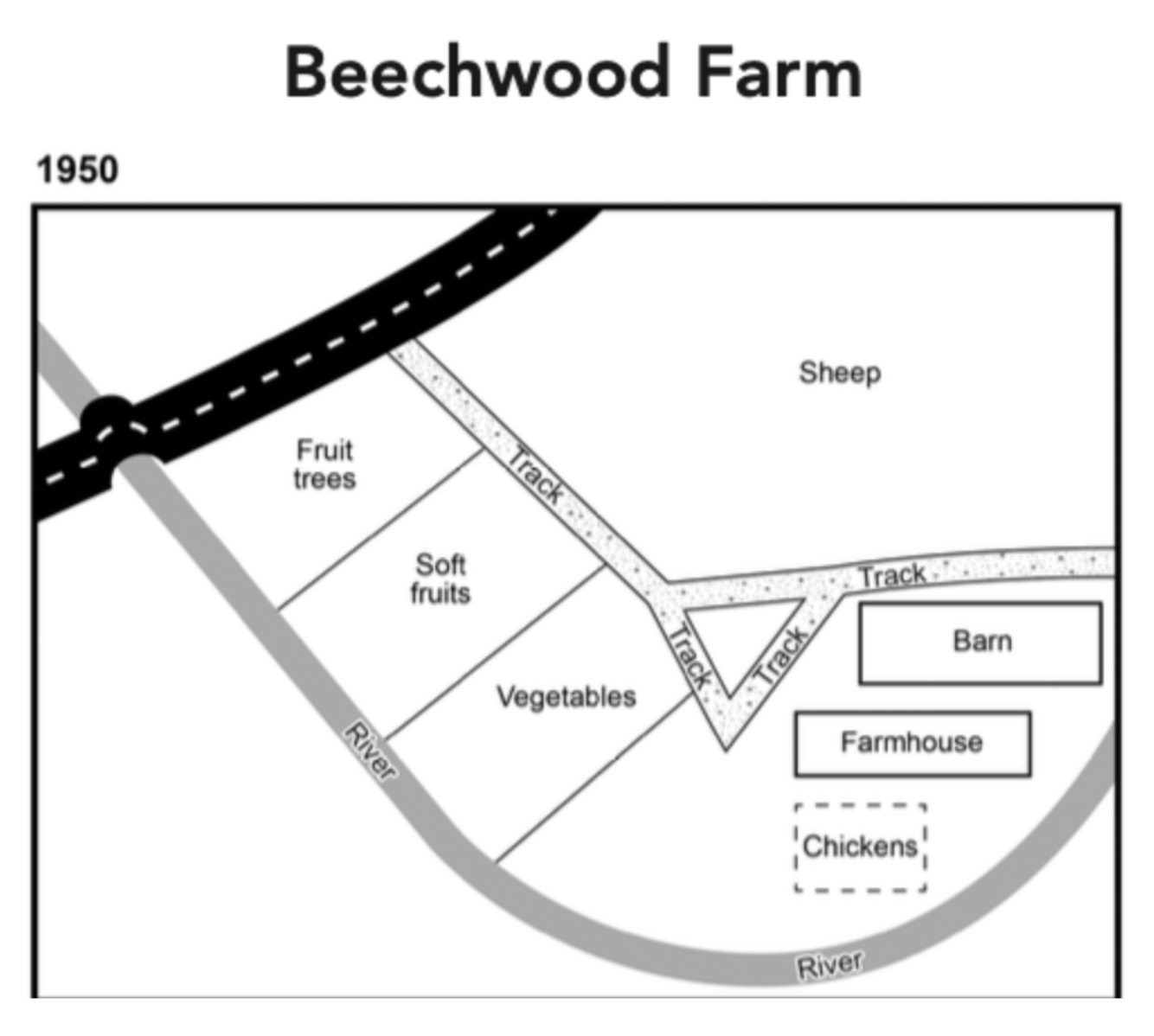
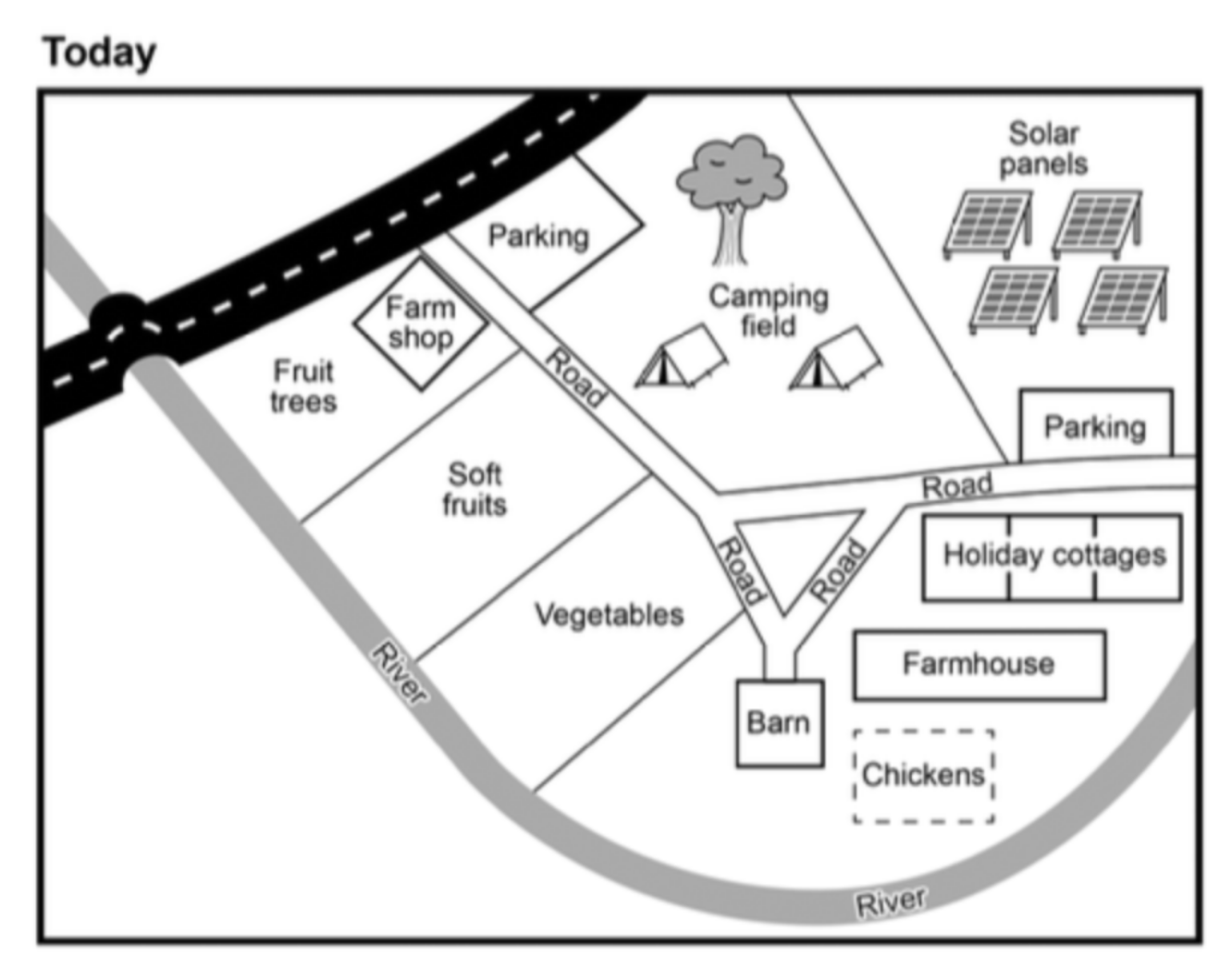
The plans below show the site of a farm in 1950 and the same site today.
Summarise the information by selecting and reporting the main features, and make comparisons where relevant.
Student answer (Band 5.0)
This is an image in which they shows us the the site of afram in 1950 and the same site today. They ask us to find the difference and ask about it and to explain it. In this pic they shows that the development on that site between 1950 to today i will explain it , I started with year 1950 it is the year in which no progress is made. I explin you the site its map is like that the river is in rounded on side of site and abridge also on it now in the center there is a fruit tree plot, by bside its a soft fruits plot, and then a vegetable plot, `then a plot inn which chickens, farm house and barn also in this plot and another side its a sheeps plot where the sheeps rest. between both sides there is a track.BUt the orignal development is made's today the river and bridge is at same position at the on side where a fruits trees in that plot there is a farm shop, soft fruits and vegetables plots are same in chickenes, barn, and framhouse plot a holiday cottages is builds. The track is also become road. On the other side ogf road the areas of sheeps are not there. There is parking by side of road and bridge , by side that there is a camping feild with 2 trees and by side there are solar pannels and aslo paking there.
AI examiner evaluation
| Criterion | Band |
|---|---|
| Task Achievement / Task Response | 5.5 |
| Coherence and Cohesion | 4.5 |
| Lexical Resource | 5.0 |
| Grammatical Range and Accuracy | 4.5 |
| Overall | 5.0 |
Task Achievement / Task Response: Band 5.5
You identify the two time periods and report several relevant changes, including the track becoming a road, the loss of the sheep area, and the addition of a farm shop, parking, camping, solar panels and holiday cottages. These details show a partial understanding of the plans. However, the response does not give a clear overview of the main transformation, and some locations or comparisons are unclear or inaccurate: for example, the river and bridge are mentioned, although the plans show a river but no bridge, and the new facilities are not located precisely. The claim that the fruit, soft-fruit and vegetable plots are in the same positions also needs clearer qualification. Organise the key changes into a concise overview and accurately compare the site’s agricultural and visitor-use areas.
Coherence and Cohesion: Band 4.5
There is a basic chronological order: you begin with 1950 and then move to the present, and you use a few linking expressions such as “then,” “between both sides,” and “on the other side.” This gives the reader some sense of comparison. However, the response is presented as one long paragraph, with several ideas joined into extended, difficult-to-follow sentences. The opening repeats the task rather than establishing a clear overview, and references such as “that plot,” “both sides,” and “by side that” do not always make the locations clear. Use separate paragraphs for the overview and the two maps, and group features by location or type of change. More precise linking and referencing would make the progression easier to follow.
Lexical Resource: Band 5.0
You use some relevant vocabulary for describing a site, including “river,” “track,” “fruit trees,” “vegetable plot,” “parking,” and “solar panels.” This gives you a basic range for reporting map features. However, vocabulary is often repetitive or imprecise, and several word choices make the description harder to understand, such as “no progress is made,” “the river is in rounded,” and “the original development is made’s today.” There are also frequent spelling errors, including “sheeps,” “framhouse,” “feild,” and “pannels.” Learn accurate map-description phrases such as “is located,” “was replaced by,” and “was converted into,” and check spelling carefully. This will help you express changes more precisely without relying on repeated “by side” constructions.
Grammatical Range and Accuracy: Band 4.5
You attempt to describe both maps and make comparisons, but sentence structures are mostly simple or joined with “and,” and attempts at longer sentences are often difficult to follow. For example, “This is an image in which they shows us” has subject–verb agreement problems, while “the track is also become road” uses an incorrect verb form and is missing an article. Tense control is also inconsistent when moving between 1950 and today, and sentence boundaries are unclear in places, particularly in the long final section. Use past tense for the 1950 plan and present tense for today, and practise clear comparative structures such as “The track has been converted into a road.” Shorter, accurately punctuated sentences would improve control.
See this exact question answered at other band scores. The same prompt compared across bands.
Browse more IELTS Writing model answers or get your own writing scored by the same AI examiner.