Band 5.5 IELTS Writing Task 1 Model Answer
Overall Band Score: 5.5 · Cambridge IELTS 20 · 2026-11-18
IELTS Writing Task 1 question
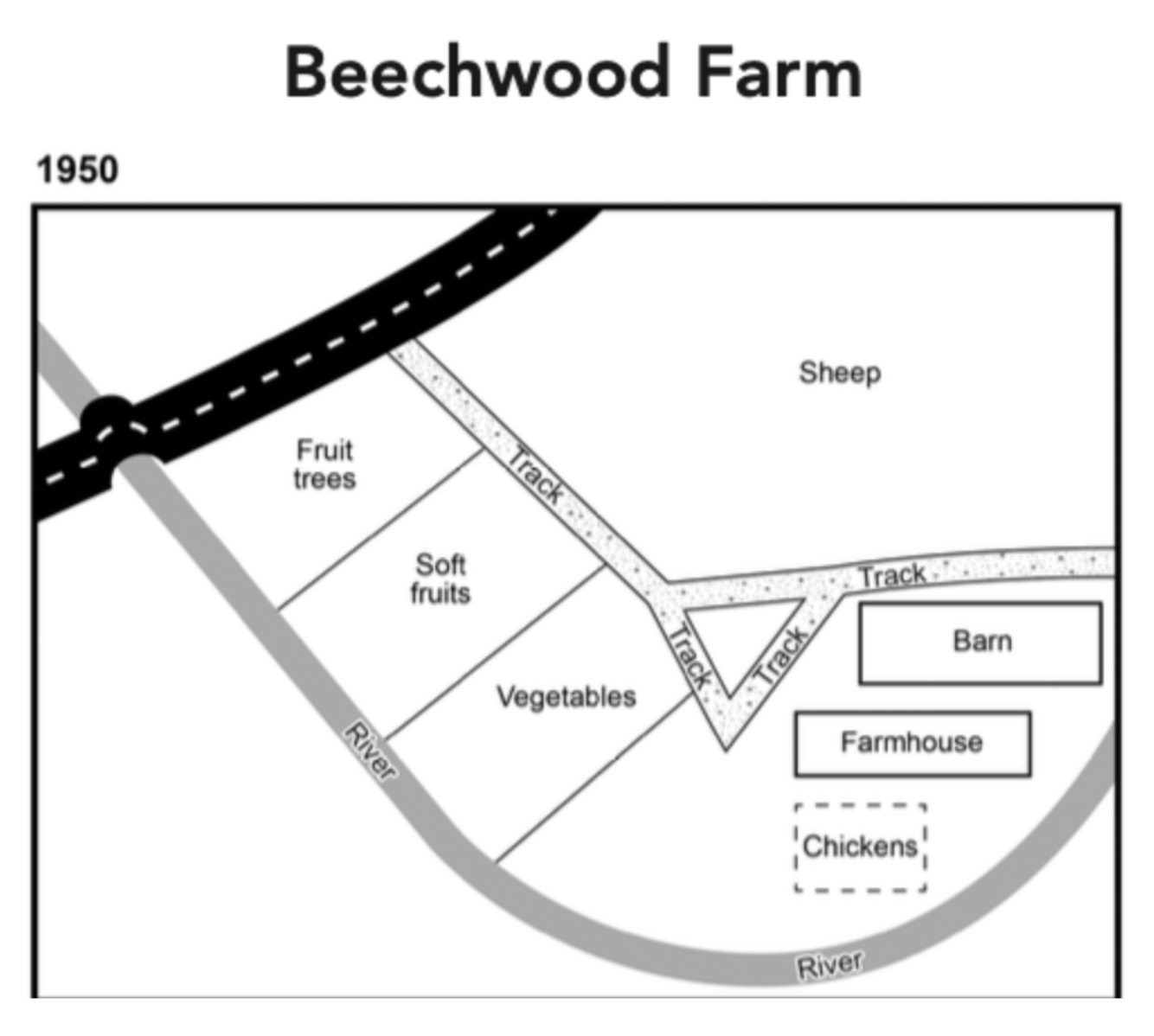
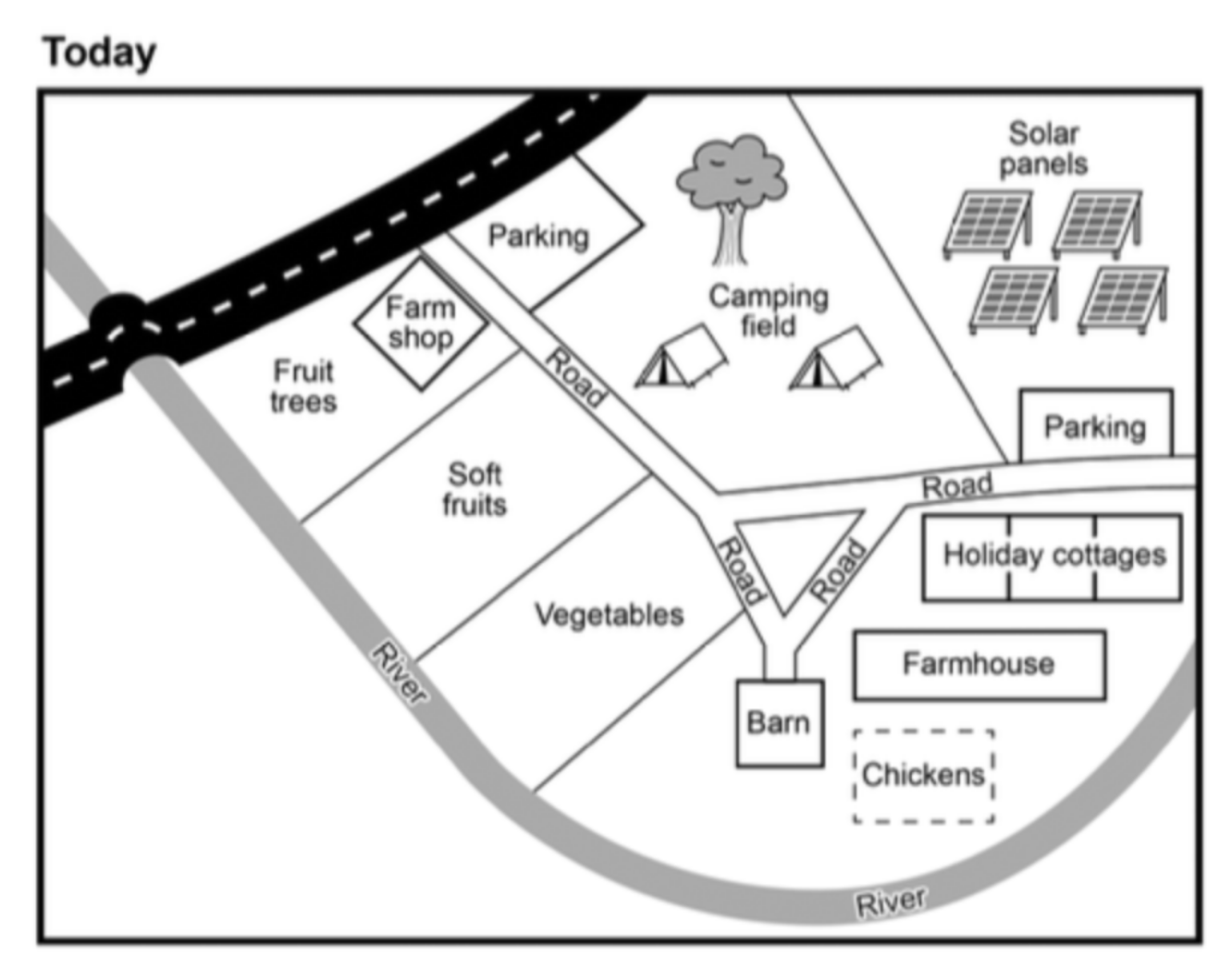
The plans below show the site of a farm in 1950 and the same site today.
Summarise the information by selecting and reporting the main features, and make comparisons where relevant.
Student answer (Band 5.5)
The plans illustrate the outline of the beechwood farm site in 1950 and also as of today after modifications.
Overall, it clearly represents significant alterations with tracks into road and field on north east now comprises with campeing field, solar panels, parking at two road side.holiday cottages introduced at the barns previous location and the barn repositioned at the adjacent road. Additionally, farm shop opened next to fruit trees.
In 1950, the beechwood was having track in the middle and the area at th east where sheeps are located. fruit trees, soft trees and vegetables are one after the other beside river. Additionally barn, farm house and chicken located to the south eastern side of the track.
As of now, the field where sheeps were grazed are now have camping feild with solar panels and two parking lots at different corners.Barn at the end of the road and holiday cottage newly introduced at barns previous location and o
AI examiner evaluation
| Criterion | Band |
|---|---|
| Task Achievement / Task Response | 5.5 |
| Coherence and Cohesion | 5.5 |
| Lexical Resource | 5.5 |
| Grammatical Range and Accuracy | 4.5 |
| Overall | 5.5 |
Task Achievement / Task Response: Band 5.5
You identify the main change from a working farm to a site with new visitor facilities, including a camping field, solar panels, parking, holiday cottages and a farm shop. You also compare the former sheep area with the camping field and note that the barn has moved. However, coverage is partial: the response gives little detail about the present-day layout, and the final sentence is unfinished, leaving several changes unexplained. Some locations are also imprecise: the 1950 sheep area is north of the track, while the new camping field is in the north-east; the cottages are south of the eastbound road, not simply at the barn’s former location. A fuller account of the retained fields, farmhouse and chicken enclosure would make the comparison clearer and more complete.
Coherence and Cohesion: Band 5.5
The response has a basic overall structure: an introduction, an overview, and paragraphs describing the two time periods. This gives the reader a general route through the information, and phrases such as “In 1950” and “As of now” help signal the comparison. However, progression is weakened by crowded, run-on sentences and abrupt transitions. The overview combines several changes in one sentence, while the final paragraph ends mid-thought (“and o”), so the account does not reach a clear conclusion. Some references, such as “the barns previous location,” are also difficult to follow. Grouping changes by area or by what remained versus what was added, and using complete, clearly separated sentences, would improve cohesion.
Lexical Resource: Band 5.5
You use relevant map vocabulary, including “solar panels,” “parking,” “holiday cottages,” “farm shop,” and “adjacent,” which allows you to identify several important features. There is also some attempt to describe change through phrases such as “introduced” and “repositioned.” However, spelling and word-choice errors are noticeable and sometimes make the description less clear: “campeing,” “feild,” “sheeps,” and “soft trees” (the map shows soft fruits). Phrases such as “tracks into road” and “road side” are not natural or precise in this context. Use the exact labels from the plan where possible, and choose standard collocations such as “converted into,” “located beside,” and “on either side of the road.”
Grammatical Range and Accuracy: Band 4.5
The response attempts a mixture of simple statements and longer sentences, but control is inconsistent, and errors frequently affect clarity. For example, “the area at th east where sheeps are located” lacks a clear grammatical structure, while “the field where sheeps were grazed are now have camping feild” has problems with agreement and verb construction. The opening overview also joins several ideas without clear sentence boundaries, and the final sentence is incomplete. Tense use shifts between past and present without always marking the comparison clearly. Practise building accurate sentences with one main idea at a time, checking subject–verb agreement and verb forms, and use past tense for 1950 and present tense for today.
See this exact question answered at other band scores. The same prompt compared across bands.
Browse more IELTS Writing model answers or get your own writing scored by the same AI examiner.