Band 5.0 IELTS Writing Task 1 Model Answer
Overall Band Score: 5.0 · Cambridge IELTS 20 · 2026-11-19
IELTS Writing Task 1 question
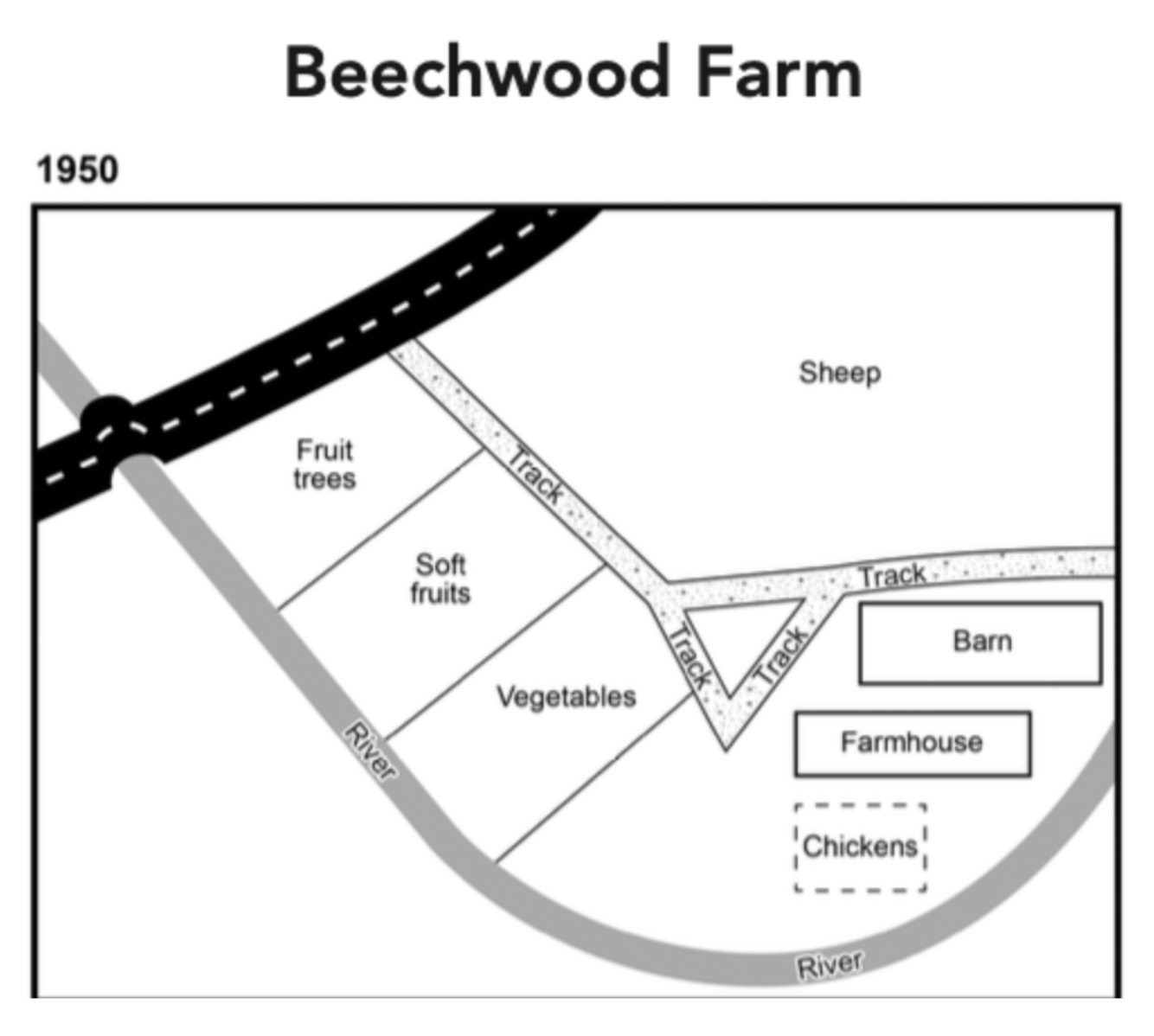
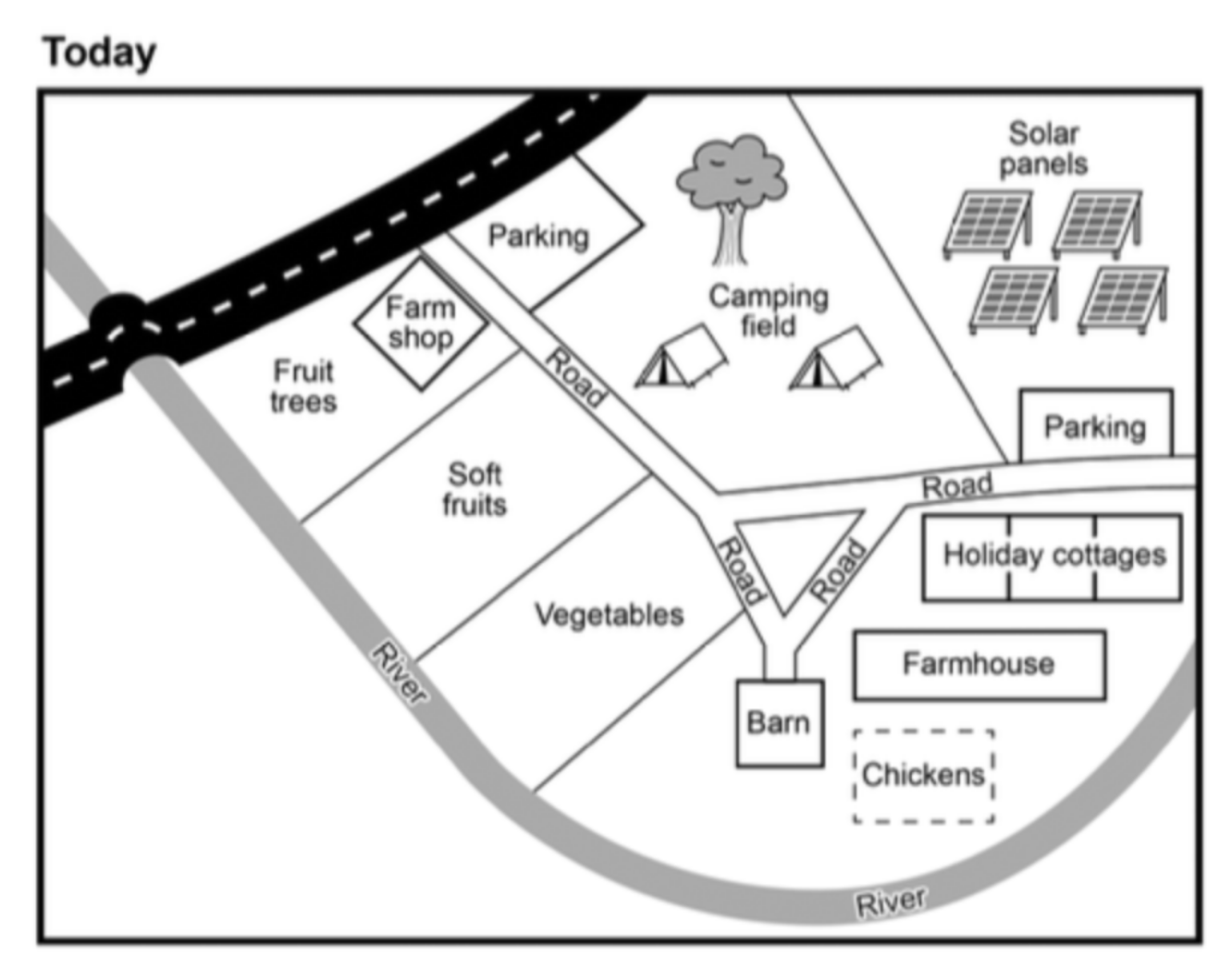
The plans below show the site of a farm in 1950 and the same site today.
Summarise the information by selecting and reporting the main features, and make comparisons where relevant.
Student answer (Band 5.0)
As we can see two graphs of farm so now we can see the differecne between the farm of 1950 as compare to today farm.As we can see that in 1950 the farm is so simple.there is a track in farm not a roadand one large space for sheeps.on the other side of track their are three sections one is fruits tree section second is soft fruits section and the last is vegetabels.On the left side it has a chickens room farm room or on top it has bam and the all back side is covered with river.But now its totally change some things are on their same place but now its totally change.now it has good road champing feild left side of the road and with that their is a place for solar panels and in the corner their is a parking and one parking is in the entrance of farm total 2 parkings. farm shop is added in fruits tree area. holiday cottages are made in the place or bam. so its seems like now the farm is totally change as compare to 1950 farm.
AI examiner evaluation
| Criterion | Band |
|---|---|
| Task Achievement / Task Response | 5.5 |
| Coherence and Cohesion | 4.5 |
| Lexical Resource | 5.0 |
| Grammatical Range and Accuracy | 5.0 |
| Overall | 5.0 |
Task Achievement / Task Response: Band 5.5
You identify the broad change from a simple farm to a site with new facilities, and you report several relevant features, including the sheep area, three crop plots, farm shop, camping field, solar panels and two parking areas. However, some important details are inaccurate or unclear: the holiday cottages are not described as replacing the barn, and the barn remains on the site. The 1950 layout is also misreported when you place the farmhouse and chickens on the left; they are in the southern part of the site. Your overview that the farm has “totally change[d]” is relevant but too general. A clearer summary of what stayed and what changed, supported by accurate locations, would make the response more complete.
Coherence and Cohesion: Band 4.5
The response follows a basic time sequence, moving from 1950 to today, and the contrast signalled by “But now” helps the reader recognise the main shift. However, it is presented as one long, run-on paragraph, with little separation between the two maps or between groups of features. Repeated phrases such as “As we can see” and “totally change” do not create clear progression, while “on the other side” and “in the corner” are not precise enough to guide the reader around the plan. Organise the report into an introduction, an overview, and separate detail paragraphs for each period, using clear location references and a small range of linking expressions.
Lexical Resource: Band 5.0
You use some task-relevant vocabulary, including “track,” “sections,” “solar panels,” “parking,” and “holiday cottages,” so the reader can identify many of the features. However, the range is limited and several choices or spellings make the description less precise, such as “graphs” for plans, “champing feild” for camping field, “bam” for barn, and “chickens room” for the enclosure. Repetition of “farm,” “place,” and “change” also reduces variety. Build a more accurate set of map-description terms, including “located,” “remained,” “was converted into,” and “in the north-east,” and check spelling and word forms. This would help you describe changes and positions more clearly.
Grammatical Range and Accuracy: Band 5.0
You attempt to connect ideas with clauses such as “some things are on their same place but now its totally change,” but most sentences rely on simple patterns, and longer ones are often difficult to follow. Errors include missing or incorrect articles and agreement in “two graphs of farm,” “one large space for sheeps,” and “their are three sections.” Tense and sentence boundaries are also inconsistent: “now its totally change” should use a suitable present-tense form, while several ideas run together without full stops. Practise writing shorter, complete sentences first, then add controlled comparisons using forms such as “In 1950, there was…” and “Today, the area has been converted into…”. Check punctuation, articles, and singular/plural agreement.
See this exact question answered at other band scores. The same prompt compared across bands.
Browse more IELTS Writing model answers or get your own writing scored by the same AI examiner.