Band 5.5 IELTS Writing Task 1 Model Answer
Overall Band Score: 5.5 · Cambridge IELTS 20 · 2026-11-20
IELTS Writing Task 1 question
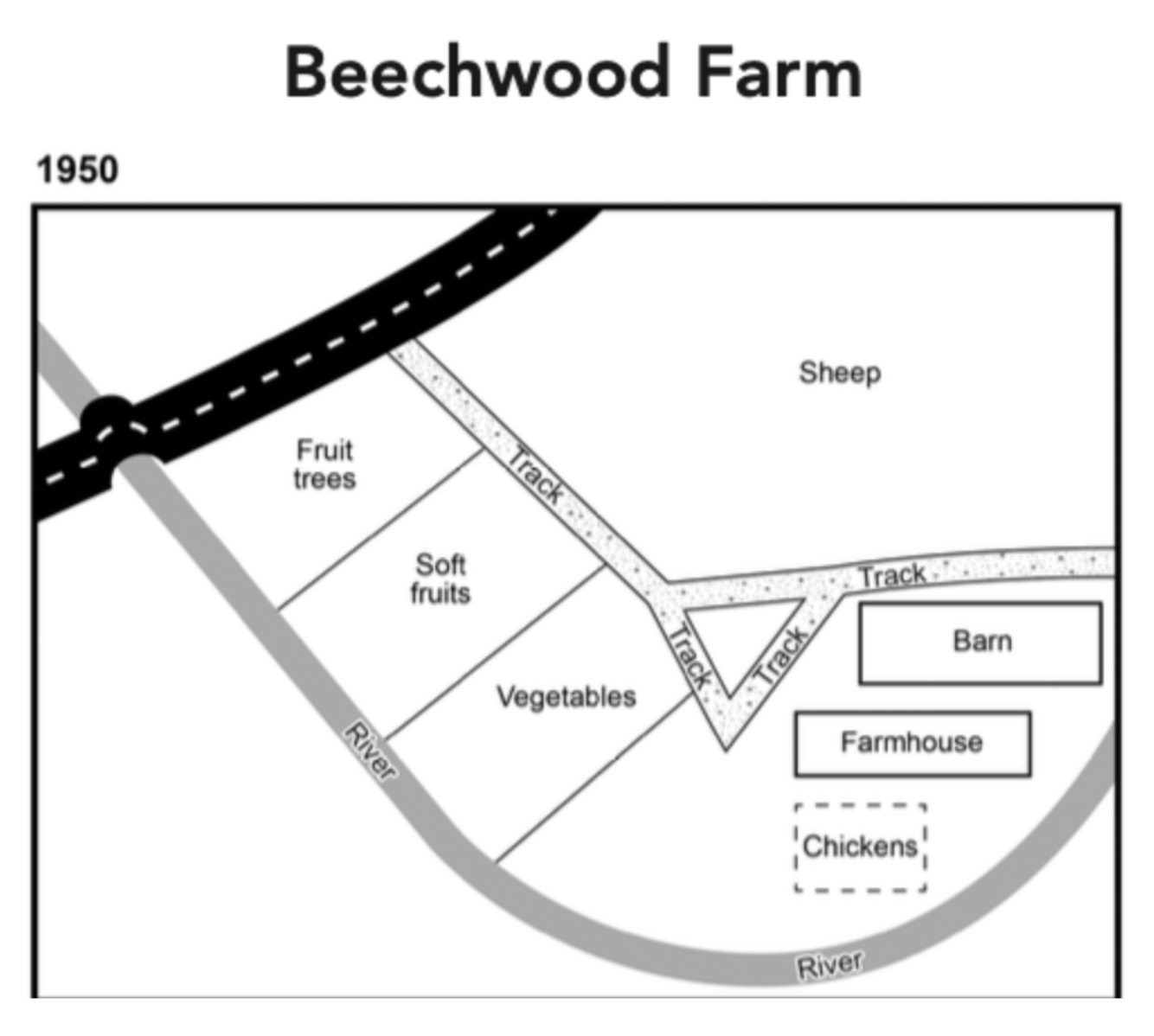
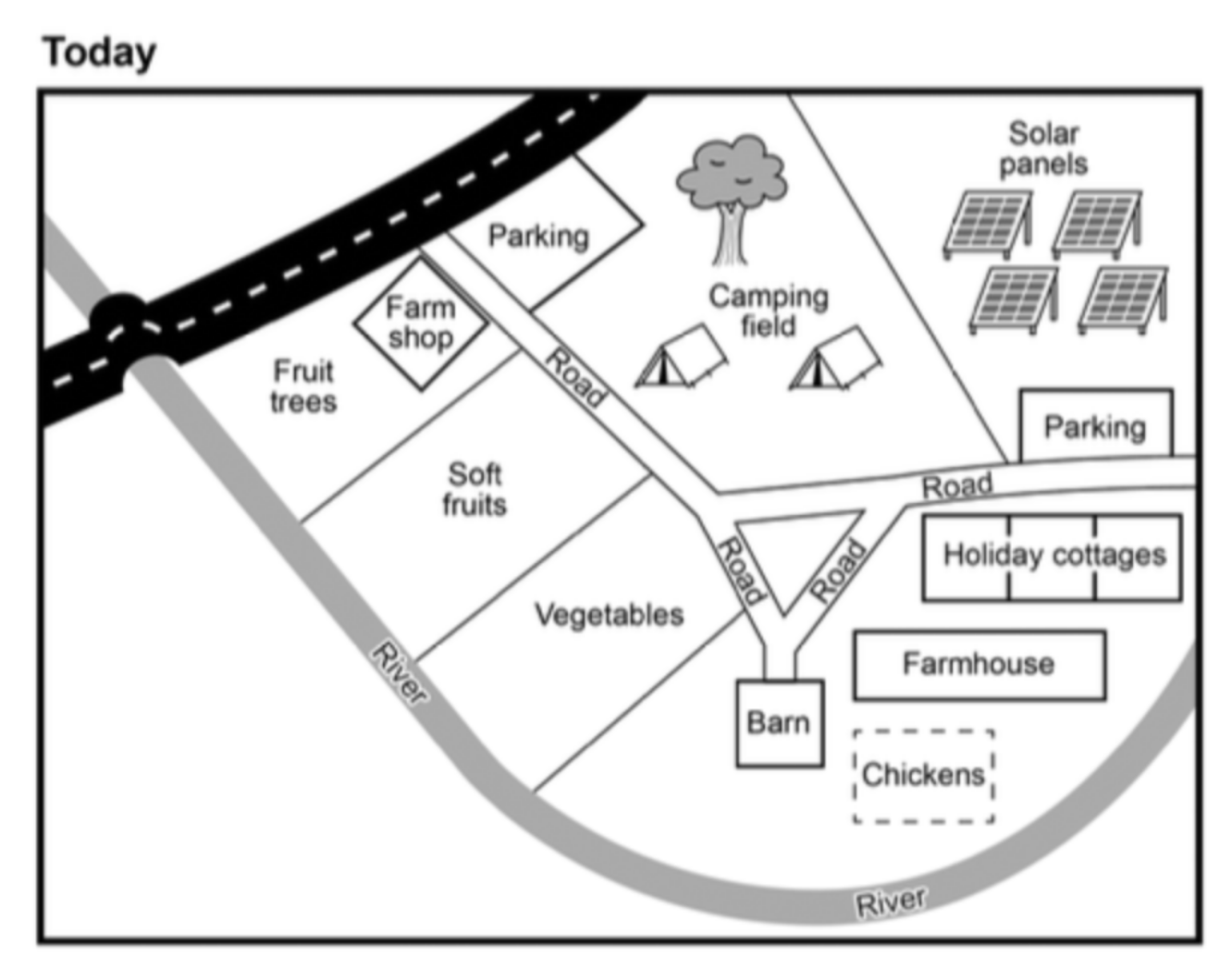
The plans below show the site of a farm in 1950 and the same site today.
Summarise the information by selecting and reporting the main features, and make comparisons where relevant.
Student answer (Band 5.5)
The map below show the site of a farm in 1950 and show the current changes happen in farm site of present day.
Overall, in 1950 in farm site there is a huge ground for sheeps and next to it has track , a small farmhouse , while in today's day farm site extended the ground and add extra important things like farm shops , parking and solar panels.
Firstly, in 1950 there is basic things included for farm site, there is a ground for sheeps then next to it has track. A fruit tress, also has soft fruits and next to it has a vegetable farm after that a chickens was there for proper caring and food then upper side it contains farmhouse which has small space and last thing has barn.
Secondly,in today's day a lot of changes happen due to technology. There is a huge ground was occupied for camping field ,alongside with 2 parking sites.At upperside right there is a 4 solar panels included for farming . Farm shop included , then another barn was also include , holiday cottages was also new included in latest farm site.
AI examiner evaluation
| Criterion | Band |
|---|---|
| Task Achievement / Task Response | 5.5 |
| Coherence and Cohesion | 6.0 |
| Lexical Resource | 5.0 |
| Grammatical Range and Accuracy | 5.0 |
| Overall | 5.5 |
Task Achievement / Task Response: Band 5.5
You identify the two time periods and mention several genuine changes, including the camping field, two parking areas, solar panels, a farm shop and holiday cottages. However, the comparison is only partly developed: the overview says the site “extended the ground,” which is not a clear or accurate summary of the main transformation. Some details are misplaced or unclear. For example, the sheep area and track are described as being next to each other without explaining their positions, and the account of the farmhouse, barn and chickens does not clearly compare their locations across the plans. To strengthen the response, summarise the major shift from a mainly agricultural site to one with tourism and energy facilities, and accurately describe what remained and what changed.
Coherence and Cohesion: Band 6.0
The response has a recognisable structure: an introduction, an overview, and two paragraphs organised by time period. “Firstly” and “Secondly” help signal the sequence, so the reader can follow the broad movement from 1950 to today. However, the progression within each paragraph is sometimes difficult to follow, and the list-like presentation does not consistently group related features by location or function. The overview also repeats the idea of the present-day changes without clearly preparing the reader for the details. Use clearer topic sentences and organise each period spatially—for example, describe the western fields first, then the central and eastern developments. More precise referencing and fewer abrupt additions would make the connections between details clearer.
Lexical Resource: Band 5.0
You use some relevant map vocabulary, including “camping field,” “parking sites,” “solar panels” and “holiday cottages,” which helps identify the new facilities. However, the range is limited and several phrases are inaccurate or unnatural, such as “huge ground for sheeps,” “farm site,” and “a lot of changes happen due to technology.” These choices sometimes make the intended meaning less precise; for instance, “ground” does not clearly convey a field or area, and the technology explanation is not supported by the map. Spelling and word-form errors such as “tress” and “sheeps” also reduce control. Build a more precise set of terms for land use and change, and use natural collocations such as “the site was redeveloped” or “an area was converted into a camping field.”
Grammatical Range and Accuracy: Band 5.0
The response attempts both simple and longer sentence forms, but errors are frequent and sometimes make relationships between features difficult to understand. For example, “The map below show” has subject–verb disagreement, while “the current changes happen in farm site” has an unclear verb construction and missing articles. Tense and agreement problems recur in “a lot of changes happen” and “holiday cottages was also new included.” Sentence boundaries and punctuation are also inconsistent, as in “Secondly,in today's day.” To improve, use a reliable present-tense pattern for describing maps, such as “The map shows…” and “The farmhouse remains…,” and check each sentence for a clear subject and verb. Practising accurate compound sentences will help you express comparisons without losing control.
See this exact question answered at other band scores. The same prompt compared across bands.
Browse more IELTS Writing model answers or get your own writing scored by the same AI examiner.