Band 5.0 IELTS Writing Task 1 Model Answer
Overall Band Score: 5.0 · Cambridge IELTS 20 · 2026-11-23
IELTS Writing Task 1 question
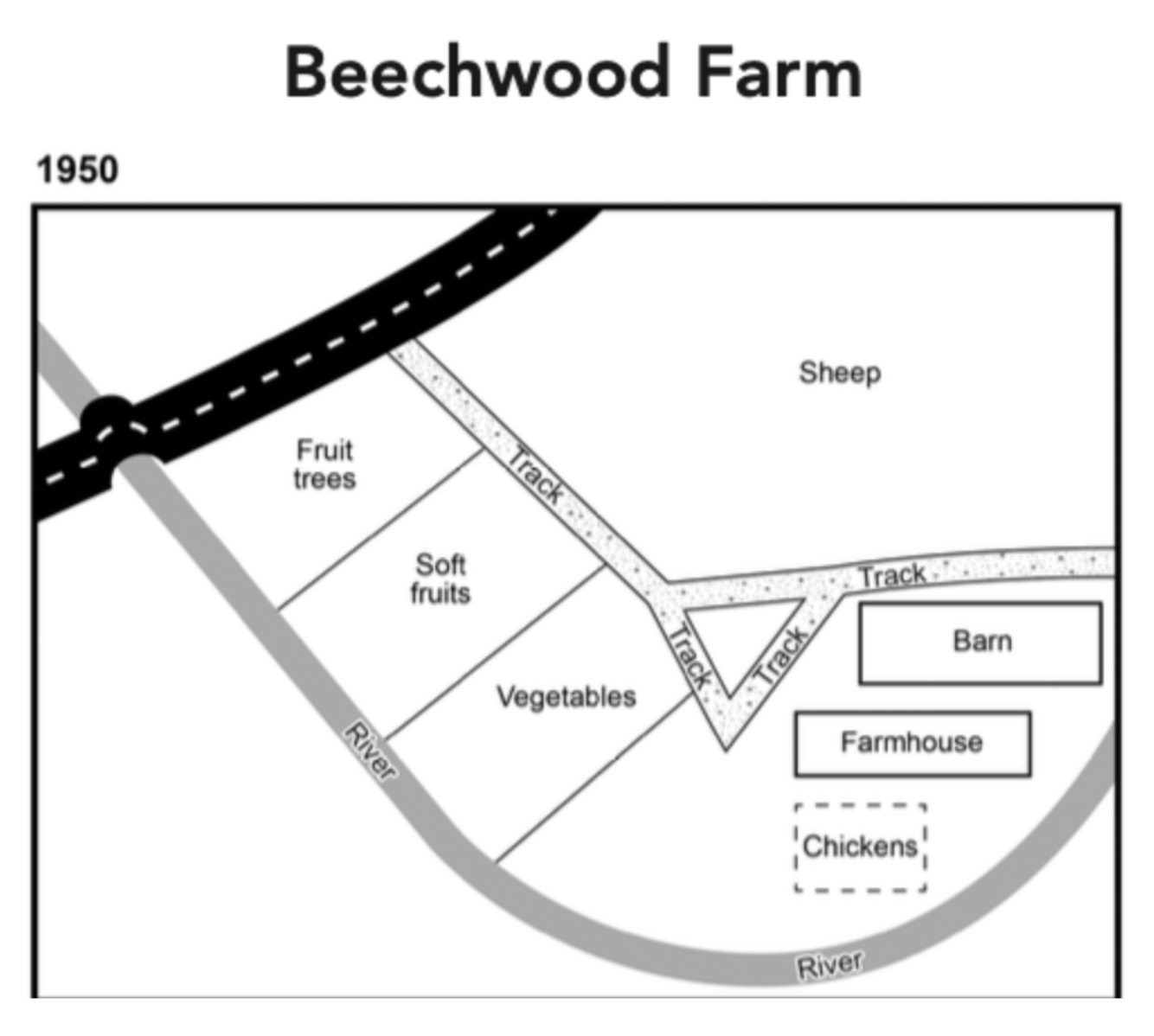
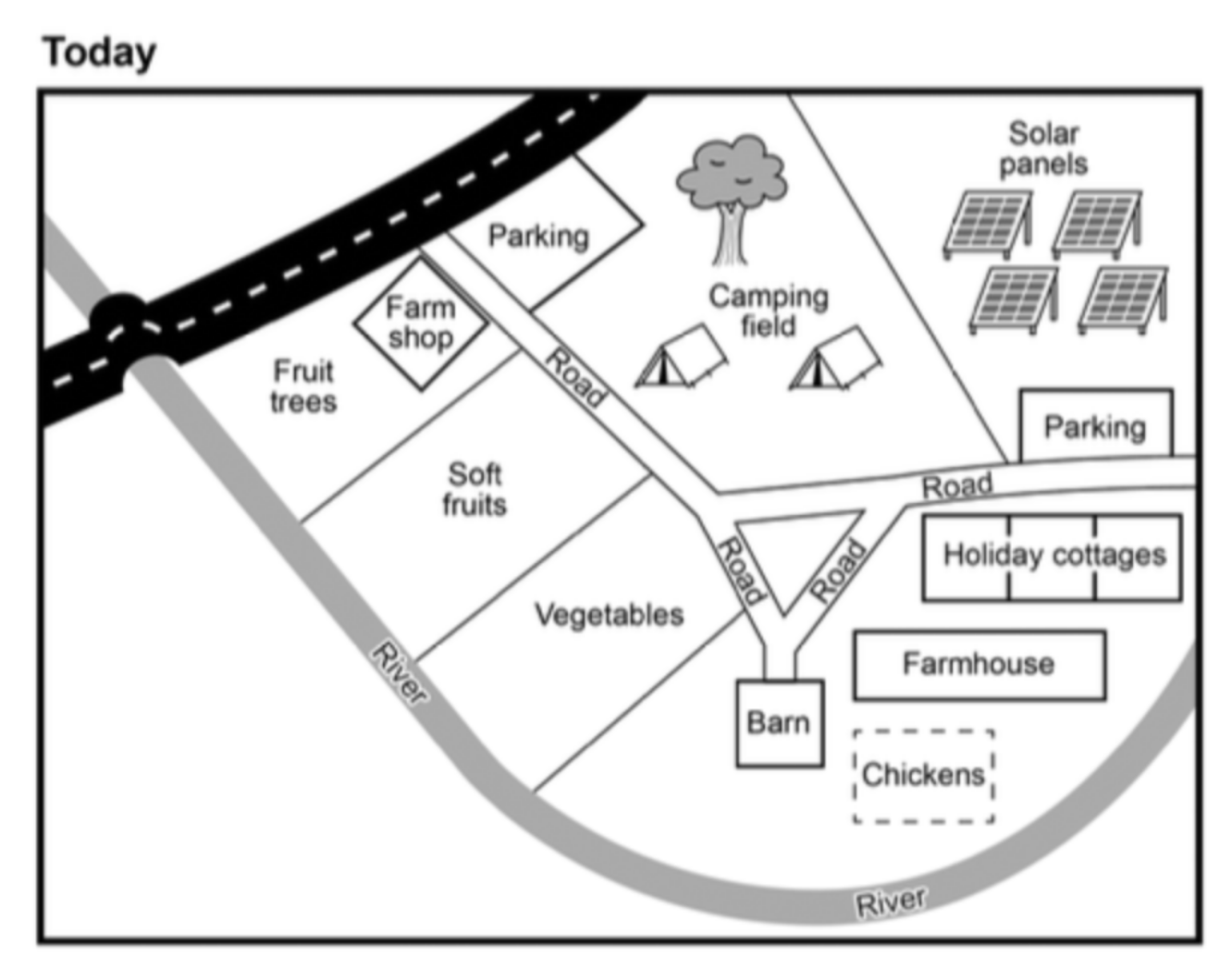
The plans below show the site of a farm in 1950 and the same site today.
Summarise the information by selecting and reporting the main features, and make comparisons where relevant.
Student answer (Band 5.0)
The diagram illustrate the information about Beechwood farm site plan in 1950 and same site today.
In 1950 the site plan show how the river passes under the road and went out the site from fruit trees,soft fruits and vegetables.The river pass out side chickens farms,farmhouse and barn.There is also a track to from main road to pass as fruit trees opposite side of the river,on the other side of track there is sheep farm till end of farm house,than track goes o soft fruit ,passes through the vegetables field than at the farmhouse.
On the other hand there are many thing add in farm site in today.As we leave the main raod there is parking and new road for the whole farm,a farm shop and in opposite side of far shop there is camping field.Barn is made at after vegetabls field and at holiday cottages and parking .There is also some solar plates add up.
Overall there is many thins added in toaday site as compared to the old sie plan of 1950.
AI examiner evaluation
| Criterion | Band |
|---|---|
| Task Achievement / Task Response | 5.0 |
| Coherence and Cohesion | 5.5 |
| Lexical Resource | 5.0 |
| Grammatical Range and Accuracy | 5.0 |
| Overall | 5.0 |
Task Achievement / Task Response: Band 5.0
You identify the two time periods and mention several relevant changes, including the farm shop, camping field, parking and solar panels. However, the comparison is only partly accurate and developed. The 1950 description gives confusing relationships—for example, saying the track “goes o soft fruit” and passes through the vegetable field—whereas the original plots lie beside the track and river. The present-day account also omits important retained features, such as the fruit, soft-fruit and vegetable areas, farmhouse and chickens, and does not clearly explain the new holiday cottages or the changed road layout. Your overview that many things were added is relevant but too general; identify the main shift from agricultural use towards visitor facilities while noting what remains.
Coherence and Cohesion: Band 5.5
The response has a basic time-based structure: it first describes 1950, then uses “On the other hand” to move to today, and ends with an overall statement. This gives the reader some sense of organisation. However, progression within the paragraphs is difficult to follow because locations are linked in long, loosely connected sentences, such as the description beginning “There is also a track…” The sequence of features and their positions becomes unclear. Some linking phrases, including “On the other hand,” suggest contrast without clearly organising the comparison. Use separate paragraphs for the overview and each map, and group details by location or by what changed and remained. Clearer references between features would also help.
Lexical Resource: Band 5.0
You use some task-relevant vocabulary, including “river,” “track,” “farmhouse,” “camping field” and “solar plates,” so the reader can recognise several map features. However, the range is limited and there are frequent spelling and word-choice problems that sometimes make the description hard to interpret. Examples include “main raod,” “vegetabls,” “thins,” and “sie plan”; “solar plates” is also not the natural term for the panels shown. Phrases such as “many thing add in farm site” are imprecise and repetitive. Build a bank of accurate map vocabulary—such as “located,” “adjacent to,” “retained” and “converted”—and check spelling and collocations before submitting.
Grammatical Range and Accuracy: Band 5.0
You attempt both simple statements and longer sentences, and the response uses past and present time references to distinguish the maps. However, the range is limited, and errors occur frequently in basic sentence construction, agreement and verb forms. For example, “The diagram illustrate” and “the site plan show” need subject–verb agreement, while “the river passes … and went” shifts tense within one description. Several sentences run together without clear punctuation, particularly the long account beginning “There is also a track…,” making relationships difficult to understand. Practise forming short, complete sentences first, then combine related ideas with accurate clauses. Check agreement, consistent tense, articles and sentence boundaries during revision.
See this exact question answered at other band scores. The same prompt compared across bands.
Browse more IELTS Writing model answers or get your own writing scored by the same AI examiner.