Band 4.5 IELTS Writing Task 1 Model Answer
Overall Band Score: 4.5 · Cambridge IELTS 20 · 2026-11-25
IELTS Writing Task 1 question
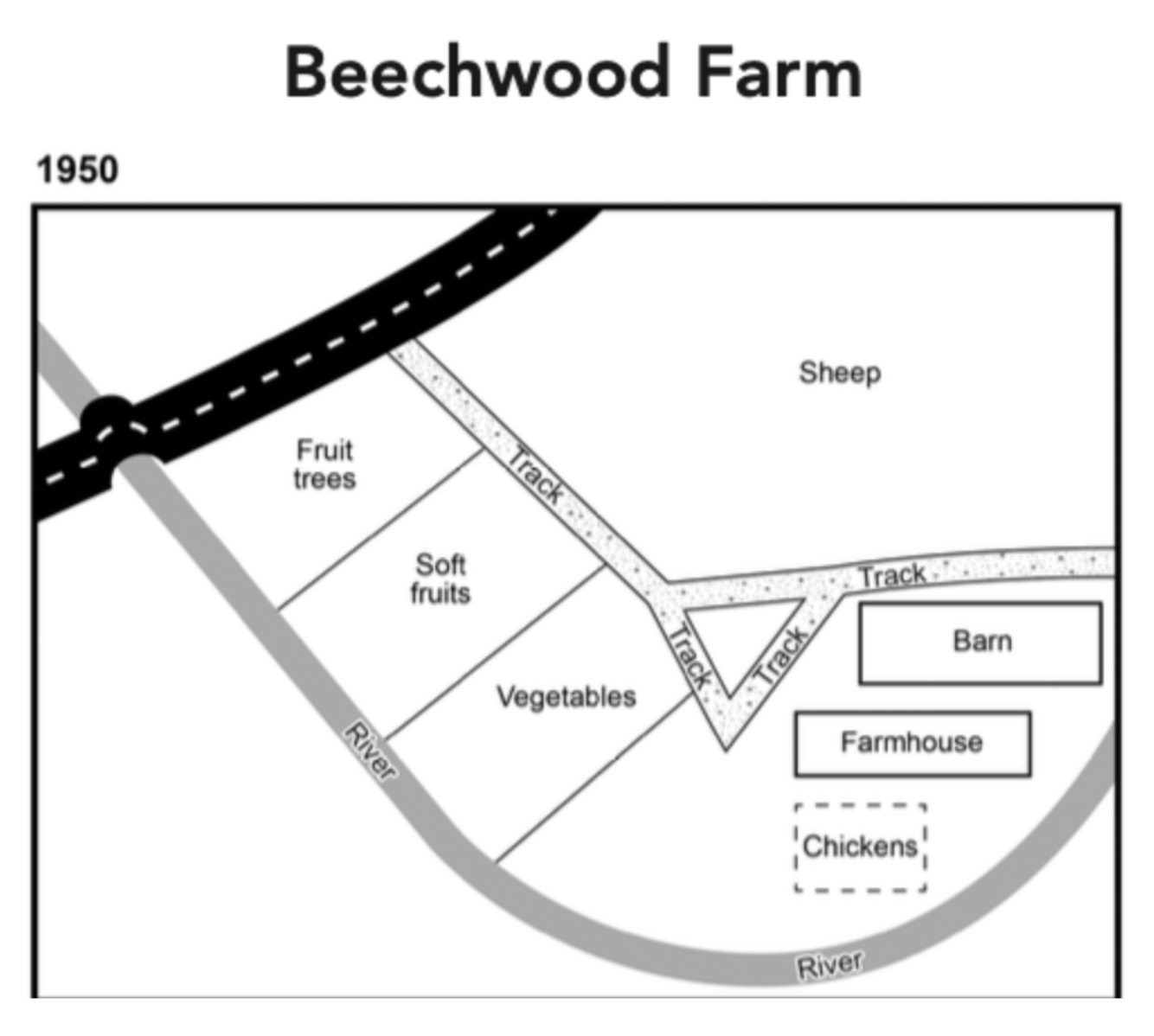
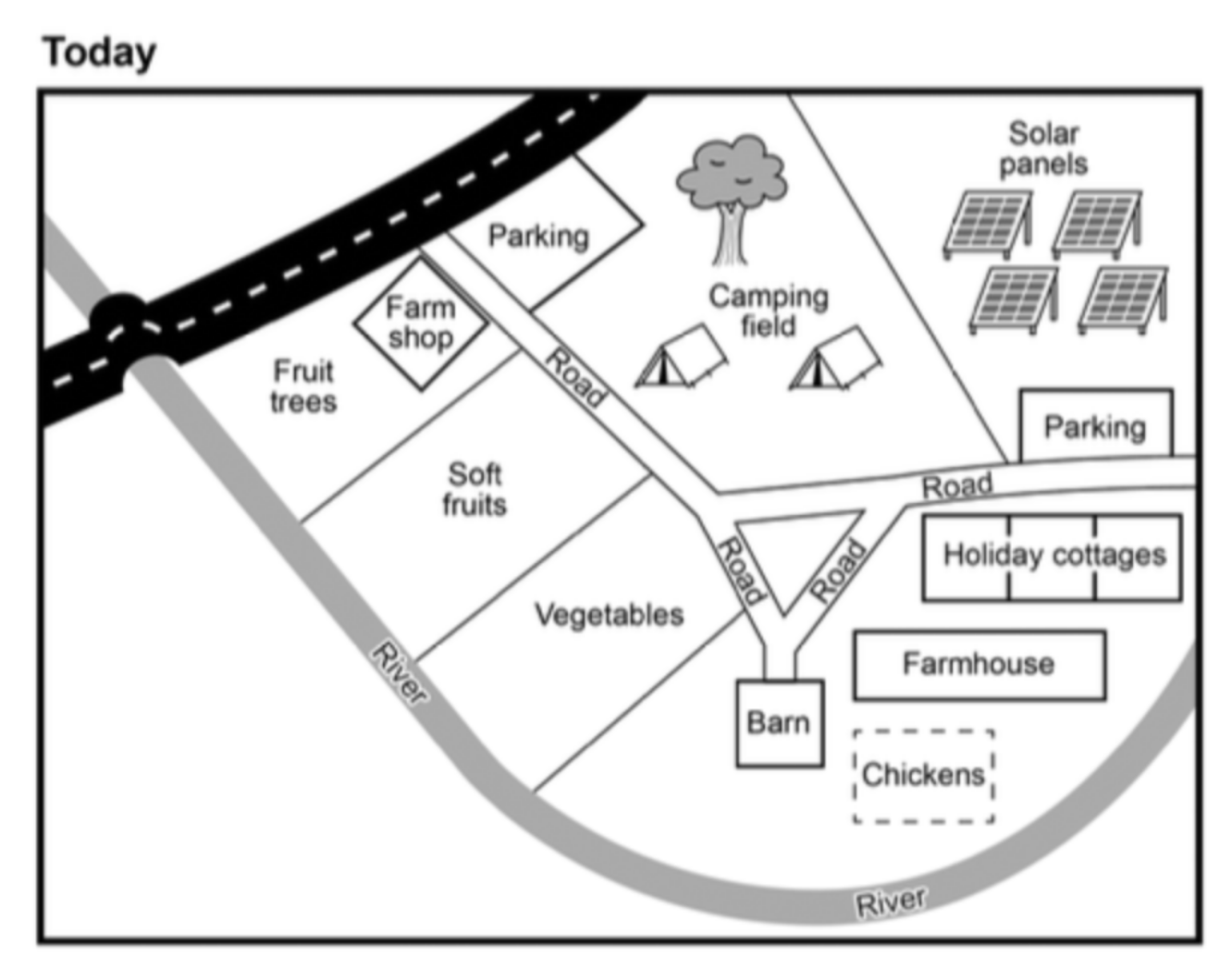
The plans below show the site of a farm in 1950 and the same site today.
Summarise the information by selecting and reporting the main features, and make comparisons where relevant.
Student answer (Band 4.5)
This image is of a 1950 farm named Beechwood Farm. This farm is located on riverside and it is mainly divided in five parts and by looking at this image we can say that they mainly do sheep farming and their main income will be by selling wools and they also have other then sheep they aslo have chickens and mostly probably they also have other animals like cows , etc . because they have barns where they store the fodder for the domesti animals in their farm. Other then animlas they also grow fruits , soft fruits and vegetables these three farms are on riverside which helps to get water very easily and proper watering will help in better outcome of fruits and vegetables. And, overall is we see this farm is on a roadside which helps in easy access of farm.I think that they migth be catching fishes from the river and genrating revenue from that and also I feel their will be amny workers because it's not possible for a single peson to handle this much big farm.
AI examiner evaluation
| Criterion | Band |
|---|---|
| Task Achievement / Task Response | 3.0 |
| Coherence and Cohesion | 4.0 |
| Lexical Resource | 5.0 |
| Grammatical Range and Accuracy | 5.0 |
| Overall | 4.5 |
Task Achievement / Task Response: Band 3.0
The response identifies some genuine features of the 1950 plan, including sheep, fruit and vegetable plots, chickens, a barn, and the river. However, it does not summarise the two plans or make the central comparison with the site today, where the farm has a shop, parking, camping, solar panels and holiday cottages. Instead, much of the response speculates about wool income, cows, fishing and the number of workers; these details are not shown in the plans. The task therefore receives only minimal, partly tangential treatment. Focus on observable changes and give a brief overview, such as the shift from a mainly agricultural site to one with visitor facilities, while noting which farming features remain.
Coherence and Cohesion: Band 4.0
There is a basic sequence: the response introduces the 1950 farm, describes livestock and crops, and then adds comments about its location and possible activities. Linking expressions such as “Other then” and “And, overall” show an attempt to connect ideas. However, the whole answer is one long paragraph, and the progression is difficult to follow because observations are mixed with unsupported guesses. Repeated additions such as “I think” and “I also feel” do not help organise a map comparison. Use separate paragraphs for an overview and key details, and group information by location or by what changed and remained. This would make the relationships between points clearer.
Lexical Resource: Band 5.0
The response uses some relevant topic vocabulary, including “riverside,” “sheep farming,” “soft fruits,” “vegetables,” and “roadside,” so the reader can identify several features of the plan. However, the range is limited and some word choices or collocations are inaccurate, such as “selling wools,” “proper watering,” and “better outcome.” Numerous spelling errors—including “animlas,” “genrating,” and “peson”—also make the writing less clear and controlled. Some expressions, such as “other animals like cows, etc.,” are vague and introduce information not shown. Build a more precise map vocabulary, for example “plots,” “facilities,” “is bordered by,” and “was converted into,” and check spelling and natural word combinations.
Grammatical Range and Accuracy: Band 5.0
The response attempts longer sentences using clauses and connectors, for example “because they have barns…” and “which helps to get water…”. This shows some willingness to use more than short, simple statements. However, these longer structures are often faulty or awkward: “This farm is located on riverside,” “they also have other then sheep,” and “overall is we see” show problems with articles, sentence construction and word order. There are also inconsistent forms and punctuation, including the run-on sequence beginning “Other then animlas…” and the comma before “etc.” The meaning is generally recoverable, but errors recur. Practise accurate simple sentences first, then combine them with controlled relative clauses and comparisons.
See this exact question answered at other band scores. The same prompt compared across bands.
Browse more IELTS Writing model answers or get your own writing scored by the same AI examiner.