Band 5.0 IELTS Writing Task 1 Model Answer
Overall Band Score: 5.0 · Cambridge IELTS 20 · 2026-11-27
IELTS Writing Task 1 question
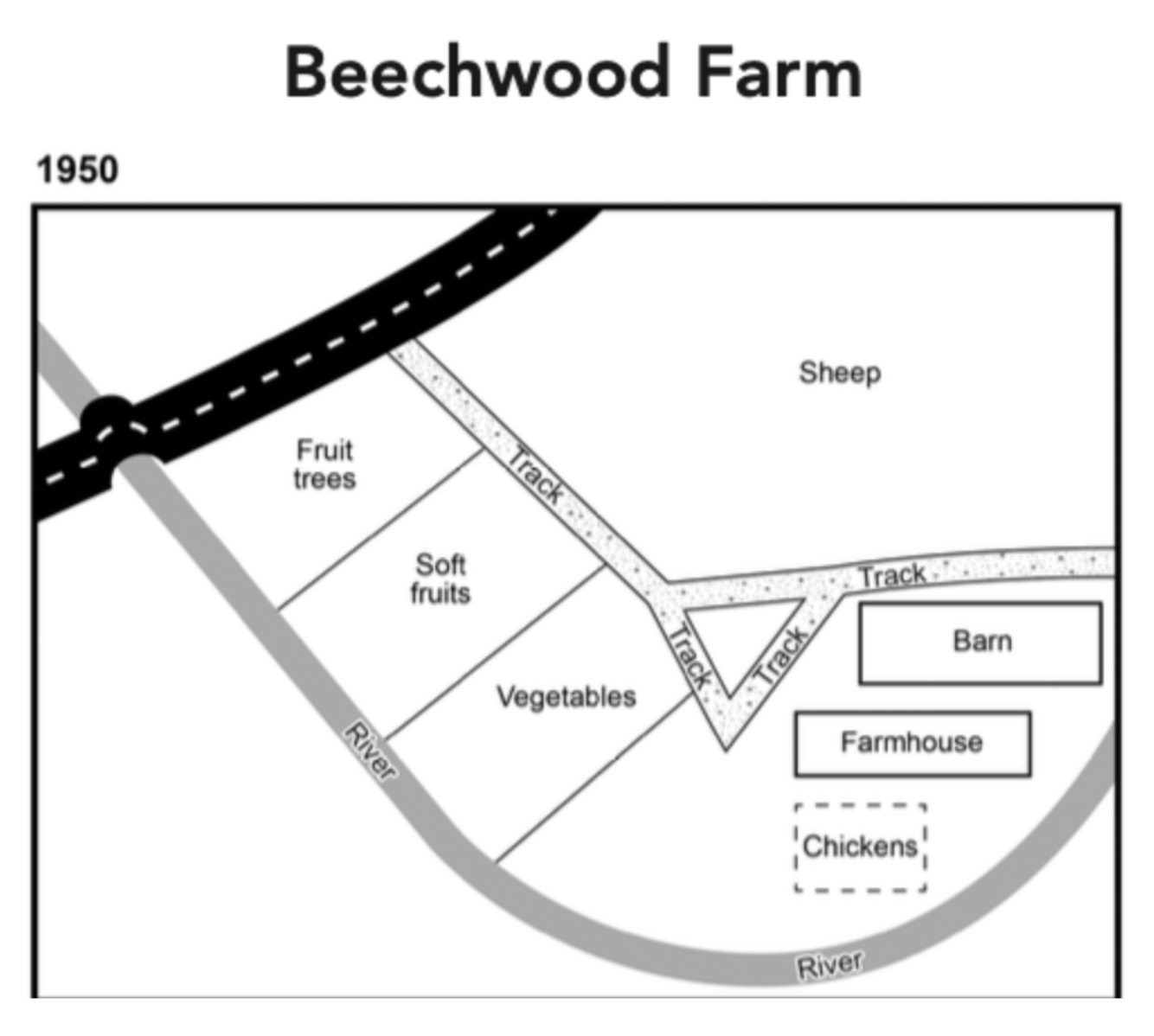
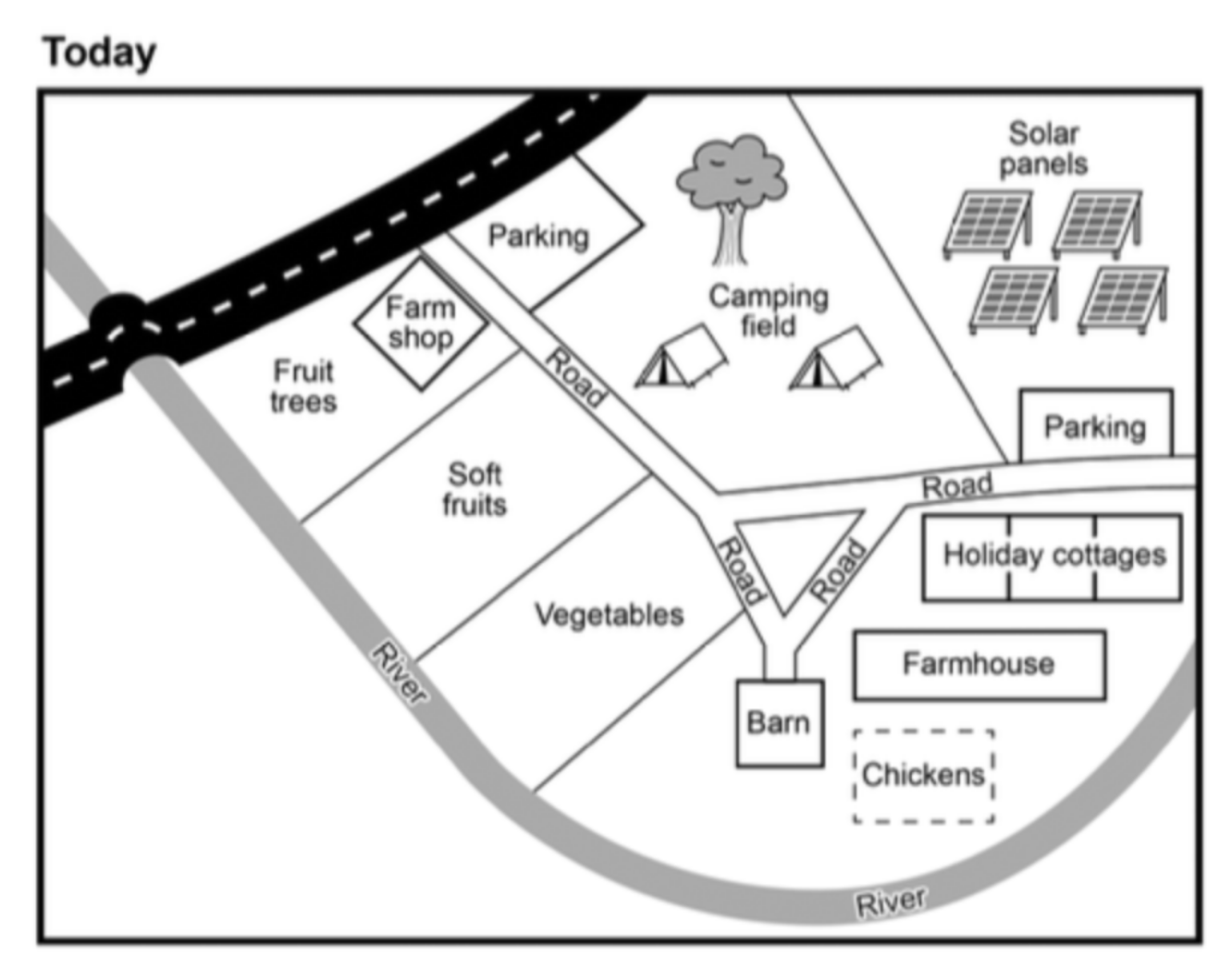
The plans below show the site of a farm in 1950 and the same site today.
Summarise the information by selecting and reporting the main features, and make comparisons where relevant.
Student answer (Band 5.0)
The two maps illustrate the different between a farm from 1959 to 2026( today time).
Overall, many things has changes compare to previous, add many things in the farm.
Beechwood farm had large space in the farm, river fleud toward the south and many vegetables and fruits grew near the river. In the north there were big sheep and in the middle there was track which divided the field in 4 parts such as fruit trees, soft fruits, vegetables and man more.
Beechwood farm expand today, many things add in every corners of the field, in the north there are solar panels and camping field for the camper
AI examiner evaluation
| Criterion | Band |
|---|---|
| Task Achievement / Task Response | 4.0 |
| Coherence and Cohesion | 5.5 |
| Lexical Resource | 5.0 |
| Grammatical Range and Accuracy | 5.0 |
| Overall | 5.0 |
Task Achievement / Task Response: Band 4.0
You identify the maps as showing changes to Beechwood Farm and mention some relevant features, including the river, crops, sheep, camping field and solar panels. However, the response only minimally summarises the plans: it gives little comparison between 1950 and today and omits major changes such as the farm shop, parking, holiday cottages and the altered road layout. Some details are inaccurate or unclear: the dates are 1950 and today, not 1959 and 2026, and the map shows sheep in a field rather than “big sheep.” The overview, “many things has changes,” is too general to highlight the main transformation. The response is also 42 words below the required minimum, limiting the detail you can report. Select key changes and explain them accurately.
Coherence and Cohesion: Band 5.5
The response has a basic overall sequence: it introduces the maps, gives a brief overview, describes some features of the earlier farm, and then turns to today. This makes the general direction of the comparison understandable. However, progression is limited because the final paragraph stops after mentioning the northern additions, without completing the account of the present-day layout or comparing it systematically with 1950. Linking is also sparse; phrases such as “Overall” and “In the north” help, but “many things” is repeated and “such as” leads into an unclear list. Organise the report into a clear introduction, overview, and two concise detail paragraphs, grouping features by location or by what changed and what remained.
Lexical Resource: Band 5.0
You use basic vocabulary relevant to maps, including “river,” “track,” “vegetables,” “fruit trees,” “solar panels” and “camping field,” so the reader can identify several features. However, the range is limited and some word choices or forms make the meaning unclear. “Different” should be the noun “difference,” “fleud” appears to be an attempt at “flowed,” and “many more” does not specify what else was present. Phrases such as “many things add” and “big sheep” are imprecise for describing a site plan. Use more precise map language, for example “was converted into,” “was added,” “occupied the northern area,” and “the river curved along the southern boundary.” Check spelling and collocations before submitting.
Grammatical Range and Accuracy: Band 5.0
You attempt several sentence forms, including a comparison in “Beechwood farm expand today” and a location clause beginning “In the north,” but the range is limited and errors occur frequently. For example, “many things has changes” has problems with subject–verb agreement and verb form; “many vegetables and fruits grew” does not clearly establish the time being described; and “there were big sheep” uses an awkward construction for a map feature. The opening also needs a grammatical structure such as “The maps show the differences between the farm in 1950 and today.” Work on consistent past and present tenses, plural agreement, articles, and complete sentence punctuation. Short, accurate sentences are a useful starting point before adding more complex comparisons.
See this exact question answered at other band scores. The same prompt compared across bands.
Browse more IELTS Writing model answers or get your own writing scored by the same AI examiner.