Band 5.5 IELTS Writing Task 1 Model Answer
Overall Band Score: 5.5 · Cambridge IELTS 20 · 2026-11-27
IELTS Writing Task 1 question
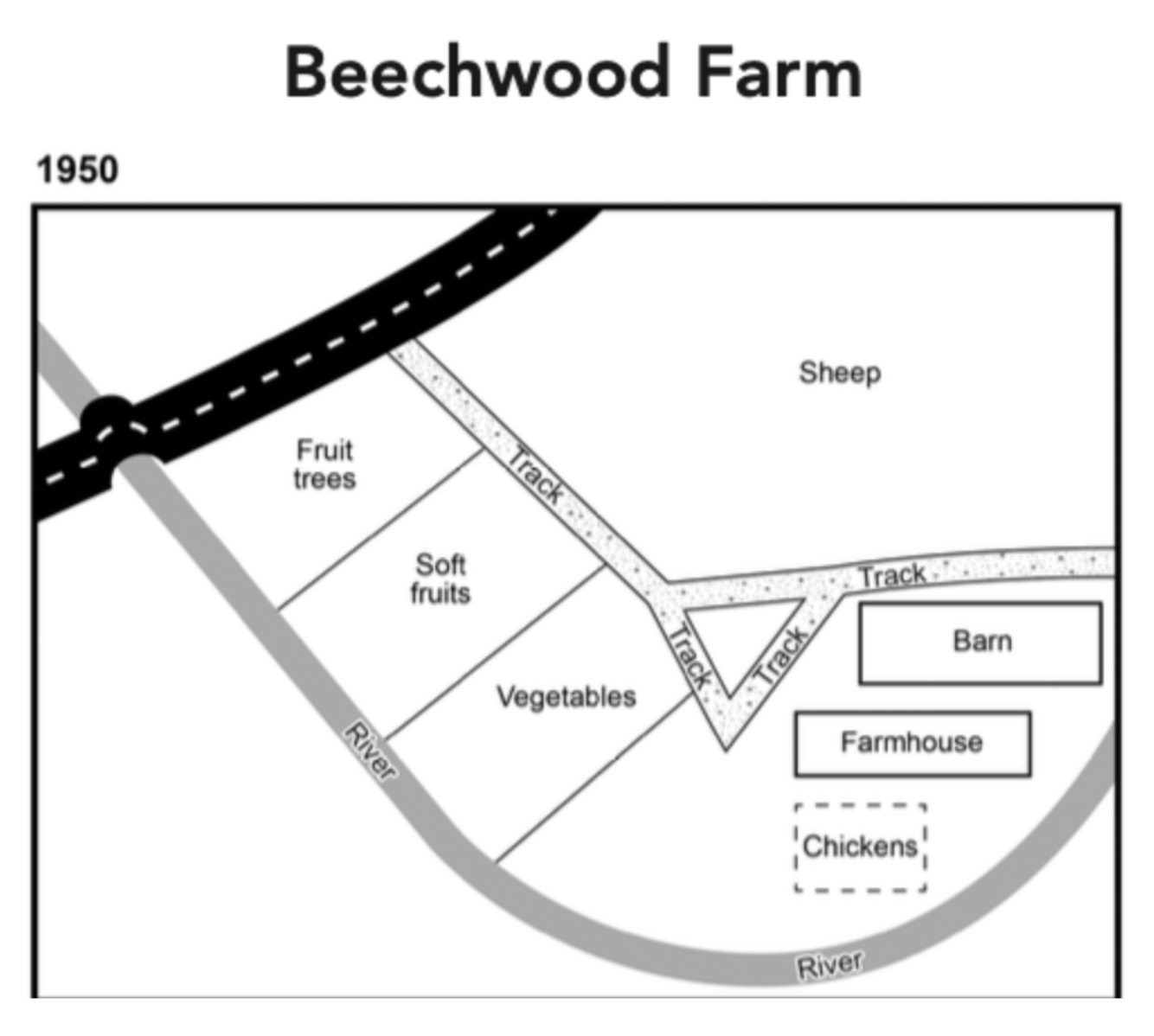
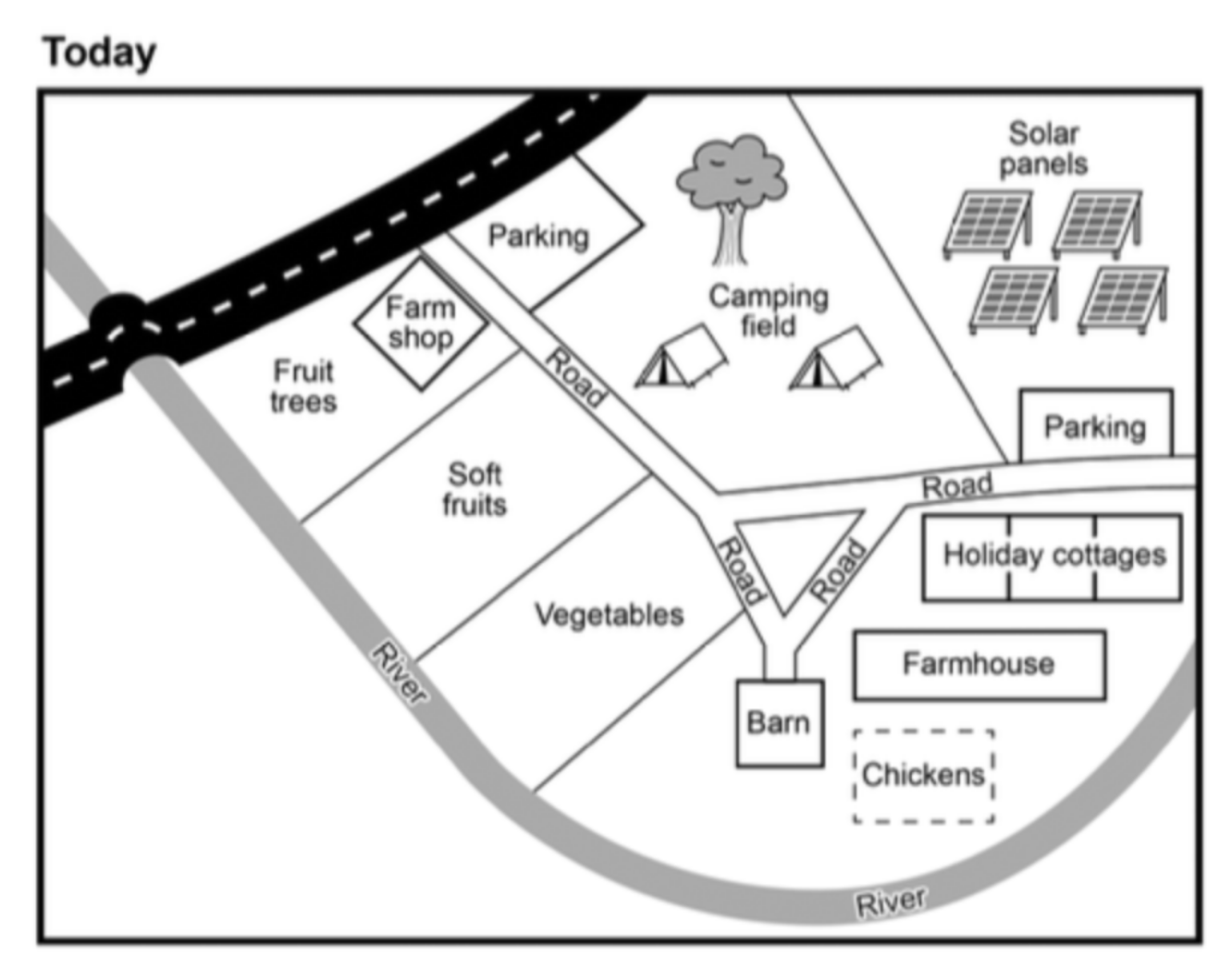
The plans below show the site of a farm in 1950 and the same site today.
Summarise the information by selecting and reporting the main features, and make comparisons where relevant.
Student answer (Band 5.5)
The map illustrates the renovation, which has done in the beechwood farm.
Overall, the structure and the total area have remained same.New spots added mainly. Sheep area was replaced by camping filed.Track has changed. The river route is still same.
If we look at the old map, farm was divided into different sectors. There was a area specific for sheeps. There was a track in previous old map. Also there was area in which fruit trees, soft fruits and vegetables were cultivated. Also there was a spot for barn. There was a farmhouse built there. There was a plot for chickens.
Current map reveals that, farm went through some major changes, track is converted into road, which is divinding two major areas of the farm. Sheep area was replaced by camping filed, solar pannels were installed there. Cottage spot was construted along side the farm house and barn was shifted to other place alongside the chicken area.Two parking lots were built one near camping field and second near solar panells.
AI examiner evaluation
| Criterion | Band |
|---|---|
| Task Achievement / Task Response | 6.0 |
| Coherence and Cohesion | 6.0 |
| Lexical Resource | 5.5 |
| Grammatical Range and Accuracy | 5.0 |
| Overall | 5.5 |
Task Achievement / Task Response: Band 6.0
You identify the main transformation and several relevant features: the sheep area becomes a camping field, the track is upgraded to a road, and the river remains broadly unchanged. You also mention the new cottages and parking, so the response addresses the comparison rather than describing only one plan. However, some details are inaccurate or unclear: the barn is not shifted alongside the chicken area; it is repositioned to the south-west of the farmhouse. The statement that parking is “near camping field” is also imprecise, as one parking area is near the road junction and the other beside the eastbound road. The overview that the “total area” remained the same is not a useful map feature. More precise coverage of the farm shop and the retained agricultural plots would make the account more complete.
Coherence and Cohesion: Band 6.0
The response has a recognisable structure: an opening, an overview, a paragraph about the 1950 plan, and a final paragraph about today. This gives the reader a basic chronological comparison, and phrases such as “Overall” and “Current map reveals that” help signal the stages. However, cohesion is sometimes mechanical, particularly the repeated “There was” in the historical description and repeated “Also.” Some links between ideas are unclear: “solar panels were installed there” appears to refer to the camping field, although the panels are in the north-east corner. The final sentence also groups parking with the solar panels without clearly locating either. Organise details by area or by change, and use clearer references and linking phrases to show how features relate spatially.
Lexical Resource: Band 5.5
You use a reasonable set of map-related terms, including “sectors,” “cultivated,” “replaced,” “installed,” and “parking lots,” which helps communicate the main changes. There are also attempts at more specific vocabulary, such as “route” and “alongside.” However, several word choices or collocations are inaccurate or imprecise: “renovation” is less suitable than “redevelopment” for describing changes to a site, and “spot” is too informal and vague for mapped features. “Cottage spot” and “solar panells” also reduce precision, while repeated use of “area” and “there” limits variety. Spelling errors such as “filed,” “divinding,” and “construted” are noticeable. Use standard map vocabulary such as “plot,” “field,” “facility,” and “located,” and check spelling carefully.
Grammatical Range and Accuracy: Band 5.0
You attempt both simple statements and longer sentences, and the overall meaning is usually recoverable. However, grammatical control is uneven, with errors in articles, verb forms, agreement, and sentence boundaries. For example, “the renovation, which has done” needs a passive form such as “the redevelopment that has taken place,” while “have remained same” requires an article before “same.” The sentence “farm went through some major changes, track is converted into road” joins clauses without the necessary articles or a clear grammatical link. There are also awkward tense choices in “there was a farmhouse built there.” Use past simple for the 1950 plan and present simple for today, and check each sentence for articles and complete clause structure. More accurate control of these patterns would make your comparisons easier to follow.
See this exact question answered at other band scores. The same prompt compared across bands.
Browse more IELTS Writing model answers or get your own writing scored by the same AI examiner.