Band 5.5 IELTS Writing Task 1 Model Answer
Overall Band Score: 5.5 · Cambridge IELTS 20 · 2026-11-27
IELTS Writing Task 1 question
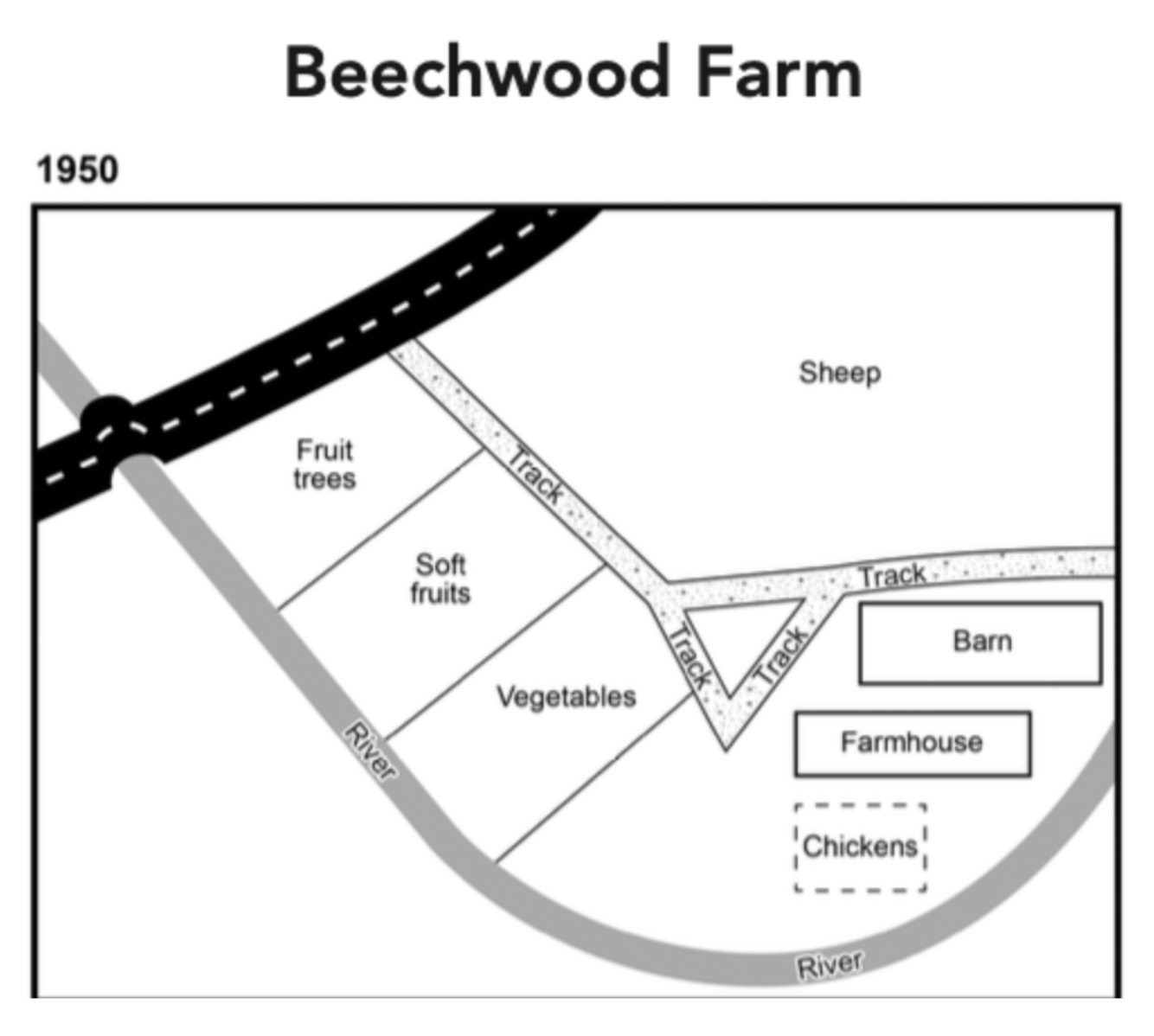
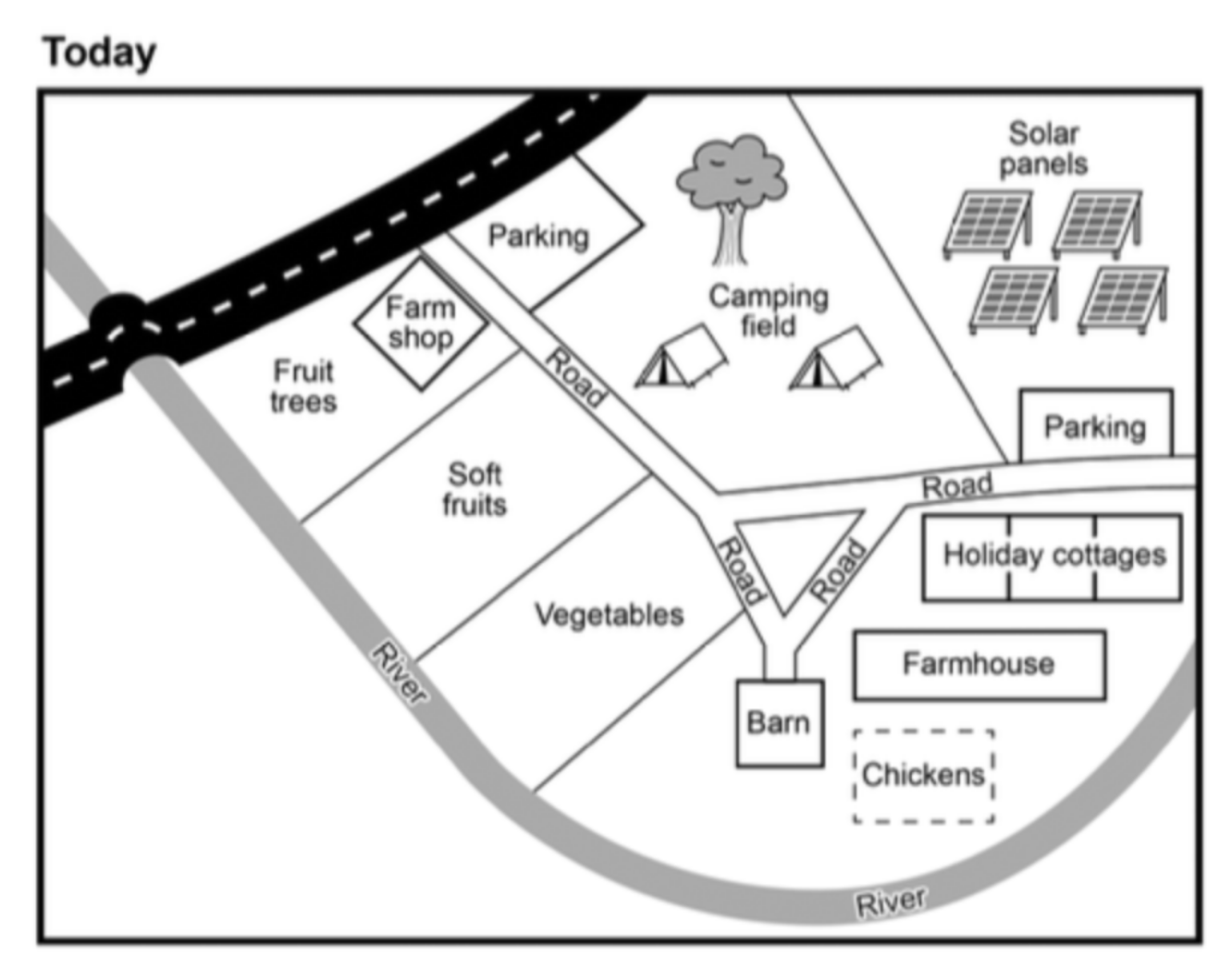
The plans below show the site of a farm in 1950 and the same site today.
Summarise the information by selecting and reporting the main features, and make comparisons where relevant.
Student answer (Band 5.5)
The chart illustrate that what changes are produced in the plan of a site farm how it looks in 1950 and what changes are made today.
In 1950, it is observed that beechwood farm is simple and there is only few things in this farm. As fruit trees, soft fruits, vegetables are together in a line and the river is also flowing near these trees and vegetables. There are also some chicken in farmhouse which people can eat. There is also a barn near the track and the other side of track there is only sheep are living.
Nowadays, the beechwood farm become modernise as people easily park their vehicales and also enjoy picnic in the camping feild. A very huge change is that the track converts into a road. People can directly go to the barn. The more development is that there is holiday cottage near the farm house from which they can enjoy view. There are also solar panels to save electricity.
To sum up the farm become modernised ]
AI examiner evaluation
| Criterion | Band |
|---|---|
| Task Achievement / Task Response | 5.5 |
| Coherence and Cohesion | 6.0 |
| Lexical Resource | 5.0 |
| Grammatical Range and Accuracy | 5.0 |
| Overall | 5.5 |
Task Achievement / Task Response: Band 5.5
You identify the broad change from a working farm to a more developed site, mentioning new parking, camping, holiday cottages and solar panels. You also compare the earlier track with the present road. However, the overview is brief and the account omits several important changes, especially the farm shop and the relocation or altered arrangement of facilities. Some details are inaccurate: chickens are shown in an enclosure south of the farmhouse, not “in farmhouse,” and the map does not indicate that people can eat them. The claim that visitors can “enjoy view” is not a feature shown by the plan. To strengthen the response, describe the main spatial changes more precisely and distinguish clearly between what the maps show and what you infer.
Coherence and Cohesion: Band 6.0
The response has a recognisable overall structure: an introduction, a paragraph about 1950, a paragraph about today, and a brief conclusion. Time markers such as “In 1950” and “Nowadays” help the reader follow the comparison, and the main ideas are generally presented in a sensible order. However, the final sentence repeats the general point rather than adding a useful overview, while several details are grouped loosely rather than compared by location or function. Linking is also somewhat mechanical, with repeated “There is/are” and “also.” Organise the body around key areas or changes—for example, agricultural land, access and visitor facilities—and use clearer references to connect old and new features.
Lexical Resource: Band 5.0
You use some relevant vocabulary for describing maps, including “river,” “track,” “barn,” “camping field,” “holiday cottage” and “solar panels.” This gives the reader a basic understanding of the site’s development. However, the range is limited and several word choices or forms are inaccurate, such as “plan of a site farm,” “become modernise,” “vehicales” and “camping feild.” Phrases such as “very huge change” and “enjoy view” are also unnatural or imprecise. Aim for accurate map-description language, including terms for location and change, and check spelling and collocations. For example, describe facilities as being “added” or “introduced,” and say that the track “was replaced by a road” rather than that it “converts.”
Grammatical Range and Accuracy: Band 5.0
You communicate the basic timeline using simple present and past references, and you attempt longer sentences with “as” and “from which.” However, grammatical control is inconsistent. The opening, “The chart illustrate that what changes are produced,” has subject–verb agreement and sentence-structure problems. Other examples include “there is only few things,” “the farm become modernise,” and “the track converts into a road,” where agreement, articles, tense or verb forms are not controlled. Some sentences also combine ideas without a clear grammatical relationship. Practise accurate simple sentences first, then build comparisons with forms such as “In 1950, the site contained…, whereas today…” and “The track has been replaced by a road.” Check agreement, articles and tense throughout.
See this exact question answered at other band scores. The same prompt compared across bands.
Browse more IELTS Writing model answers or get your own writing scored by the same AI examiner.