Band 5.5 IELTS Writing Task 1 Model Answer
Overall Band Score: 5.5 · Cambridge IELTS 20 · 2026-11-28
IELTS Writing Task 1 question
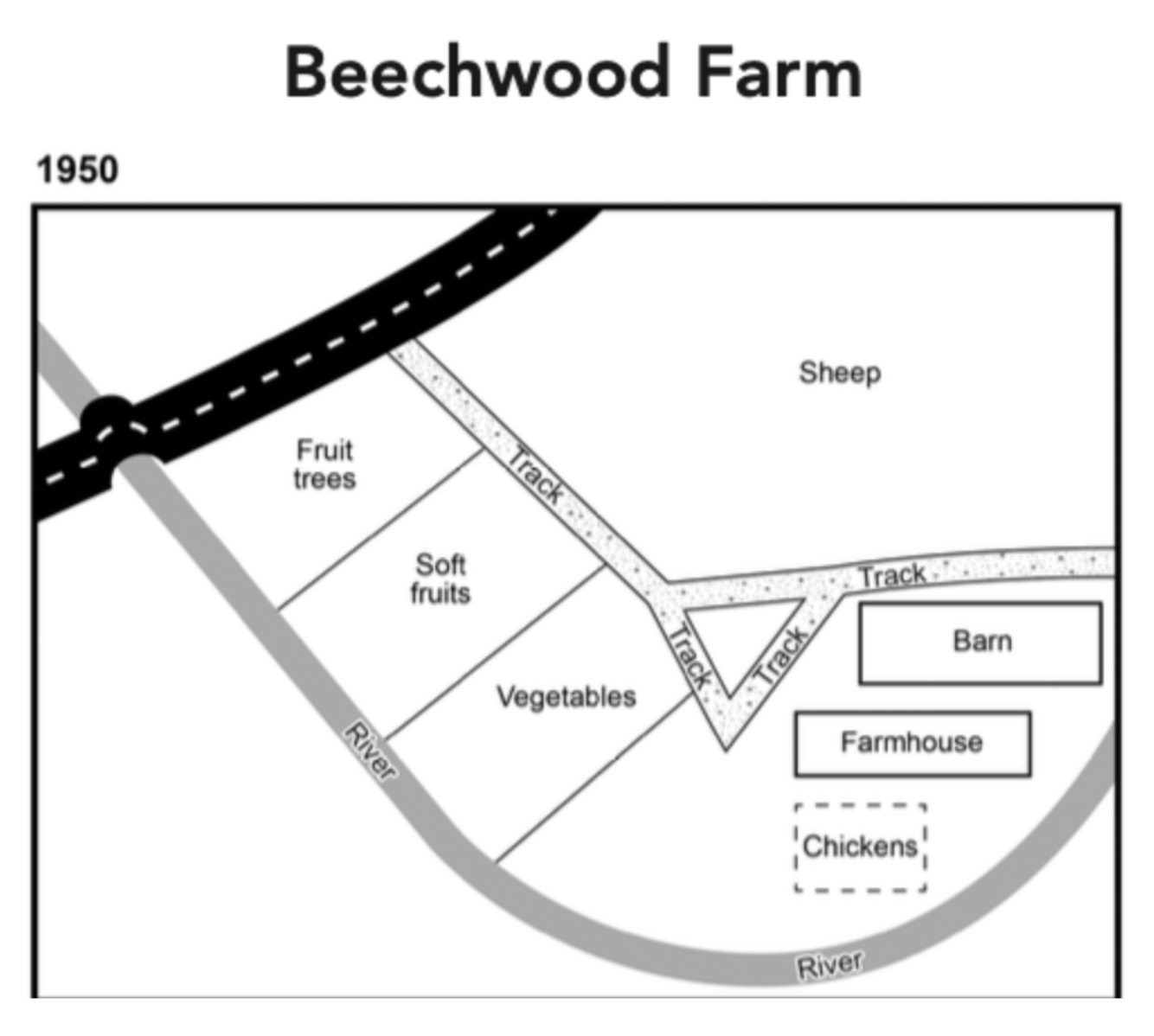
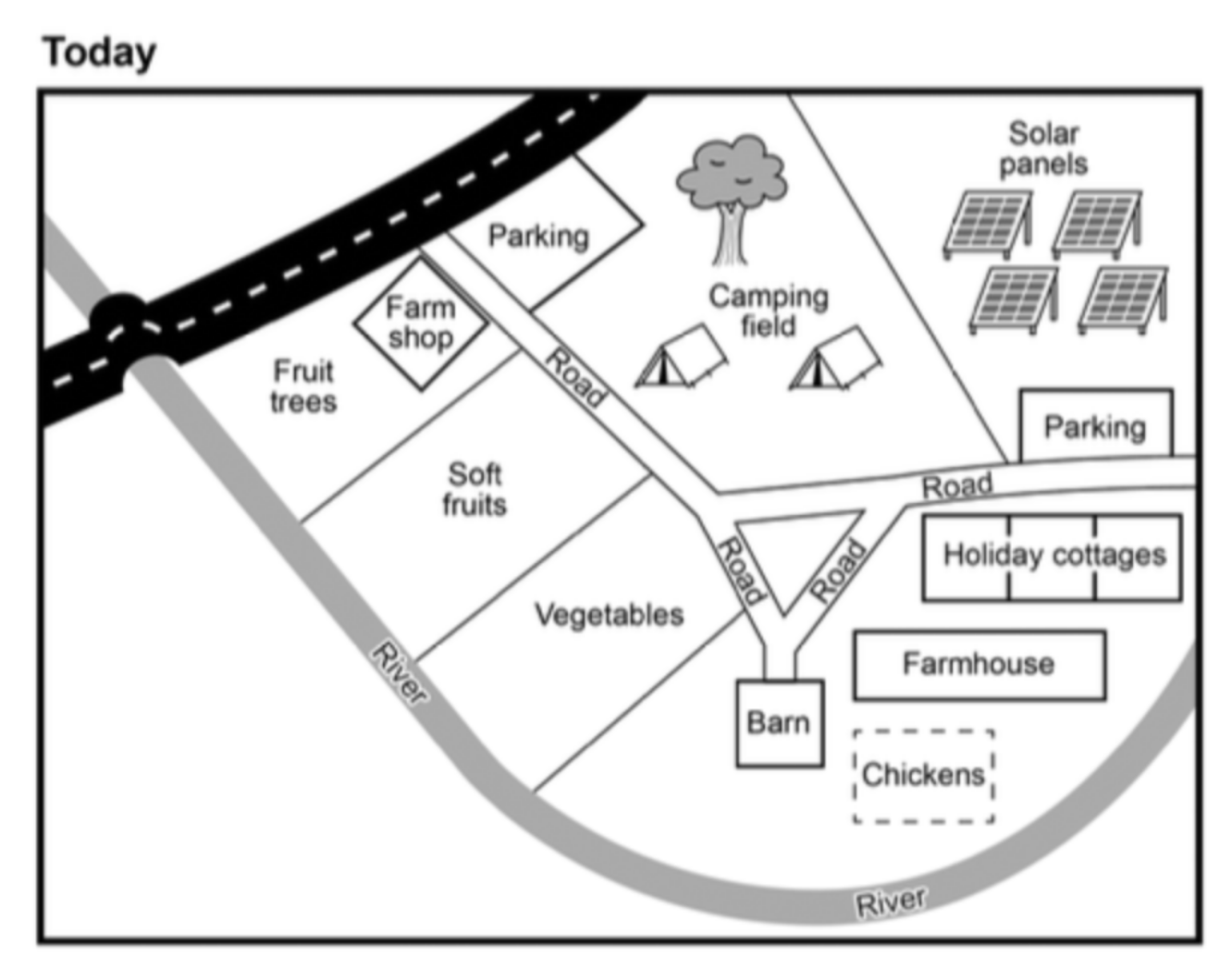
The plans below show the site of a farm in 1950 and the same site today.
Summarise the information by selecting and reporting the main features, and make comparisons where relevant.
Student answer (Band 5.5)
The map plan show the site of a farm in 1950 and the same site present.
Overall, it will we clear seen that,in the present time they added solar panels , parking,farm shop, fruit trees ad other many things. beechwood farm in 1950 very much place cober sheep. i think it's good change plan in now.
To being with,in 1950 beechwood farm we seen in the coner side sheep. beechwood farm around river and one side road.In the centre there are many devided many part like soft fruits, growing fruit trees and good green vegetables after the some place small farmhouse and barn ,chickens.
Futhermore,in the present time, beechwood farm change very much. sheep places changed and added solar pannels and camping field and adding some parking near the road.River is the same place they never changed . farmhouse and chickens same place but barn removed and adding holiday cottages and barn fix new place with adding roads. fruits trees, soft fruits and vrgrtables same the place. they never changed.
AI examiner evaluation
| Criterion | Band |
|---|---|
| Task Achievement / Task Response | 6.0 |
| Coherence and Cohesion | 5.5 |
| Lexical Resource | 5.0 |
| Grammatical Range and Accuracy | 4.5 |
| Overall | 5.5 |
Task Achievement / Task Response: Band 6.0
You cover both time periods and identify several important changes, including the addition of solar panels, parking, a farm shop, a camping field and holiday cottages. You also correctly note that the river and the fruit-growing areas remain broadly unchanged. However, some details are inaccurate or unclear: the sheep area is not described as being in a “corner side,” and the barn was relocated rather than simply removed and replaced. The overview, “they added … other many things,” is too general to summarise the main transformation clearly, and the claim that the farm was “very much place cober sheep” is difficult to interpret. A more precise overview contrasting the new visitor facilities with retained agricultural features would strengthen the response.
Coherence and Cohesion: Band 5.5
The response has a recognisable structure: an introduction, an overview, a description of the earlier plan and a paragraph about the present layout. Time markers such as “in 1950” and “in the present time” help signal the comparison. However, progression within paragraphs is uneven, and several details are crowded into long, loosely connected sentences. For example, the final paragraph moves from solar panels and parking to the river, buildings and crops without a clear spatial order. Repeated linking phrases such as “Furthermore” and “and” do not always show the relationship between ideas, while references such as “they” are unclear. Grouping features by location or by what changed and stayed the same would make the comparison easier to follow.
Lexical Resource: Band 5.0
You use relevant map vocabulary, including “river,” “road,” “farmhouse,” “chickens,” “camping field” and “holiday cottages,” so the reader can identify many of the features being compared. However, the range is limited and several word choices or spellings make meaning difficult to recover. Phrases such as “very much place cober sheep,” “good green vegetables” and “barn fix new place” are not natural or precise descriptions. There are also spelling errors in “pannels,” “devided” and “vrgrtables.” Aim to use accurate location and change vocabulary, such as “located,” “remained,” “was relocated” and “was converted,” rather than relying on general words like “added” and “changed.”
Grammatical Range and Accuracy: Band 4.5
You attempt both simple statements and longer sentences, and the reader can generally recognise the two time periods being compared. However, control of sentence structure and verb forms is weak in several places. For example, “The map plan show” needs subject–verb agreement, while “it will we clear seen” does not form a grammatical clause. The present and past are also mixed in descriptions of the 1950 plan, as in “we seen” and “there are.” Some sentences lack clear boundaries or punctuation, particularly the long final paragraph, which makes relationships between clauses difficult to follow. Practise accurate past-tense descriptions and build longer sentences from correctly joined clauses.
See this exact question answered at other band scores. The same prompt compared across bands.
Browse more IELTS Writing model answers or get your own writing scored by the same AI examiner.