Band 5.5 IELTS Writing Task 1 Model Answer
Overall Band Score: 5.5 · Cambridge IELTS 17 · 2026-11-10
IELTS Writing Task 1 question
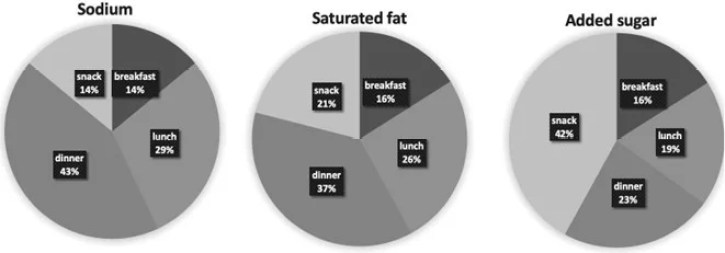
The charts below show the average percentages in typical meals of three types of nutrients, all of which may be unhealthy if eaten too much.
Summarise the information by selecting and reporting the main features, and make comparisons where relevant.
Average percentages of sodium, saturated fats and added sugars in typical meals consumed in the USA
Student answer (Band 5.5)
The given charts help us distinguish the different type of nutrients we consume in our daily meals and the amount each nutrient varies between breakfast,lunch and dinner might help us to regulate it properly.
Nutrients play an essential role in proper functioning of human body. Dinner is fully enriched with sodium and saturated fats with an optimum amount of added sugar. Lunch consists sodium in a greater amount with saturated fats being a little less and added sugar being the least among three of them.
Breakfast contain a balance of all three nutrients at an optimum value. The diet in breakfast seems a balanced diet to be productive the entire day. The snacks consumed in the entire day contain almost a 50% added sugar that is very bad for health and optimum balanced amount of saturated fats and sodium.
The snacks consumed throughout the day are the most contagious and dangerous for human health. The added sugar in it might lead to heart problems, obesity or diabetes.
AI examiner evaluation
| Criterion | Band |
|---|---|
| Task Achievement / Task Response | 5.0 |
| Coherence and Cohesion | 5.0 |
| Lexical Resource | 5.5 |
| Grammatical Range and Accuracy | 5.5 |
| Overall | 5.5 |
Task Achievement / Task Response: Band 5.0
The response identifies some relevant broad patterns, especially that dinner has high sodium and saturated fat and that snacks contain the largest share of added sugar. However, it only partially reports the chart: it gives no precise figures and makes several unsupported or inaccurate claims. For example, lunch does not contain sodium “in a greater amount” than dinner, and breakfast is not shown to be a balanced or “optimum” meal; these charts compare nutrient shares, not nutritional quality. The overview should clearly state the main contrasts: dinner leads in sodium and saturated fat, while snacks lead in added sugar. Report key percentages and avoid health advice or conclusions that the data cannot establish.
Coherence and Cohesion: Band 5.0
The response is divided into paragraphs and generally moves from an introduction to meal-by-meal comments, so there is some basic organisation. However, the progression is not consistently clear: the second paragraph discusses dinner and lunch, the third shifts to breakfast and snacks, and the final paragraph repeats the warning about snacks rather than adding a new comparison. Connections between ideas are also limited, and phrases such as “Lunch consists sodium…” make the relationship between the meal and nutrient difficult to follow. Organise the report around the chart’s main contrasts, using one paragraph for dinner’s high sodium and saturated fat and another for the snack sugar peak, with comparisons to the other meals.
Lexical Resource: Band 5.5
There is some relevant vocabulary, including “nutrients,” “saturated fats,” “added sugar,” and “amount,” and the response attempts more descriptive language such as “enriched” and “optimum.” However, several choices are inaccurate or unsuitable for an objective chart summary. “Contagious” does not mean harmful, while “fully enriched” and “productive the entire day” introduce unclear or unsupported meanings. Repetition of “amount” and “consumed” also limits precision. Use neutral reporting language such as “accounted for,” “share,” “highest proportion,” and “lowest figure.” More accurate vocabulary would help distinguish the chart’s percentages from claims about whether a meal is healthy.
Grammatical Range and Accuracy: Band 5.5
The response attempts both simple and more extended sentences, and the main message is usually understandable. However, errors in agreement, articles, and sentence construction remain noticeable. For example, “Breakfast contain” should be “Breakfast contains,” and “proper functioning of human body” needs articles (“the proper functioning of the human body”). The opening sentence is long and awkwardly joined, while “Lunch consists sodium” lacks the required grammatical pattern (“consists of” or, more naturally, “contains”). There are also punctuation and spacing issues, such as the missing space in “breakfast,lunch.” Aim for shorter, controlled sentences and check subject–verb agreement and article use when revising.
See this exact question answered at other band scores. The same prompt compared across bands.
Browse more IELTS Writing model answers or get your own writing scored by the same AI examiner.