Band 5.0 IELTS Writing Task 1 Model Answer
Overall Band Score: 5.0 · Cambridge IELTS 17 · 2026-11-11
IELTS Writing Task 1 question
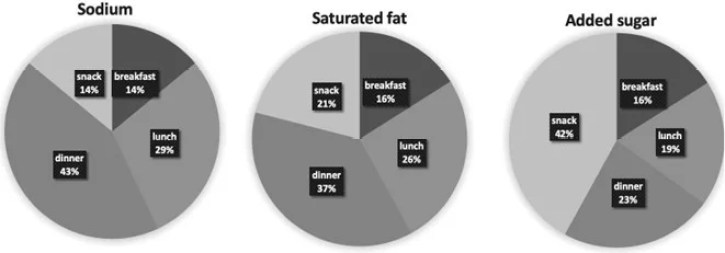
The charts below show the average percentages in typical meals of three types of nutrients, all of which may be unhealthy if eaten too much.
Summarise the information by selecting and reporting the main features, and make comparisons where relevant.
Average percentages of sodium, saturated fats and added sugars in typical meals consumed in the USA
Student answer (Band 5.0)
The pie chart illustrates the average proportion in typical meals of three kinds of nutrients, all of which may be unhealthy if eaten too much named sodium, saturated fats and sugar.
Overall, the given chart highlights singnificants difference in three types of nutrients in the USA whereas, dinner meals consumed the highest percentages while breakfast recorded the lowest meals consumed.
To start with, the average percentages of sodium snack start at approximately 14% and gradually increase to 21% and then rise dramatically 42%. In addition, the luch meals consumed began at 29% . Following the saturated fat lunch experience 26% and slightly decline when added sugar. On the other hand, dinner meal consumed about at 43% and dramatically decline to 37%. The figures also fall to 23%. Meanwhile, the breakfast meal consumed up and down trend.
AI examiner evaluation
| Criterion | Band |
|---|---|
| Task Achievement / Task Response | 4.5 |
| Coherence and Cohesion | 4.5 |
| Lexical Resource | 5.0 |
| Grammatical Range and Accuracy | 5.0 |
| Overall | 5.0 |
Task Achievement / Task Response: Band 4.5
You identify the three nutrients and include an overall statement that dinner is highest and breakfast lowest, which shows an attempt to summarise the main pattern. However, the overview is not fully accurate: dinner is not highest for added sugar, where snacks lead at 42%, and breakfast is not the lowest for every nutrient. Several comparisons are confused, such as saying sodium rises from 14% to 21% and then 42%; these figures actually belong to different nutrients and meals. The response also omits clear, accurate coverage of the chart’s main contrasts. It contains 124 words, below the required 150, which limits the detail available. To improve, organise the figures by nutrient or meal and report the key values accurately, especially the snack peak for sugar and dinner peaks for sodium and saturated fat.
Coherence and Cohesion: Band 4.5
There is a basic attempt to organise the response with an introduction, an overview, and a body paragraph, and phrases such as “Overall,” “To start with,” and “On the other hand” signal relationships. However, the body does not progress clearly through the chart: it shifts between sodium, snacks, lunch, saturated fat, dinner, and breakfast without a consistent comparison structure. Some links are difficult to follow, particularly “Following the saturated fat lunch experience 26% and slightly decline when added sugar.” The final sentence about breakfast is not supported with figures or a clear comparison. Use one paragraph to compare the three nutrients across meals, or separate paragraphs by nutrient, and make each transition connect ideas that are actually being compared.
Lexical Resource: Band 5.0
You use some relevant chart vocabulary, including “average percentages,” “proportion,” “dramatically,” and “decline,” so the response has a basic range for describing data. However, word choice and collocation are often inaccurate or repetitive, which makes some comparisons hard to understand. For example, “breakfast recorded the lowest meals consumed” confuses meal frequency with nutrient percentages, while “the average percentages of sodium snack” is not a natural phrase. There are also spelling errors such as “singnificants” and “luch.” Aim for precise terms such as “accounted for,” “share,” and “percentage,” and use the meal names consistently. Check spelling and avoid using trend verbs when the figures are separate categories rather than a sequence over time.
Grammatical Range and Accuracy: Band 5.0
The response includes both simple statements and attempts at longer sentences, such as the opening sentence and the sentence beginning “In addition.” However, the longer structures are often difficult to control, and several clauses lack clear grammatical relationships. For instance, “Following the saturated fat lunch experience 26% and slightly decline when added sugar” has no clear subject for “decline,” while “dinner meal consumed about at 43%” has an awkward and incomplete structure. Articles, sentence boundaries, and punctuation are also inconsistent, as seen in the extra spacing and comma use in the overview. Practise building clear subject–verb sentences first, then combine them with accurate connectors. For example: “Dinner accounted for 43% of sodium, compared with 37% of saturated fat.”
See this exact question answered at other band scores. The same prompt compared across bands.
Browse more IELTS Writing model answers or get your own writing scored by the same AI examiner.