Band 5.0 IELTS Writing Task 1 Model Answer
Overall Band Score: 5.0 · Cambridge IELTS 17 · 2026-11-11
IELTS Writing Task 1 question
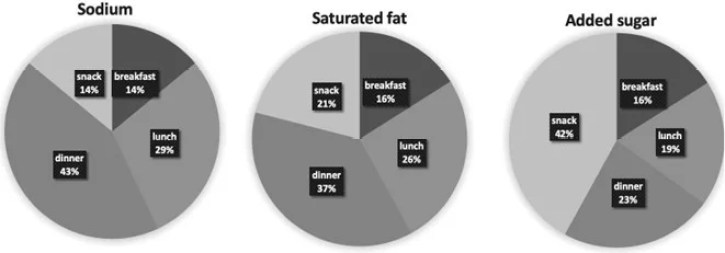
The charts below show the average percentages in typical meals of three types of nutrients, all of which may be unhealthy if eaten too much.
Summarise the information by selecting and reporting the main features, and make comparisons where relevant.
Average percentages of sodium, saturated fats and added sugars in typical meals consumed in the USA
Student answer (Band 5.0)
In sodium, there is 14 % snack, but in saturated fat there is 21 % snack but when sugar is added into the nutrients , that increase the range of percentage or leads to 42%. If we just focus on the dinner percentage which consumed in USA that is 43% in sodium, 37% in saturated fat but very low with the addition of sugar that is just 23%. The range of breakfast for all the three nutrients is quite good and comparable as ranging from 14 to 16% that is consuming in USA, so the percentage of breakfast is a reasonable to consume nutrients for the health with this range. As the lunch is showing 29% by using the sodium nutrient, and its below on average as 26% in saturated fat that is consuming low but when we talk about sugar its showing the percentage of 23% which is consuming very low as compare to the others.
AI examiner evaluation
| Criterion | Band |
|---|---|
| Task Achievement / Task Response | 5.5 |
| Coherence and Cohesion | 4.5 |
| Lexical Resource | 5.5 |
| Grammatical Range and Accuracy | 5.0 |
| Overall | 5.0 |
Task Achievement / Task Response: Band 5.5
You identify several relevant comparisons, including dinner as the largest share of sodium (43%) and saturated fat (37%), and snacks as the largest share of added sugar (42%). You also note that breakfast figures are close together. However, the report does not give a clear overall summary of the main pattern, and some comparisons are inaccurate: added sugar at lunch is 19%, not 23%, while 23% is the dinner figure. The claim that dinner is “very low” for added sugar is not well supported, since it is higher than breakfast and lunch. The response therefore covers the charts only partially, with key observations present but not consistently accurate or developed. State the main contrasts clearly and check each figure against the chart.
Coherence and Cohesion: Band 4.5
The response moves through the nutrients and meal types, so a reader can identify the comparisons you intend to make. However, it is presented as one long paragraph without a clear overview or a planned sequence, and several links make the progression difficult to follow. For example, “but when sugar is added into the nutrients” does not clearly explain the comparison, while “As the lunch is showing…” introduces another point without a clear connection to the previous one. Repeated use of “but,” “as,” and “when” also makes cohesion feel mechanical. Organise the report into an overview followed by grouped comparisons, and use precise references such as “by contrast” or “for added sugar” only where they clarify the relationship.
Lexical Resource: Band 5.5
You use relevant chart vocabulary such as “percentage,” “range,” “breakfast,” and “dinner,” and the reader can generally understand which nutrient and meal you mean. However, the vocabulary is repetitive and some word combinations are unnatural or imprecise, including “there is 14% snack,” “the addition of sugar,” and “reasonable to consume nutrients for the health.” The phrase “very low” is also an unsuitable description of the 23% dinner share without a clear comparison. These choices sometimes make the intended meaning less clear. Aim for concise reporting language and accurate collocations, such as “accounts for,” “share,” and “proportion,” while avoiding health advice that the charts do not provide.
Grammatical Range and Accuracy: Band 5.0
You attempt longer sentences using clauses and connectors, for example, “If we just focus on the dinner percentage…” and “As the lunch is showing…”. However, these complex structures are often faulty, and sentence boundaries and clause relationships are not consistently controlled. In “that increase the range of percentage or leads to 42%,” the subject and verb do not agree, and the sentence does not form a clear grammatical comparison. Phrases such as “which consumed in USA” also lack a correctly formed clause. Use shorter, complete sentences first, with a clear subject and verb, then add subordinate clauses where you can control them. Check articles, agreement, and punctuation when revising.
See this exact question answered at other band scores. The same prompt compared across bands.
Browse more IELTS Writing model answers or get your own writing scored by the same AI examiner.