Band 5.5 IELTS Writing Task 1 Model Answer
Overall Band Score: 5.5 · Cambridge IELTS 17 · 2026-11-11
IELTS Writing Task 1 question
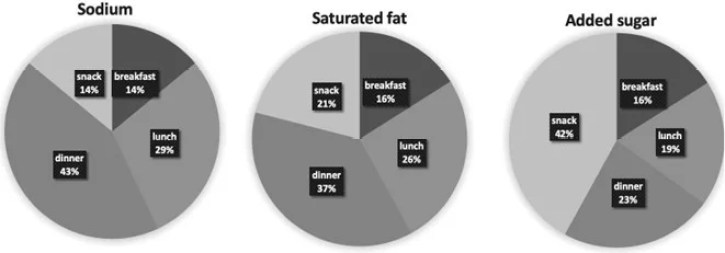
The charts below show the average percentages in typical meals of three types of nutrients, all of which may be unhealthy if eaten too much.
Summarise the information by selecting and reporting the main features, and make comparisons where relevant.
Average percentages of sodium, saturated fats and added sugars in typical meals consumed in the USA
Student answer (Band 5.5)
The diagrams demonstrate the exact ratio in beneficial foods of triple kinds of nutrients,overall of which may be harmful if eaten too much.
Overall,it is evident from the charts average fraction of sodium,saturated fats and added sugars in typical meals consumed in the USA.It can be seen sodium is consumed in large quantaties in dinner.In addition,second ranked is more eaten saturated fats.
In detail,the sodium which is more taken in the USA meals.However,the dinner is rougly 43%,whereas the saturated fats the dinner is consumed approximatly 37%.Moreover,the added sugar is 23%,this is least portion which is eaten less.
On the other hand,in the first diagram the breakfast is taken 14% as compare to another one it is 16%,and next one is remain the same.In the added sugar the highest ratio is snacks which consumed very well roughly 42%,in addition the lowest is considered the breakfast which is 19% respectively.
In my opinion it can seen overall,the dinner hit the peak point consumed in high quantaty,and the breakfast eaten in low range.
AI examiner evaluation
| Criterion | Band |
|---|---|
| Task Achievement / Task Response | 6.0 |
| Coherence and Cohesion | 5.0 |
| Lexical Resource | 5.0 |
| Grammatical Range and Accuracy | 5.0 |
| Overall | 5.5 |
Task Achievement / Task Response: Band 6.0
You identify several important patterns, especially that dinner accounts for the largest shares of sodium and saturated fat (43% and 37%) and that snacks contribute the most added sugar (42%). You also attempt an overview and compare meal categories. However, some details are inaccurate or unclear: breakfast has the lowest added-sugar share at 16%, not 19%, and 19% is the lunch figure. The statement that breakfast is “the lowest” overall is too broad, since breakfast is tied with snacks for sodium and is not the smallest share of saturated fat. The overview also says dinner is highest and breakfast lowest without clearly distinguishing the three nutrients. More precise, nutrient-by-nutrient comparisons would make the relevant features clearer and more fully developed.
Coherence and Cohesion: Band 5.0
The response has a basic paragraph structure, moving from an introduction and overview to details, and it uses linking expressions such as “Overall,” “In addition,” and “On the other hand.” However, progression is difficult to follow because the comparisons are not consistently organised by nutrient or meal. Phrases such as “the first diagram” and “another one” leave the reader unsure which chart or figure is meant, while “next one is remain the same” does not clearly identify the comparison. Several connectors are also used mechanically or do not express the relationship accurately. Grouping the information into clear comparisons—for example, dinner’s shares of sodium and saturated fat, then the snack peak for sugar—would create a more logical flow.
Lexical Resource: Band 5.0
You use some task-relevant vocabulary, including “ratio,” “portion,” “consumed,” and “highest,” and the reader can generally recognise that the response is describing chart proportions. However, the range is limited and several word choices or collocations make the meaning awkward: “beneficial foods” misrepresents the charts, “triple kinds” is unnatural, and “dinner hit the peak point” is not suitable for formal data reporting. There are also noticeable spelling errors, including “quantaties,” “rougly,” and “approximatly.” Use precise chart language such as “share,” “proportion,” and “accounted for,” and check spelling carefully. This would make the comparisons clearer and more appropriately academic.
Grammatical Range and Accuracy: Band 5.0
You attempt both simple and more complex sentences, including comparisons with “whereas” and clauses introduced by “which.” However, sentence structures are often faulty, and errors sometimes make relationships difficult to understand. For example, “Overall, it is evident from the charts average fraction…” lacks a grammatical connection between the charts and the claim, while “the breakfast is taken 14% as compare to another one it is 16%” has an unclear comparison structure. Articles, agreement, and sentence boundaries also need attention, as in “the added sugar is 23%, this is least portion.” Practise forming complete sentences with a clear subject and verb, and use accurate comparative patterns such as “Breakfast accounts for 14%, compared with 16% for saturated fat.”
See this exact question answered at other band scores. The same prompt compared across bands.
Browse more IELTS Writing model answers or get your own writing scored by the same AI examiner.