Band 6.0 IELTS Writing Task 1 Model Answer
Overall Band Score: 6.0 · Cambridge IELTS 17 · 2026-11-11
IELTS Writing Task 1 question
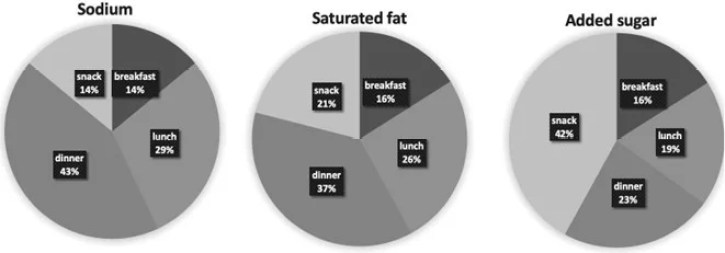
The charts below show the average percentages in typical meals of three types of nutrients, all of which may be unhealthy if eaten too much.
Summarise the information by selecting and reporting the main features, and make comparisons where relevant.
Average percentages of sodium, saturated fats and added sugars in typical meals consumed in the USA
Student answer (Band 6.0)
The pie charts illustrate the typical proportion in meals of three types of nutrients which can be harmful for health if we eaten excessively.
Looking at the details, firstly sodium; in snack there are 14% soduim and same amount are in the breakfast. However, dinner share the largest percentage 43% among all, while lunch constitute 29%. In second chart, snack has 21% saturated fat and breakfast accounted for 16%. Meanwhile, dinner has the largest proportion of saturated fat 37%, while lunch has 26%. Furthermore, in added sugar chart snack has largest share 42%. However, breakfast has lowest percentage among all constitute 16% and dinner has 23% sugar. While, lunch has 19% added sugar.
Overall, dinner has more percentage of sodium and saturated fat. While snack has largest added sugar percentage, in breakfast and lunch have moderate percentage among all nutrients. Dinner has low sugar nutrient as other other nutrients in the USA.
AI examiner evaluation
| Criterion | Band |
|---|---|
| Task Achievement / Task Response | 6.5 |
| Coherence and Cohesion | 6.5 |
| Lexical Resource | 6.0 |
| Grammatical Range and Accuracy | 5.5 |
| Overall | 6.0 |
Task Achievement / Task Response: Band 6.5
You cover all three nutrients and report the main meal patterns accurately: dinner is highest for sodium (43%) and saturated fat (37%), while snacks lead for added sugar (42%). The overview also identifies these key contrasts, and the figures you include are consistent with the charts. This gives the response a clear, relevant summary. Some comparisons are less fully developed, however: for example, the overview calls breakfast and lunch “moderate” without explaining how their shares compare across nutrients, and the final claim that dinner has “low sugar” is vague rather than a precise comparison. To strengthen the response, make the overview more comparative and distinguish the relatively even sugar shares at breakfast, lunch and dinner from the much higher snack figure.
Coherence and Cohesion: Band 6.5
The response has a recognisable structure, moving from an introduction to details and then an overall summary. Grouping the figures by nutrient makes the information easy to follow, and linking words such as “Meanwhile” and “Furthermore” help signal progression. However, cohesion is sometimes mechanical or unclear: “However” is used where no contrast is needed, and the repeated “while” constructions make the account feel list-like. The overview comes after the detailed figures, which is acceptable, but it repeats points rather than synthesising them. Improve progression by presenting the main overview immediately after the introduction, then grouping comparisons by meal or by the two contrasting patterns. Use referencing and connectors only when they express a genuine relationship.
Lexical Resource: Band 6.0
You use an adequate range of task-related vocabulary, including “proportion,” “largest percentage,” “share,” and “accounted for,” so the chart information remains understandable. There are also attempts at more formal phrasing, such as “harmful for health” and “constitute.” Some word choices and collocations are inaccurate or repetitive, though: “dinner share” and “dinner has more percentage” are not natural ways to describe chart values, while “moderate percentage” is imprecise. The spelling error “soduim” also weakens accuracy. Aim for consistent, natural reporting language such as “accounted for,” “represented,” and “the highest proportion,” and use “percentage” only when referring to a numerical share rather than as a substitute for “amount” or “proportion.”
Grammatical Range and Accuracy: Band 5.5
You attempt both simple and more complex sentence forms, including comparisons joined with “while” and “however,” and the intended meaning is generally clear. Some grammatical errors remain, particularly with articles, agreement and sentence construction. For example, “if we eaten excessively” needs a correctly formed conditional clause, and “in snack there are 14%” has an awkward structure for reporting a chart figure. In “breakfast and lunch have moderate percentage,” the noun phrase also needs an article or plural form. The final overview contains a sentence fragment beginning “While,” and “in breakfast and lunch have” has an incorrect construction. Practise complete clauses and consistent subject–verb patterns; this will make your comparisons more accurate while preserving the range you are attempting.
See this exact question answered at other band scores. The same prompt compared across bands.
Browse more IELTS Writing model answers or get your own writing scored by the same AI examiner.