Band 5.5 IELTS Writing Task 1 Model Answer
Overall Band Score: 5.5 · Cambridge IELTS 17 · 2026-11-11
IELTS Writing Task 1 question
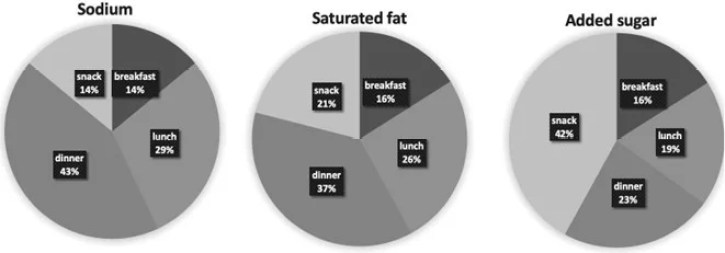
The charts below show the average percentages in typical meals of three types of nutrients, all of which may be unhealthy if eaten too much.
Summarise the information by selecting and reporting the main features, and make comparisons where relevant.
Average percentages of sodium, saturated fats and added sugars in typical meals consumed in the USA
Student answer (Band 5.5)
The pie chart dipicts the average percentages in typical meals of three types of nutrients, all of which may be unhealthy if eaten too much. Overall, added sugar in snack is major problem and saturated fat and sodium in dinner is the main cause to become unhealthy if eaten too much.
As we can see, the add sugar in the snack which is 42 percent is the main cause where as sodium in snack is 14 percent and saturated fat is 21 percent. In breakfast the added sugar and saturated fat is same which is 16 percent where as the percentage of sodium is less in it which is 14 percent.
Furthermore, in lunch the sodium is consumed 29 percent which is highest and saturated fat is 26 percent and sugar is on the lesser side which is only 19 percent. Moreover, in dinner sodium is consumed 43percent which is too much high and saturated fat is 37 percent and sugar is 23 percent which is at low side.
AI examiner evaluation
| Criterion | Band |
|---|---|
| Task Achievement / Task Response | 5.5 |
| Coherence and Cohesion | 5.5 |
| Lexical Resource | 5.0 |
| Grammatical Range and Accuracy | 5.5 |
| Overall | 5.5 |
Task Achievement / Task Response: Band 5.5
You identify the main contrast accurately: added sugar is highest in snacks at 42%, while sodium and saturated fat peak at dinner, at 43% and 37%. You also report the breakfast and lunch figures, so the response is relevant and includes several useful comparisons. However, the overview is not fully clear: calling dinner nutrients “the main cause to become unhealthy” is an imprecise interpretation, and the response does not clearly summarise the overall pattern across all three nutrients. The task is also under the required minimum: it contains 148 words, with 21 words copied from the prompt excluded from the count. Add a concise overview and develop the comparisons rather than repeating individual figures.
Coherence and Cohesion: Band 5.5
The response has a basic, understandable structure: an introduction and overview are followed by details about snacks and breakfast, then lunch and dinner. Linking expressions such as “Overall,” “Furthermore,” and “Moreover” help signal movement between points. However, progression is somewhat mechanical, and the overview does not establish a clear organising pattern for the details. Repeated constructions such as “which is” and “where as” make the comparisons feel list-like, while the snack and breakfast information is grouped together without a clear reason. Organise the body around the main trends—for example, meals with the highest shares, then those with lower shares—and use clearer references to the three nutrients.
Lexical Resource: Band 5.0
You use relevant chart vocabulary, including “average percentages,” “nutrients,” “consumed,” and “percentage,” and the reader can generally understand the comparisons. However, the range is limited and several word choices or collocations are noticeably inaccurate. “The add sugar” is not the correct form, “major problem” is an awkward description of a chart value, and “on the lesser side” and “at low side” are imprecise. “Dipicts” is also misspelled. Aim for concise, conventional reporting language such as “accounted for,” “highest proportion,” and “lowest figure.” This will make the description more precise without requiring unnecessarily complex vocabulary.
Grammatical Range and Accuracy: Band 5.5
You attempt both simple statements and longer comparisons, and most of the figures remain understandable. However, grammatical control is uneven, particularly in agreement and sentence construction. For example, “the added sugar and saturated fat is same” needs plural agreement and an article, while “sodium in snack is 14 percent” lacks an article before “snack.” The opening overview, “saturated fat and sodium in dinner is the main cause,” also has a subject–verb agreement problem and an unclear structure. Punctuation and spacing are inconsistent, as in “43percent.” Practise accurate comparison patterns, such as “the figures for X and Y were…” and check articles, plurals, and agreement when describing multiple nutrients.
See this exact question answered at other band scores. The same prompt compared across bands.
Browse more IELTS Writing model answers or get your own writing scored by the same AI examiner.