Band 5.0 IELTS Writing Task 1 Model Answer
Overall Band Score: 5.0 · Cambridge IELTS 17 · 2026-11-13
IELTS Writing Task 1 question
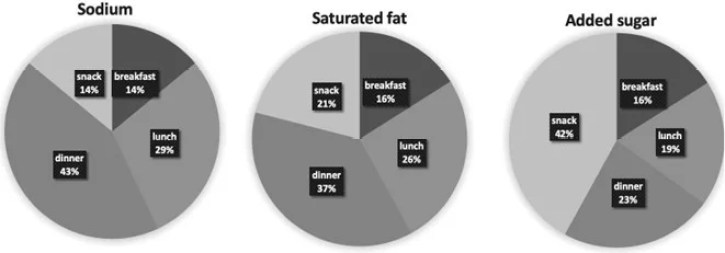
The charts below show the average percentages in typical meals of three types of nutrients, all of which may be unhealthy if eaten too much.
Summarise the information by selecting and reporting the main features, and make comparisons where relevant.
Average percentages of sodium, saturated fats and added sugars in typical meals consumed in the USA
Student answer (Band 5.0)
The charts below illustrates the average percentages in typical meals of three types of nutrients all of which may be unhealthy if eaten too much.
To begin with, the highest number of sodium and saturated fat used in dinner is about 43% sodium and 37% saturated fat used in dinner. While the highest amount of sugar added in snakes is about 42%. Moreover, the lowest proportion of sodium used in snake and in breakfast are about 14% however, the minimum wage of saturated fat used in breakfast is about 16%. Furthermore, the lowest share of sugar added in breakfast is about 16%.
In addition, the 29% sodium used in lunch while the 21% saturated fat used in snakes and 26% saturated fat used in lunch. As well as, 19% sugar added in lunch and 23% sugar used in dinner. This report shows that these three types of meals are unhealthy for ou health if we eaten too mich.
AI examiner evaluation
| Criterion | Band |
|---|---|
| Task Achievement / Task Response | 4.5 |
| Coherence and Cohesion | 5.0 |
| Lexical Resource | 5.0 |
| Grammatical Range and Accuracy | 5.0 |
| Overall | 5.0 |
Task Achievement / Task Response: Band 4.5
You identify several important features, including dinner as the largest source of sodium and saturated fat (43% and 37%) and snacks as the largest source of added sugar (42%). You also report some other figures accurately. However, the response is under the 150-word minimum: it contains 137 words, with 21 words copied from the prompt excluded from the count. Coverage is therefore limited, and there is no clear, developed overview comparing the three meal patterns—for example, that dinner leads for sodium and saturated fat while snacks lead for sugar. The final claim that the meals are unhealthy does not summarise the chart data. Add a concise overview and develop the comparisons with accurate figures.
Coherence and Cohesion: Band 5.0
The response has a basic sequence: it introduces the charts, reports some highest and lowest values, and then gives additional figures. Linking expressions such as “To begin with,” “Moreover,” and “Furthermore” show an attempt to connect points. However, the progression is not consistently clear: the second paragraph moves between nutrients and meals without a strong organising principle, and “In addition” introduces figures without explaining how they relate to the earlier comparisons. “While” and “As well as” are also used awkwardly, making some relationships unclear. Group the information by the main patterns—dinner, snacks, and the remaining meal comparisons—and use fewer, more precise transitions to guide the reader.
Lexical Resource: Band 5.0
You use some relevant chart vocabulary, including “proportion,” “share,” “highest,” and “lowest,” and the nutrient names are generally clear. However, the range is limited and several word choices or collocations are inaccurate, which can distract the reader. “Snakes” appears where you mean “snacks,” and “minimum wage” is not appropriate for describing a chart value; “lowest proportion” would fit. “Highest number” is also less suitable for percentages than “highest proportion.” The closing phrase “unhealthy for our health” is repetitive and does not add useful chart description. Aim for precise terms such as “accounted for,” “represented,” and “percentage,” and check spelling and collocations carefully.
Grammatical Range and Accuracy: Band 5.0
The response mainly uses simple sentence patterns, with attempts to add complexity through “while” and “however.” These attempts are not always grammatically complete: “While the highest amount of sugar added in snakes is about 42%” is a dependent clause presented as a sentence, and “As well as, 19% sugar added in lunch…” is also incomplete. There are recurring problems with agreement and sentence construction, as in “The charts below illustrates” and “the 29% sodium used in lunch.” The final clause, “if we eaten too mich,” also has an incorrect verb form. These errors sometimes make relationships difficult to follow. Practise complete sentences with a clear subject and verb, and combine comparisons using accurate clauses.
See this exact question answered at other band scores. The same prompt compared across bands.
Browse more IELTS Writing model answers or get your own writing scored by the same AI examiner.