Band 4.5 IELTS Writing Task 1 Model Answer
Overall Band Score: 4.5 · Cambridge IELTS 17 · 2026-11-16
IELTS Writing Task 1 question
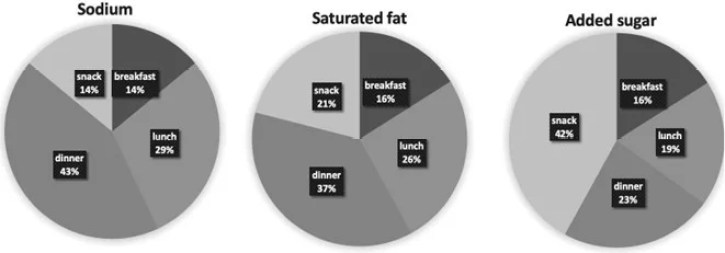
The charts below show the average percentages in typical meals of three types of nutrients, all of which may be unhealthy if eaten too much.
Summarise the information by selecting and reporting the main features, and make comparisons where relevant.
Average percentages of sodium, saturated fats and added sugars in typical meals consumed in the USA
Student answer (Band 4.5)
There is some information given by the USA. unhealthy food may cause if eaten to much and also the comparision between sodium, saturated fat, added sugar.
To begin, sodium include 14% snack well comparise with saturated fats 21% which is 7% high from the sodium and when we also comparise with added sugar its became as 42% which is siriously cause our health. In breakfast we added of all three sodium, saturated fat, and sugar so its 46%. When we ate dinner its became tottal 103% of mix sodium, saturated fat and sugar everybody had lunch in day so its became 73% all around of three unhealthy things. Avoiding unhealthy food its safe for long lasting life. Fat is burned by excersice or some sports sodium is important for body and sugar cause many deseases.
In the conclusion we avoided sugar in our breakfast and lowest in our daily life. everything is possible when ous body or health is well.
AI examiner evaluation
| Criterion | Band |
|---|---|
| Task Achievement / Task Response | 4.5 |
| Coherence and Cohesion | 4.0 |
| Lexical Resource | 4.5 |
| Grammatical Range and Accuracy | 4.5 |
| Overall | 4.5 |
Task Achievement / Task Response: Band 4.5
The response recognises that the charts compare sodium, saturated fat and added sugar across meals, and it includes some figures. However, the main patterns are not clearly summarised: dinner is highest for sodium and saturated fat, while snacks are highest for added sugar. The response mentions the snack figures and combines meal percentages, but totals such as 46%, 103% and 73% do not describe the chart’s comparisons and make the data harder to interpret. The claim about avoiding sugar at breakfast is also unsupported; breakfast has the lowest added-sugar share only jointly with sodium and saturated fat at 16%, not zero. Focus on reporting the largest and smallest meal shares and avoid health advice that is not shown in the charts.
Coherence and Cohesion: Band 4.0
There is a basic attempt to organise the response with an opening, a main paragraph beginning “To begin,” and a conclusion. Some comparisons are signalled with phrases such as “when we also compare,” but the ideas do not progress in a clear order. The paragraph moves from snack figures to breakfast, dinner and lunch, then shifts to general advice about exercise and health; the conclusion introduces another unsupported point. This makes it difficult to follow the chart summary. Group the information by nutrient or by meal, use one paragraph for the overview and another for selected comparisons, and remove unrelated advice. Clearer links between each figure and the meal it describes would also improve cohesion.
Lexical Resource: Band 4.5
The response uses a small set of relevant terms, including “sodium,” “saturated fat,” “added sugar,” “breakfast” and “dinner,” so the topic is identifiable. However, vocabulary is basic and often inaccurate or repetitive, which sometimes strains understanding. Phrases such as “sodium include 14% snack,” “its became as 42%” and “tottal 103% of mix” do not express the data naturally. There are also spelling errors, including “comparision,” “siriously,” “excersice” and “deseases.” Use precise chart language such as “accounted for,” “proportion” and “highest share,” and check spelling and collocations. Avoid evaluative claims like “seriously cause our health,” which are unclear and not needed for this task.
Grammatical Range and Accuracy: Band 4.5
The response attempts both simple statements and longer sentences joined with “and,” “when” and “so,” but control is limited and errors frequently make relationships unclear. For example, “There is some information given by the USA” has an unclear subject, while “In breakfast we added of all three … so its 46%” has faulty sentence structure and does not clearly identify what the percentage represents. Verb forms and agreement are also problematic in “sodium include” and “when we ate dinner its became.” Punctuation and sentence boundaries need attention, particularly where several ideas are joined in one long sentence. Practise accurate simple comparisons first, then add subordinate clauses while keeping each sentence focused on one chart feature.
See this exact question answered at other band scores. The same prompt compared across bands.
Browse more IELTS Writing model answers or get your own writing scored by the same AI examiner.