Band 6.0 IELTS Writing Task 1 Model Answer
Overall Band Score: 6.0 · Cambridge IELTS 17 · 2026-11-16
IELTS Writing Task 1 question
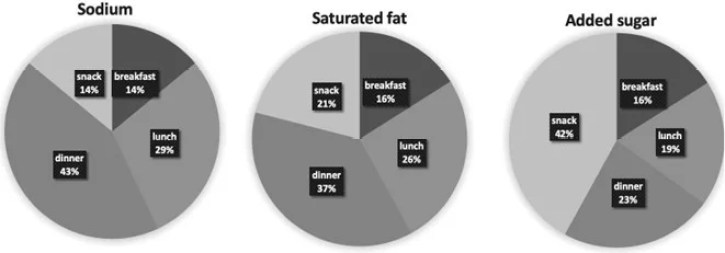
The charts below show the average percentages in typical meals of three types of nutrients, all of which may be unhealthy if eaten too much.
Summarise the information by selecting and reporting the main features, and make comparisons where relevant.
Average percentages of sodium, saturated fats and added sugars in typical meals consumed in the USA
Student answer (Band 6.0)
The pie chart illusturates the average percentages of sodium, saturated fats and added sugars in typicakl meals consumed in the usa.
Overall, dinner accounts for the highest proportion of soidium and saturated fat, whereas added sugar mainly is du to the heavy consuption of snaks. In contrast breakfast play the smallest percnetage for all three meals.
Firstly regarding consuption of sodium, dinner represents the highest use of sodium at 43%, whereas lunch also contribute for excesive using of sodium about 29%, however snack and breakfast remian same at 14%. A smimilar pattern can be observed by the saturated fat as dinner make up the highest percentage as about 37%, whereas lunch 26% and snack 21%, morovere the breakfast has 16%.
Secondly however the added sugar changed considerebaly from perivious one, whereas snack plays the highest ration about 42% and dinner has 23%, furthermore breakfast about 16%, while lunch about 19%.
AI examiner evaluation
| Criterion | Band |
|---|---|
| Task Achievement / Task Response | 6.0 |
| Coherence and Cohesion | 6.0 |
| Lexical Resource | 5.5 |
| Grammatical Range and Accuracy | 5.5 |
| Overall | 6.0 |
Task Achievement / Task Response: Band 6.0
You identify the main contrasts accurately: dinner has the largest shares of sodium and saturated fat, while snacks lead for added sugar. The figures you report are consistent with the chart, including dinner’s 43% sodium and snacks’ 42% added sugar. You also provide an overview and cover all three nutrients. However, the overview’s claim that breakfast has the smallest percentage “for all three” is not accurate: snacks are lowest for sodium, and breakfast is lowest only for saturated fat and added sugar. Some comparisons are also brief, particularly the added-sugar figures. The response is 140 words, so it is 10 words below the 150-word minimum; develop the comparisons further to meet the requirement.
Coherence and Cohesion: Band 6.0
The response has a clear overall arrangement: an introduction, an overview, and two paragraphs grouping sodium with saturated fat and then discussing added sugar. This makes the information easy to locate, and transitions such as “Overall,” “Firstly,” and “Secondly” signal the stages of the report. However, some linking is mechanical or awkward, especially the repeated use of “whereas” and “however” within the same comparisons. The final paragraph also lists figures without clearly explaining how the added-sugar pattern differs from the other nutrients. Use more precise links between comparisons and ensure each paragraph develops a clear point, rather than relying mainly on sequencing words.
Lexical Resource: Band 5.5
You use relevant chart vocabulary, including “proportion,” “accounts for,” and “represents,” and the reader can generally understand the comparisons. However, spelling errors are frequent enough to be noticeable, for example “illusturates,” “typicakl,” “soidium,” “consuption,” and “perivious.” Several word combinations are also unnatural or imprecise: “highest use of sodium,” “excesive using,” and “highest ration” do not describe chart shares naturally. Aim for accurate, consistent terms such as “percentage,” “share,” and “accounted for,” and proofread spelling carefully. This would make your adequate range more precise and reduce the effort required to interpret some phrases.
Grammatical Range and Accuracy: Band 5.5
You attempt both simple and more complex sentence forms, including comparisons joined with “whereas” and “while,” and the overall meaning is usually clear. Some grammatical errors remain, particularly with subject–verb agreement and sentence construction. For example, “lunch also contribute” should be “lunch also contributes,” and “breakfast play” should be “breakfast plays.” In “dinner make up the highest percentage as about 37%,” the structure is incomplete; write “dinner makes up about 37%.” Several long sentences join multiple comparisons with commas and linking words, making punctuation and clause relationships less controlled. Use a mix of shorter, accurate sentences and carefully formed complex comparisons.
See this exact question answered at other band scores. The same prompt compared across bands.
Browse more IELTS Writing model answers or get your own writing scored by the same AI examiner.