Band 6.0 IELTS Writing Task 1 Model Answer
Overall Band Score: 6.0 · Cambridge IELTS 17 · 2026-11-19
IELTS Writing Task 1 question
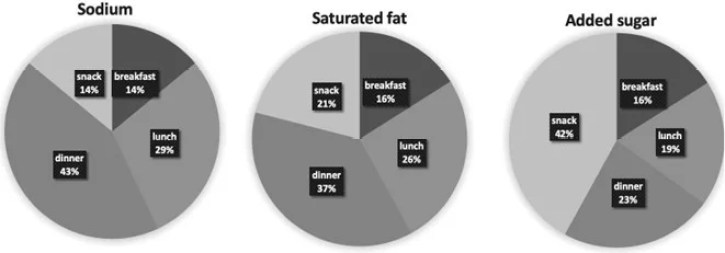
The charts below show the average percentages in typical meals of three types of nutrients, all of which may be unhealthy if eaten too much.
Summarise the information by selecting and reporting the main features, and make comparisons where relevant.
Average percentages of sodium, saturated fats and added sugars in typical meals consumed in the USA
Student answer (Band 6.0)
The chart depicts the average ratings in typical meals of three types of nutrients . They are Sodium, Saturated fat, Added sugar all of which may be unhealthy if eaten too much.
Overall we can see that the ratings of Sodium is higher in Dinner. On the otherhand consumption of added sugar is higher in snack. In breakfast we moslty consume saturated fat and added sugar. For lunch the rating is higher for sodium and saturated fat.
In Dinner the rating for sodium is higher which is 43%. During breakfast the consumption of sodium is 14% and for lunch it is 29%. For snack the rating of sodium is only 14%.
For the nutrient saturated fat the rating is 37% in dinner occuping the highest rate in this chart. For lunch and breakfast saturated fat contributes correspondingly 26% and 16%. For snack the rating is 21% which is slightly increased than Sodium.
Added sugar has highest contribution in snack while the percentage is 42%. The second highest rating for added sugar is noticed in dinner which is 23%. The ratings of added sugar in breakfast and lunch are nearly same. For breakfast the rating is 16% and for lunch it is 19%.
AI examiner evaluation
| Criterion | Band |
|---|---|
| Task Achievement / Task Response | 6.0 |
| Coherence and Cohesion | 6.0 |
| Lexical Resource | 5.5 |
| Grammatical Range and Accuracy | 5.5 |
| Overall | 6.0 |
Task Achievement / Task Response: Band 6.0
You cover all three nutrients and all four meal types, and the figures reported match the chart. The overview identifies the main contrasts: sodium and saturated fat peak at dinner, while added sugar is highest in snacks. You also support these points with relevant values, such as 43% sodium at dinner and 42% added sugar in snacks. However, some comparisons are less fully developed or unclear. For example, saying breakfast is where “we mostly consume saturated fat and added sugar” does not explain that both are at 16%, tied as the highest nutrient shares for that meal, and the lunch overview could more clearly distinguish sodium (29%) from saturated fat (26%). A more precise overview of the meal-by-meal patterns would strengthen the response.
Coherence and Cohesion: Band 6.0
The response has a clear overall arrangement: an introduction, an overview, and separate paragraphs describing the three nutrients. This makes the information easy to locate, and the repeated meal labels help readers follow the comparisons. However, cohesion is sometimes mechanical because many sentences follow the same pattern, such as “For lunch…” and “For snack…”. Some links between ideas are also awkward: “On the otherhand” introduces a contrast, but the following breakfast and lunch statements do not clearly connect to it. Grouping related comparisons more deliberately—for example, contrasting dinner and snacks across the nutrients—would create smoother progression. Check that each overview statement is clearly supported by the details that follow.
Lexical Resource: Band 5.5
You use relevant chart vocabulary, including “percentage,” “contributes,” “highest,” and “consumption,” so the main information is generally understandable. There is also some attempt to vary wording through “rating,” “contribution,” and “percentage.” However, “rating” is repeatedly used for proportions in a chart and is not an accurate collocation; “share” or “proportion” would be more suitable. Phrases such as “occuping the highest rate” and “slightly increased than Sodium” are awkward, while “moslty” and “otherhand” contain spelling or spacing errors. Aim for precise, natural terms for describing shares and peaks, and proofread spelling and word forms to improve control.
Grammatical Range and Accuracy: Band 5.5
Your response includes a mix of simple statements and some longer structures, and the meaning is usually clear. For example, the sentence beginning “For the nutrient saturated fat…” communicates the dinner figure and comparison, although its construction is awkward. Some errors in agreement and sentence formation remain: “the ratings of Sodium is higher” should use a plural verb or a singular subject, and “Sodium, Saturated fat, Added sugar all of which…” is not a complete, correctly punctuated sentence. There are also inconsistent article and capitalization choices, as in “in Dinner” and “in snack.” More consistently accurate sentence patterns, especially in the overview, would help you express comparisons with greater control.
See this exact question answered at other band scores. The same prompt compared across bands.
Browse more IELTS Writing model answers or get your own writing scored by the same AI examiner.