Band 4.5 IELTS Writing Task 1 Model Answer
Overall Band Score: 4.5 · Cambridge IELTS 17 · 2026-11-19
IELTS Writing Task 1 question
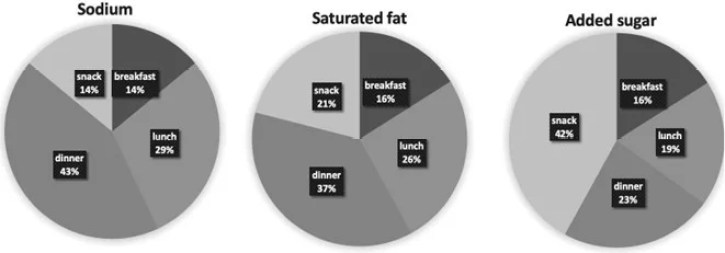
The charts below show the average percentages in typical meals of three types of nutrients, all of which may be unhealthy if eaten too much.
Summarise the information by selecting and reporting the main features, and make comparisons where relevant.
Average percentages of sodium, saturated fats and added sugars in typical meals consumed in the USA
Student answer (Band 4.5)
The given chart illustartes the average percentages in typical meals of three types of nutrient,all of which may be unhealthy if eaten too much.
Overall, the average percentages of sodium, saturated fats and added sugars in typical meals consumed in the USA.
Firstly,in the sodium the percentage of snack is 14% same as breakfast but the percentage of the lunch is 29% and the higest percentage of sodium is dinner which is 43% while if we discuss about saturated fat the percentage of the snack is goes to the 21% the difference is 7%.In same situation breakfast is least higher than sodium which is 16%
Now, in the added sugar the percentage in snack which was 42% this was highest percentage as compared to other and if we talk about breakfast which almost same in all the meals of nutrients with the difference 2% just in sodium and in the percentage added sugar of dinner is low as compared to other nutrients as same in the lunch.
AI examiner evaluation
| Criterion | Band |
|---|---|
| Task Achievement / Task Response | 4.0 |
| Coherence and Cohesion | 4.5 |
| Lexical Resource | 5.0 |
| Grammatical Range and Accuracy | 5.0 |
| Overall | 4.5 |
Task Achievement / Task Response: Band 4.0
You identify several relevant figures, including sodium at dinner (43%) and added sugar in snacks (42%), and you note that breakfast and snacks each account for 14% of sodium. However, the overview is incomplete: “Overall” is followed by a restatement of the topic rather than a summary of the main patterns. Comparisons across all three nutrients are limited, and the saturated-fat figures are not fully reported. Some statements are unclear, such as saying breakfast is “least higher than sodium,” so the reader cannot confidently identify the intended comparison. The response is also 132 words, below the required 150; 36 words copied from the prompt were not counted. Add a clear overview and develop accurate comparisons using the chart’s key figures.
Coherence and Cohesion: Band 4.5
The response has paragraph breaks and attempts to guide the reader with “Overall,” “Firstly,” and “Now,” so there is some basic organisation. However, the overall progression is difficult to follow because the overview does not state the main trends, and the body paragraphs combine several comparisons in long, loosely connected sentences. For example, the sodium and saturated-fat discussion runs together with “while if we discuss,” then shifts to breakfast without clearly explaining the relationship. The final paragraph also moves between snack, breakfast, dinner and lunch without a consistent comparison pattern. Organise the body by nutrient or by meal, and use clear linking phrases to show how each figure relates to the others.
Lexical Resource: Band 5.0
You use relevant topic vocabulary such as “average percentages,” “nutrients,” “sodium,” “saturated fat” and “added sugar,” and terms such as “highest” and “difference” show an attempt to describe data. However, the range is limited and several word choices or collocations make the meaning unclear. Phrases such as “least higher,” “the percentage … goes to,” and “in the same situation” are not natural ways to describe chart values. There are also spelling errors, including “illustartes” and “higest,” which reduce accuracy. Aim for precise reporting language and vary repeated uses of “percentage.” For example, use “accounted for,” “stood at,” or “was the largest share” where appropriate.
Grammatical Range and Accuracy: Band 5.0
You attempt some longer sentences and use basic comparison structures, but control is inconsistent. Several sentences contain faulty clause construction, as in “the percentage of the snack is goes to the 21%,” where the verb form is incorrect, and “if we discuss about saturated fat,” where the clause pattern is not well formed. The overview is also a sentence fragment: “Overall, the average percentages … in typical meals consumed in the USA.” Commas are often missing after introductory phrases, and spacing around punctuation is inconsistent. These errors sometimes make relationships between figures difficult to understand. Build more accurate simple sentences first, then combine them with controlled clauses such as “while” or “whereas.”
See this exact question answered at other band scores. The same prompt compared across bands.
Browse more IELTS Writing model answers or get your own writing scored by the same AI examiner.