Band 5.0 IELTS Writing Task 1 Model Answer
Overall Band Score: 5.0 · Cambridge IELTS 17 · 2026-11-20
IELTS Writing Task 1 question
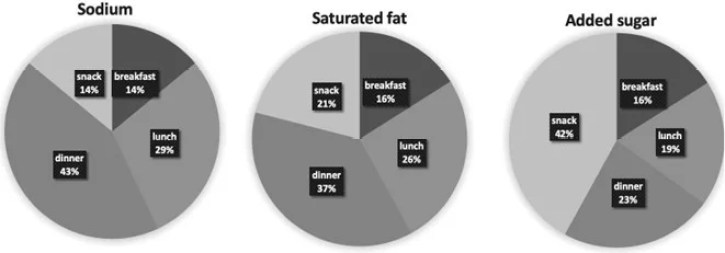
The charts below show the average percentages in typical meals of three types of nutrients, all of which may be unhealthy if eaten too much.
Summarise the information by selecting and reporting the main features, and make comparisons where relevant.
Average percentages of sodium, saturated fats and added sugars in typical meals consumed in the USA
Student answer (Band 5.0)
The chart illustrate the average percentages of sodium, saturated fats and added sugars in typical meals consumed in the US, all of which may be unhealthy if eaten too much.
Overall, we can start with Sodium at 43% plus 37% of saturated fats and 23% of added sugar on average US dinner as the top unhealthy meal in the day.
Next, we move to Snacks that is 42% of added sugar and 21% of saturated fats plus a 14% of sodium, this the second unhealthiest US meal.
after this we got lunch that's averaging between 19% to 29% of all the three types of nutrients and it rank as the second least unhealthy meal.
finally the breakfast as the least unhealthyiest meal with an average ranging from 14% to 16% of the three nutrients
AI examiner evaluation
| Criterion | Band |
|---|---|
| Task Achievement / Task Response | 5.0 |
| Coherence and Cohesion | 5.0 |
| Lexical Resource | 5.0 |
| Grammatical Range and Accuracy | 5.0 |
| Overall | 5.0 |
Task Achievement / Task Response: Band 5.0
You identify the three nutrients and report several accurate figures, including dinner’s 43% sodium, 37% saturated fat and 23% added sugar, as well as the high added-sugar share in snacks. You also attempt an overview by ranking meals. However, the claim that dinner is the “top unhealthy meal” is too broad: snacks have the highest added-sugar figure, while dinner leads in sodium and saturated fat. The ranking of lunch as the “second least unhealthy” is also not clearly supported across all nutrients. The response addresses the task only partially because comparisons and key features are under-developed. It is also 41 words below the 150-word minimum; develop the overview and compare the three nutrients across meals in more detail.
Coherence and Cohesion: Band 5.0
The response has a basic sequence, moving from dinner to snacks, lunch and breakfast, and paragraph breaks help distinguish these points. However, the progression is not fully clear: “Next,” “after this” and “finally” create a list of meals rather than a well-organised comparison of the chart’s main patterns. The opening overview also combines several figures without explaining how they relate to the later ranking. Some links are awkward or incomplete, such as “this the second unhealthiest US meal,” and the lowercase starts after paragraph breaks weaken presentation. Group the information around the main contrasts—for example, dinner’s high sodium and saturated fat versus snacks’ high added sugar—and use clear references to connect each comparison.
Lexical Resource: Band 5.0
You use relevant chart vocabulary, including “average percentages,” “nutrients,” “saturated fats” and “added sugar,” so the topic is generally clear. However, the range is limited and some expressions are imprecise or unnatural, which makes comparisons harder to follow. “Top unhealthy meal” and “second unhealthiest” are not natural ways to describe the figures, while “average US dinner” is an unclear phrase. The invented form “least unhealthyiest” also shows weak control of word formation. Aim for precise terms such as “highest proportion,” “largest contributor” and “lowest figures,” and vary the language used to compare percentages. Check spelling and avoid combining two superlative forms.
Grammatical Range and Accuracy: Band 5.0
The response communicates its general meaning through mostly simple sentence patterns, but the range is limited and errors occur frequently enough to make some statements difficult to interpret. For example, “The chart illustrate” has subject–verb disagreement, and “Snacks that is 42%” has an incorrect verb form and an incomplete clause. The phrase “this the second unhealthiest US meal” is missing a verb, while “it rank” also has incorrect agreement. Sentence boundaries and capitalization need attention, particularly the lowercase “after” and “finally” at the start of paragraphs. Practise complete sentences with accurate agreement, such as “Snacks account for 42% of added sugar,” and use punctuation to separate the overview from supporting comparisons.
See this exact question answered at other band scores. The same prompt compared across bands.
Browse more IELTS Writing model answers or get your own writing scored by the same AI examiner.