Band 4.5 IELTS Writing Task 1 Model Answer
Overall Band Score: 4.5 · Cambridge IELTS 17 · 2026-11-24
IELTS Writing Task 1 question
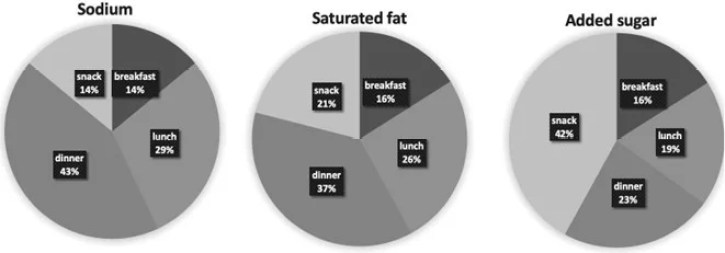
The charts below show the average percentages in typical meals of three types of nutrients, all of which may be unhealthy if eaten too much.
Summarise the information by selecting and reporting the main features, and make comparisons where relevant.
Average percentages of sodium, saturated fats and added sugars in typical meals consumed in the USA
Student answer (Band 4.5)
the chart define the three major product like sodium saturated fat added sugar three types of nutrients all of which may be unhealthy if eaten too much describe the sodium is big sours of energy many thing is including in sodium like snack 14 percent and many thing in break fast ad the sodium in 14percent and dinner item big thing of add sodium like 43 percent and lunch time add the sodium 29 percent saturated fat is average add of four time like snack and breakfast dinner lunch snack add the fat 21 percent break fast add the fat 16 percent and dinner add the fat 37 percent and lunch add the fat 26 percent fat is very good for every person added sugar is mine including the snack and break fast lunch and dinner sugar add the dinner 23 percent and snack add the sugar 42 percent sugar add the lunch 19 percent sugar add the break fast 16 percent all meals good for all humans
AI examiner evaluation
| Criterion | Band |
|---|---|
| Task Achievement / Task Response | 4.5 |
| Coherence and Cohesion | 4.0 |
| Lexical Resource | 4.5 |
| Grammatical Range and Accuracy | 4.5 |
| Overall | 4.5 |
Task Achievement / Task Response: Band 4.5
You identify all three nutrients and report several figures accurately, including sodium at dinner (43%) and snack (14%), saturated fat at lunch (26%) and dinner (37%), and added sugar at snacks (42%). However, the response does not provide a clear overview of the main patterns: for example, dinner has the highest shares of sodium and saturated fat, while snacks lead for added sugar. Some descriptions are difficult to interpret, and claims such as “fat is very good for every person” and “all meals good for all humans” are unsupported opinions rather than chart information. To strengthen the report, summarise the key contrasts first, then compare the meal percentages accurately and avoid adding health claims.
Coherence and Cohesion: Band 4.0
The response follows a basic sequence, discussing sodium, saturated fat and then added sugar, and it includes figures for each category. This gives the reader some sense of the chart’s subject. However, the information is presented as one long, run-on passage, with no clear paragraphing or overview to guide the reader. Repeated wording such as “add the fat” and “add the sugar” also makes the progression mechanical, while phrases such as “many thing in break fast” obscure the relationship between ideas. Organise the response into a short introduction and overview followed by clearly separated comparisons, and use linking expressions such as “whereas” or “by contrast” to show differences between meals.
Lexical Resource: Band 4.5
You use relevant chart vocabulary, including “sodium,” “saturated fat,” “added sugar,” “snack,” and “percent,” so the topic is recognisable. However, the range is basic and repetitive, and several word choices or combinations make the meaning unclear. For instance, “big sours of energy” does not accurately describe what the chart shows, and “many thing” is repeated without conveying a specific comparison. “Add the sodium” and “add the fat” are also unnatural ways to report proportions. Use precise reporting language such as “accounted for,” “represented,” and “the highest proportion,” and check spelling and word forms, including “breakfast.”
Grammatical Range and Accuracy: Band 4.5
The response attempts to communicate a series of comparisons, and some short phrases containing figures can be understood, such as “dinner … 43 percent” and “lunch … 29 percent.” However, sentence structures are very limited and frequently incomplete or incorrectly joined. The opening, “the chart define the three major product,” lacks accurate subject–verb agreement and a clear sentence structure; later, several ideas run together without full stops, making relationships difficult to follow. Articles and prepositions are also often missing or misplaced. Practise writing complete sentences with a clear subject and verb, for example, “Dinner accounted for 43% of sodium,” and use punctuation to separate each comparison.
See this exact question answered at other band scores. The same prompt compared across bands.
Browse more IELTS Writing model answers or get your own writing scored by the same AI examiner.