Band 4.0 IELTS Writing Task 1 Model Answer
Overall Band Score: 4.0 · Cambridge IELTS 17 · 2026-11-27
IELTS Writing Task 1 question
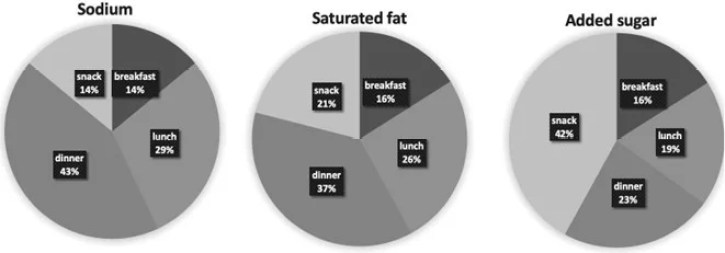
The charts below show the average percentages in typical meals of three types of nutrients, all of which may be unhealthy if eaten too much.
Summarise the information by selecting and reporting the main features, and make comparisons where relevant.
Average percentages of sodium, saturated fats and added sugars in typical meals consumed in the USA
Student answer (Band 4.0)
The picuter show is very important and the main topic of sodium and saturated fat and the added sugar. first of all the sodium and the parstage of 14%and small they normall 29% and fast 43% sodium is a very important point. But the secend of the saturated fet is the secend point of the perstange of the very small 16% and 17% and the normall of the 27% snd the big and very fast of th 37% but we also very important point of the secend.We are the third of the point of the added sugar suger is very important point of the perstanged of the small 16% and normall 19% to 23% and the big and fast of the perstage of the 42%. This is the very importantof the topic of the sodium to saturated fat and the added suger of the main point of the topic this.
AI examiner evaluation
| Criterion | Band |
|---|---|
| Task Achievement / Task Response | 4.5 |
| Coherence and Cohesion | 4.0 |
| Lexical Resource | 4.0 |
| Grammatical Range and Accuracy | 4.0 |
| Overall | 4.0 |
Task Achievement / Task Response: Band 4.5
The response identifies all three nutrients and includes several figures that match the charts, such as sodium at 29% for lunch and 43% for dinner, and added sugar at 42% for snacks. However, it does not clearly summarise the main patterns: dinner is the largest source of sodium and saturated fat, while snacks contribute the most added sugar. Some figures are also inaccurate, including saturated fat at breakfast and lunch, given as 16% and 27% rather than 16% and 26%. Much of the response repeats that each point is “very important” instead of explaining comparisons. To make the report more complete, state the overall contrasts clearly and select accurate figures to support them.
Coherence and Cohesion: Band 4.0
The response attempts to move through the three nutrients in sequence, using phrases such as “first of all,” “the second” and “the third.” This gives the reader a basic sense of the intended order. However, the ideas are not arranged into clear paragraphs, and the repeated references to “important point” do not show how the figures relate to one another. Several phrases, including “the big and very fast,” make the progression difficult to follow, while the final sentence repeats the topic rather than providing a concise overview. Organise the report into an introduction, an overview of the main contrasts, and grouped details. Use clear links such as “by contrast” to guide comparisons.
Lexical Resource: Band 4.0
The vocabulary is basic and repetitive, with frequent reliance on “very important,” “point,” “small,” “normall” and “big.” These choices do not describe chart data precisely, and errors such as “picuter,” “parstage,” “secend” and “suger” make parts of the response harder to understand. The writer does attempt to refer to percentages and meal categories, which is relevant to the task, but terms such as “fast” are unclear in this context. Build a small set of accurate chart-reporting expressions, including “accounted for,” “proportion,” “highest share” and “lowest figure.” Check spelling and use the meal labels consistently.
Grammatical Range and Accuracy: Band 4.0
The response relies mainly on short, incomplete or poorly connected sentence patterns, and frequent grammatical errors sometimes obscure the intended meaning. For example, “The picuter show is very important and the main topic of…” lacks a clear grammatical structure, while “the sodium and the parstage of 14%and small they normall 29%” does not form a complete, understandable sentence. Articles, verb forms and sentence boundaries are often missing or inaccurate, and punctuation is limited. There is little evidence of controlled complex sentence construction. Practise writing complete sentences with a clear subject and verb, for example, “Dinner accounts for 43% of sodium intake, the highest share among the meals.” Then check each sentence for agreement and punctuation.
See this exact question answered at other band scores. The same prompt compared across bands.
Browse more IELTS Writing model answers or get your own writing scored by the same AI examiner.