Band 5.0 IELTS Writing Task 1 Model Answer
Overall Band Score: 5.0 · Cambridge IELTS 17 · 2026-11-27
IELTS Writing Task 1 question
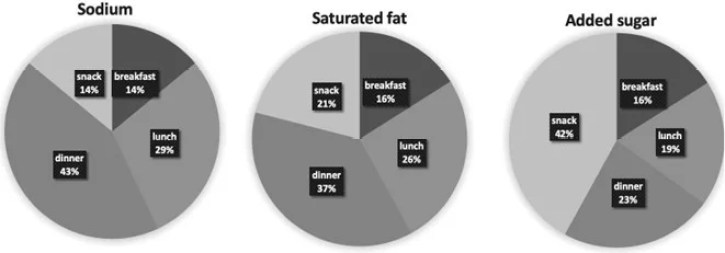
The charts below show the average percentages in typical meals of three types of nutrients, all of which may be unhealthy if eaten too much.
Summarise the information by selecting and reporting the main features, and make comparisons where relevant.
Average percentages of sodium, saturated fats and added sugars in typical meals consumed in the USA
Student answer (Band 5.0)
the three bar chart illustrate the proproation in typical meals like dinner, snack,breakfest and lunch on three type of nutrients. which is unhealty if eaten sustainble of it in the usa .unites are measured in percentage.
overall, dinnar rank the rise percentage in both sodium and saturated fat , breakfest was the lowest percentage in each type . however, snack its about half of added suger.
in sodium,dinner has the highest percentage about 43%.snack and breakfest are similar by 14% which means collecting both of them the same with lunch with 29%.
in saturated fat, snack and lunch has gab about 5% between them about( 21%, 26% )respectively. dinner around 37%.and breakfest is the wearek percentage about 16%.
added suger, suger almost the half of the bar chat about 42%. meanwhille , lunch and breakfest has not big diffrence about 3% between them . dinner approximately 23%.
AI examiner evaluation
| Criterion | Band |
|---|---|
| Task Achievement / Task Response | 5.0 |
| Coherence and Cohesion | 5.5 |
| Lexical Resource | 5.0 |
| Grammatical Range and Accuracy | 5.0 |
| Overall | 5.0 |
Task Achievement / Task Response: Band 5.0
You identify the main pattern that dinner has the largest shares of sodium and saturated fat, and you report several figures accurately, including sodium at 43% for dinner and added sugar at 42% for snacks. However, the overview is incomplete: breakfast is not the lowest for every nutrient, since snacks have the lowest sodium share jointly with breakfast, while added sugar is highest in snacks. The comparison that sodium in breakfast and snacks together equals lunch is also inaccurate: 14% + 14% is 28%, rather than 29%. Some key comparisons, especially the contrast between dinner and snacks for added sugar, could be stated more clearly. The response is three words below the required minimum, and the limited development contributes to only partial coverage of the task.
Coherence and Cohesion: Band 5.5
The response has a recognisable structure: an introduction, an overview, and separate paragraphs for the three nutrients. This makes the information relatively easy to locate. However, progression within paragraphs is sometimes unclear, and several links between figures are difficult to follow, as in “collecting both of them the same with lunch.” Connectors such as “however” and “meanwhile” are used, but the relationships they signal are not always precise. Sentence boundaries and spacing also interrupt the flow, for example in “43%.snack” and “37%.and.” To improve, group related comparisons in complete sentences and use linking expressions only when the contrast or similarity is clear.
Lexical Resource: Band 5.0
You use some relevant chart vocabulary, including “percentage,” “highest,” “lowest,” and “approximately,” and the nutrient names help keep the report focused. However, the range is limited and several spelling and word-choice errors make parts harder to understand: “proproation,” “unhealty,” “suger,” and “wearek.” Some expressions are also unnatural or imprecise, such as “rank the rise percentage” and “snack its about half of added suger.” Use standard terms such as “share,” “account for,” and “proportion,” and check spelling carefully. More precise language for comparisons would help you describe the data clearly without relying on vague phrases such as “not big difference.”
Grammatical Range and Accuracy: Band 5.0
You attempt both simple statements and longer comparisons, but the sentence structures are often faulty, and errors frequently make the relationships between figures difficult to follow. For example, “the three bar chart illustrate” has problems with number agreement, while “dinner has the highest percentage” is not consistently framed as a comparison of meal shares. Several clauses are joined or punctuated incorrectly, as in “dinner around 37%.and breakfest…” and “lunch and breakfest has not big diffrence.” Use complete sentences with a clear subject and verb, check singular/plural agreement, and separate independent clauses with appropriate punctuation. A wider range of accurately controlled sentence patterns would make the report easier to read.
See this exact question answered at other band scores. The same prompt compared across bands.
Browse more IELTS Writing model answers or get your own writing scored by the same AI examiner.