Band 6.5 IELTS Writing Task 1 Model Answer
Overall Band Score: 6.5 · IELTS Academic Practice Accelerator · 2026-11-05
IELTS Writing Task 1 question
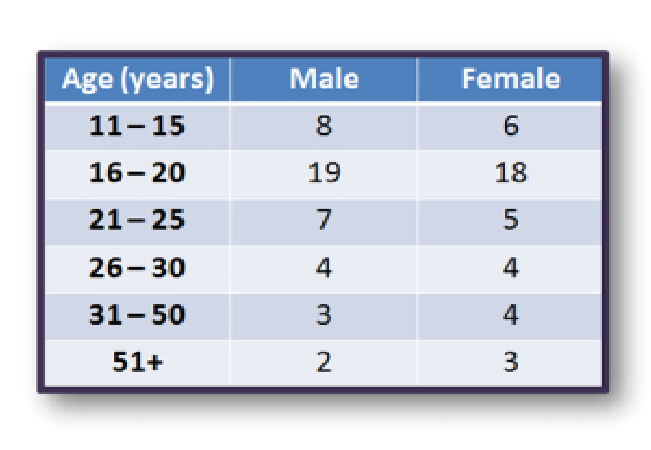
The table gives information about the average hours spent on the Internet by European people of different age groups.
Summarise the information by selecting and reporting the main features, and make comparisons where relevant.
Student answer (Band 6.5)
The table compares the average number of hours spent on the Internet by people of different age groups from the European region.
Overall, it is evident that children in their late adolescence spent the highest number of hours on the Internet, whereas people in their early 50s spent the least. The table also suggests that on average males spent a greater proportion of time on the Internet compared to females.
According to the table, pre-teens and teenagers upto 15 years spent an average of 8-6 hours on the Internet. There is a substantial increase in the number of hours spent on the Internet by the next age group with both male and females spending close to 20 hours on average. It is evident that as people grow older they spent less time on the Internet with people in their late 20s spending only 4 hours online. This number continues to fall steadily as people in their early 50s spend only 2-3 hours on the internet.
AI examiner evaluation
| Criterion | Band |
|---|---|
| Task Achievement / Task Response | 6.0 |
| Coherence and Cohesion | 7.0 |
| Lexical Resource | 6.5 |
| Grammatical Range and Accuracy | 6.5 |
| Overall | 6.5 |
Task Achievement / Task Response: Band 6.0
The response identifies the main pattern accurately: the 16–20 group records the highest figures, while the oldest group has the lowest, and usage generally declines after age 20. It also includes relevant comparisons between males and females. However, some key details are reported imprecisely: “8-6 hours” does not clearly distinguish the male and female figures, and the claim that males spend more time overall overlooks the 31–50 and 51+ groups, where females are higher. The description of a steady decline is also too broad, since the 26–30 figures are equal and female usage rises slightly in the 31–50 group. More precise reporting of these exceptions would make the overview and comparisons more complete.
Coherence and Cohesion: Band 7.0
The response is organised clearly into an introduction, an overview and a detail paragraph. Its progression from the overall pattern to age-specific figures is easy to follow, and linking phrases such as “Overall,” “According to the table” and “This number continues to fall” help guide the reader. The final paragraph, however, moves through several age groups without consistently separating male and female values, which makes some comparisons less clear. For example, “8-6 hours” is ambiguous, and the later figures are often presented as a range rather than explicitly assigned to each sex. Use parallel phrasing for each age group—stating the male figure first and the female figure second—to improve cohesion and precision.
Lexical Resource: Band 6.5
The vocabulary is adequate for describing the table, with useful expressions such as “substantial increase,” “highest number” and “continues to fall.” There is some flexibility in referring to age groups, including “pre-teens” and “late 20s.” However, a few choices are imprecise or awkward for formal data reporting: “a greater proportion of time” is not the clearest way to compare hours, and “early 50s” does not accurately represent the open-ended 51+ category. “Internet” is also capitalised inconsistently. More exact terms such as “average hours,” “higher figures” and “people aged 51 and over” would improve precision and register while retaining the clear meaning.
Grammatical Range and Accuracy: Band 6.5
The response uses a mix of simple and complex sentence forms, including the contrast in “whereas people in their early 50s spent the least” and the clause beginning “as people grow older.” Most sentences are understandable, and errors do not prevent the reader from following the main message. Some grammatical slips remain: “both male and females” has inconsistent number, “people … they spent” shifts awkwardly between present and past, and “pre-teens and teenagers upto 15 years spent” is not a well-formed age-group construction. The hyphenated figures in “8-6 hours” also make the intended comparison unclear. More consistent tense and carefully structured comparisons would strengthen accuracy.
See this exact question answered at other band scores. The same prompt compared across bands.
Browse more IELTS Writing model answers or get your own writing scored by the same AI examiner.