Band 5.5 IELTS Writing Task 1 Model Answer
Overall Band Score: 5.5 · IELTS Academic Practice Accelerator · 2026-11-06
IELTS Writing Task 1 question
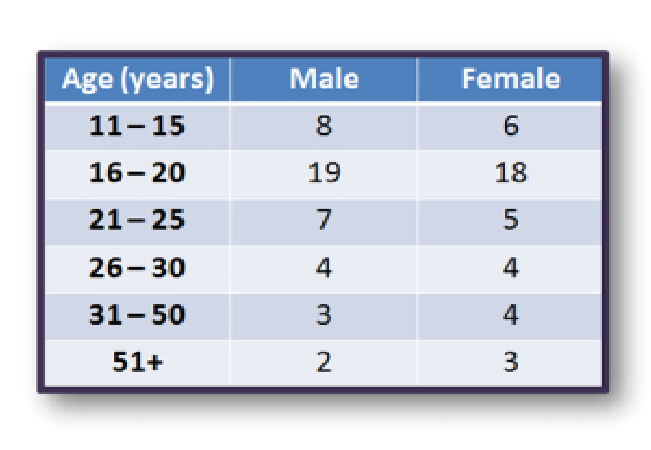
The table gives information about the average hours spent on the Internet by European people of different age groups.
Summarise the information by selecting and reporting the main features, and make comparisons where relevant.
Student answer (Band 5.5)
The table illustrates average hours spent on the internet by European people of different age groups and genders.
Overall, the most amount of time consumed on internet is in 16-20 age group of male and females. In contrast, least internat using group is 51+, while second most highest average hours spent on internet by European age group is 11-15.
Firstly, the highest average hours spent age group on internet exploring is 16-20 the youngsters in this group male utilised 19 hours, while female used internet for 18 hours. In contrast, lowest age group is 51+ the senior citizens males are just 2 hours active on internet as average, while females are 3 hours on internet. However, second highest internet consuming age group is 11-15 the teenagers here male consumed 8 hours, while female spent 6 hours on internet in European people.
Moreover, age group of adults 21-25 spent 7 hours on male side and 5 hours on female on internet. Lastly, two old adults age group of 26-30 and 31-50 spent widely 4 and 3 hours for male, while 4 and 4 same time spent by female on internet in both age groups.
AI examiner evaluation
| Criterion | Band |
|---|---|
| Task Achievement / Task Response | 6.5 |
| Coherence and Cohesion | 5.5 |
| Lexical Resource | 5.5 |
| Grammatical Range and Accuracy | 5.0 |
| Overall | 5.5 |
Task Achievement / Task Response: Band 6.5
You cover the table’s main pattern and report the key figures accurately: the 16–20 group records the highest use (19 hours for males and 18 for females), while the 51+ group is lowest (2 and 3). You also identify 11–15 as the next-highest group and include the remaining age bands, so the response addresses the task well. The overview is present, although “second most highest” is unclear and the comparison between the sexes across the full table could be stated more precisely. Some details are less fully developed: for example, the equal figures for ages 26–30 and the female advantage in ages 31–50 are not highlighted as comparisons. A sharper overview of these patterns would make the summary more complete.
Coherence and Cohesion: Band 5.5
The response has a recognisable structure: an introduction, an overview, and two detail paragraphs. The sequence from the highest-use group to lower-use groups is generally understandable, and transitions such as “Overall,” “Firstly,” “Moreover,” and “Lastly” help signal movement between points. However, the progression is somewhat mechanical, and several transitions do not clarify the relationship between the figures. For instance, “In contrast” introduces the lowest group, but the contrast could be expressed more directly. The final sentence combines two age bands and both genders in a way that is difficult to follow. Grouping the figures into clear comparisons—peak, decline, and small gender differences—would improve cohesion and make the paragraphing more purposeful.
Lexical Resource: Band 5.5
You use enough topic vocabulary to communicate the table, including “average hours,” “age group,” “utilised,” and “consumed.” There is also some attempt to vary wording rather than repeat “spent.” However, several choices are unnatural or imprecise for describing internet use: “most amount of time consumed,” “internet exploring,” and “internet consuming age group” make the report less fluent. “Old adults” is also an unsuitable label for the 26–30 and 31–50 groups, and “internat” is misspelled. These issues are noticeable, although the intended meaning is usually recoverable. Prefer neutral, accurate collocations such as “spent online,” “recorded the highest average,” and “older age groups,” and avoid inventing labels for the people represented.
Grammatical Range and Accuracy: Band 5.0
You attempt both simple and more complex sentences, including comparisons joined with “while,” and the main figures can generally be understood. However, control is uneven, particularly in sentence construction and agreement. For example, “the most amount of time consumed on internet is in 16-20 age group” has an awkward grammatical structure, while “the senior citizens males are just 2 hours active” places the subject and complement confusingly. In “male utilised 19 hours, while female used internet,” articles and plural forms are missing. The final sentence also lacks a clear grammatical structure when it links the two age groups and their figures. Build shorter, complete sentences first, then add comparisons with accurate subjects, verbs, articles, and punctuation.
See this exact question answered at other band scores. The same prompt compared across bands.
Browse more IELTS Writing model answers or get your own writing scored by the same AI examiner.