Band 6.0 IELTS Writing Task 1 Model Answer
Overall Band Score: 6.0 · IELTS Academic Practice Accelerator · 2026-11-09
IELTS Writing Task 1 question
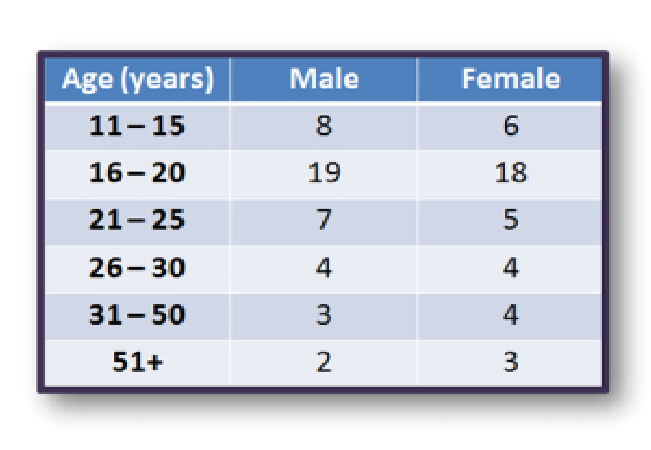
The table gives information about the average hours spent on the Internet by European people of different age groups.
Summarise the information by selecting and reporting the main features, and make comparisons where relevant.
Student answer (Band 6.0)
The table given below presents the data about average hours spending on internet browsing of European citizens in terms of six different age brackets.
It can be seen from the table that for both genders, 16-20 age groups spent the maximum amount of times on the internet, whereas the people who belong to 51 ages or more than that, tended to limit their use least, comparing to the remaining all age brackets.
In terms of male users, an average of 19 hours spent on the internet by 16-20 age bracket. In contrast, 11-15 and 21-25 age brackets spent almost the same amount of time, which stood at 8 and 7 hours respectively. Besides, the other 3 groups continued to reduce their using times accroding to the age growth, measured at 4,3,and 2 hours respectively.
Conversly, the female users who belongs to 16-20 age brackets, spent the highest amount of times of 18 hours by browsing internet, while 51 plus women spent 3 hours. In addition, 11-15 age groups were in the second position with 6 hours spending, and the other remaining three age ranges used internet almost for the same time limit, 5, 4, and 4 hours respectively.
AI examiner evaluation
| Criterion | Band |
|---|---|
| Task Achievement / Task Response | 6.0 |
| Coherence and Cohesion | 6.5 |
| Lexical Resource | 6.0 |
| Grammatical Range and Accuracy | 5.5 |
| Overall | 6.0 |
Task Achievement / Task Response: Band 6.0
The response identifies the main pattern accurately: both sexes record their highest internet use in the 16–20 group, and the 51+ group has the lowest figures. It also reports most values correctly and makes relevant male–female comparisons, such as 19 versus 18 hours for ages 16–20 and equal figures of 4 hours for ages 26–30. However, the overview is not fully precise: saying older groups “tended to limit their use” suggests a steady decline, whereas female use rises slightly from 3 hours in the 51+ group to 4 hours among ages 31–50. The final comparison also groups the remaining female figures together without clearly explaining their order. A more exact overview and clearer selection of the key contrasts would make the summary more complete.
Coherence and Cohesion: Band 6.5
The information is arranged in a clear overall sequence: an introduction, an overview, and separate paragraphs for male and female figures. This makes the response easy to follow, and linking expressions such as “In contrast” and “In addition” help signal comparisons. The organisation is coherent, but some connections are mechanical or imprecise. For example, “the other 3 groups” and “the other remaining three age ranges” make the reader work out which categories are meant, while “Conversly” introduces the female paragraph without a particularly clear contrast. The overview’s claim of a general decline also does not align neatly with the later figures. Use more precise references to age groups and ensure that transitions reflect the actual relationship between the data.
Lexical Resource: Band 6.0
The response uses an adequate range of task-related vocabulary, including “age brackets,” “average,” “maximum,” and “in contrast,” so the data can generally be understood. There are also attempts at more formal phrasing, such as “tended to limit their use.” However, several word choices and collocations are unnatural or inaccurate: “average hours spending,” “amount of times,” and “continued to reduce their using times” do not express the intended meaning naturally. “Internet browsing” is also less suitable than a direct reference to time spent on the internet. Spelling errors such as “accroding” and “Conversly” further reduce accuracy. Aim for standard data-reporting phrases and check spelling and word forms carefully.
Grammatical Range and Accuracy: Band 5.5
The response attempts a mix of simple and complex structures, including a contrast clause beginning “whereas” and sentences with introductory phrases such as “In terms of male users.” Meaning is usually recoverable, but some grammatical errors remain. For example, “an average of 19 hours spent” lacks a clear finite verb, and “the female users who belongs” has incorrect subject–verb agreement. The phrase “people who belong to 51 ages or more than that” also has an awkward and unclear grammatical construction. Articles, plurals, and sentence punctuation need more consistent control, particularly in lists such as “4,3,and 2.” Practise forming complete clauses with an explicit subject and verb, and check agreement when the subject is plural.
See this exact question answered at other band scores. The same prompt compared across bands.
Browse more IELTS Writing model answers or get your own writing scored by the same AI examiner.