Band 5.0 IELTS Writing Task 1 Model Answer
Overall Band Score: 5.0 · IELTS Academic Practice Accelerator · 2026-11-09
IELTS Writing Task 1 question
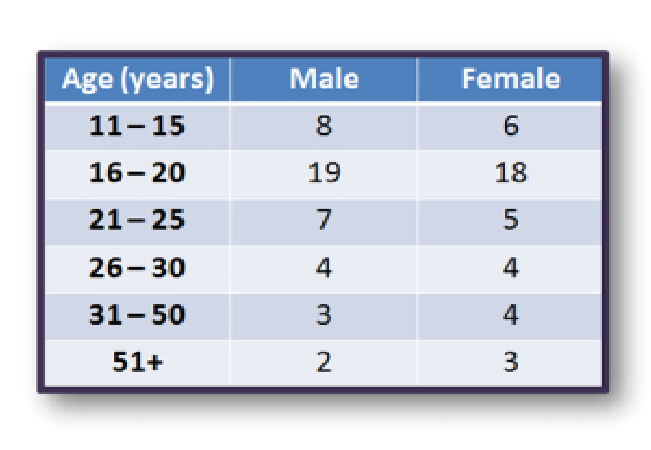
The table gives information about the average hours spent on the Internet by European people of different age groups.
Summarise the information by selecting and reporting the main features, and make comparisons where relevant.
Student answer (Band 5.0)
The table represents the information about the time spent by European indiviuals of different ages on the Internet.
Overall, male spent more time on internet then compare to female.The largest numbers of hours were spent by male which were 19 hours .After 30 years the average time spent by male were lower then female.
Initially, the largest number spent by male were 19 hours while women spent almost same like 18 hours .So, there was not a big defference .Males who were above fifty spent only 2 hours and spent less time then females because female spent 3 hours .
The first age group of boys were spent 8 hours while girls spent only 6 hours.Approximately same as the 20 to 25 years old people because they also spent two more hours then female but after the age of 30 men were spent only 3 hours on social media .Above then 30 mens spent one less hour then women on social media.
AI examiner evaluation
| Criterion | Band |
|---|---|
| Task Achievement / Task Response | 5.5 |
| Coherence and Cohesion | 5.0 |
| Lexical Resource | 5.0 |
| Grammatical Range and Accuracy | 5.0 |
| Overall | 5.0 |
Task Achievement / Task Response: Band 5.5
You identify relevant patterns, including the peak for males aged 16–20 (19 hours), the similar female figure (18), and the lower male figure among people aged 51+ (2 versus 3). You also note that males aged 11–15 spend more time online than females. However, the overview is not fully accurate: “male spent more time” is too broad, since females exceed males in the 31–50 and 51+ groups, and the 26–30 figures are equal. The statement “After 30 years” also blurs the distinction between these age groups. Several figures and comparisons are omitted, and the main features are not consistently summarised. A more precise overview and clearer coverage of the age-group pattern would strengthen the response.
Coherence and Cohesion: Band 5.0
The response has a basic structure, moving from an introduction and overview to details about several age groups. This gives the reader some organisation, and words such as “Overall,” “Initially,” and “while” signal relationships between points. However, progression is not consistently clear: the overview repeats the peak figure before the body discusses it again, and the final paragraph moves between the youngest, 20–25-year-olds, and people over 30 without a clear sequence. Some linking is inaccurate or awkward, as in “Approximately same as the 20 to 25 years old people,” which does not clearly connect to the preceding comparison. Grouping the data in a consistent age order and using clearer comparisons would make the report easier to follow.
Lexical Resource: Band 5.0
You use enough topic vocabulary to communicate the general subject, including “average time,” “age group,” and “spent.” However, the range is limited and several expressions are repeated, particularly “spent” and “hours.” Some word choices are imprecise or unsuitable for a formal data report: “largest numbers of hours” would be more naturally expressed as “highest figures,” and “social media” is not what the table measures; it reports Internet use. There are also noticeable spelling errors, including “indiviuals” and “defference,” which reduce accuracy. Aim for precise terms such as “Internet use,” “average hours,” and “exceeded,” and check spelling and collocations when editing.
Grammatical Range and Accuracy: Band 5.0
The response attempts both simple and longer sentences, and the basic meaning is generally recoverable. However, errors are frequent, especially in verb forms, agreement, and sentence construction. Examples include “male spent,” “the average time … were lower,” and “men were spent,” where the subject and verb pattern do not agree or are incorrectly formed. Comparisons also lack grammatical control in “then compare to female” and “spent less time then females.” Punctuation and spacing are inconsistent, as in “female.The largest,” and some sentences run together. Practise forming accurate comparative sentences with a clear subject and verb—for example, “men spent fewer hours than women”—before adding more complex clauses.
See this exact question answered at other band scores. The same prompt compared across bands.
Browse more IELTS Writing model answers or get your own writing scored by the same AI examiner.