Band 6.0 IELTS Writing Task 1 Model Answer
Overall Band Score: 6.0 · IELTS Academic Practice Accelerator · 2026-11-10
IELTS Writing Task 1 question
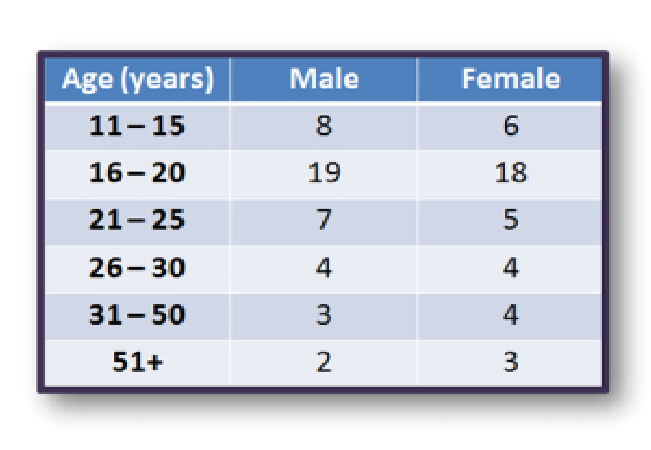
The table gives information about the average hours spent on the Internet by European people of different age groups.
Summarise the information by selecting and reporting the main features, and make comparisons where relevant.
Student answer (Band 6.0)
The provided table illustrates the data about average hours spent on the internet by European people of different age groups (11-15, 16-20, 21-25, 26-30, 31-50, above 51) in male and female. Overall, the general trend of the hours spent on the internet by european public have eratic phase in their ratio according to age groups although 16-20 age group people used to spent more time on internet compare to others, whereas above 51 years age group scored less.
At first glance, it is evident that 16-20 age group spent highest hours on the internet which is 19 in males and 18 in females, while the ratio of both sex drops as you move toward the age group of th elderly but younger age group 11-15 also spent a lot of their time on internet by 8 and 6 in males and females.
On the other hand, it is lucid that above 51 age group people of both genders spend not much hours on internet comparing to other age groups which is 2 in males and 3 in females.
AI examiner evaluation
| Criterion | Band |
|---|---|
| Task Achievement / Task Response | 6.0 |
| Coherence and Cohesion | 6.0 |
| Lexical Resource | 5.5 |
| Grammatical Range and Accuracy | 5.5 |
| Overall | 6.0 |
Task Achievement / Task Response: Band 6.0
You identify the main feature accurately: the 16–20 group records the highest figures (19 hours for males and 18 for females), while the 51+ group has the lowest (2 and 3). You also include the 11–15 figures and note that usage generally falls among older groups. However, the overview’s claim that the trend has an “eratic phase” is unclear, and the response does not report several useful comparisons, such as the equal figures for ages 26–30 or the female advantage in the 31–50 and 51+ groups. The age-by-age pattern is only partly described, so some relevant features are less fully covered than others. A clearer overview and more selective comparisons would make the summary more complete.
Coherence and Cohesion: Band 6.0
The response has a recognisable structure: an introduction and overview are followed by paragraphs describing the peak and the oldest group. This gives the information an overall arrangement, and phrases such as “Overall” and “On the other hand” signal relationships between ideas. However, the progression is not fully smooth: the second paragraph combines the peak age group with the younger group, while the final paragraph repeats the point that the oldest group uses the internet least. “On the other hand” does not introduce a strong contrast here, and references such as “the ratio” are not always clear. Organise the body by a consistent comparison—for example, peak and younger groups, then the decline and gender differences—and use linking phrases only when their relationship is precise.
Lexical Resource: Band 5.5
You use a reasonable range of vocabulary for describing the table, including “illustrates,” “evident,” “drops,” and “age group.” Some choices, however, are inaccurate or unnatural for this task. “Eratic phase” does not clearly describe the pattern, “scored less” is unsuitable for hours of internet use, and “spend not much hours” is an awkward expression. There are also spelling and form issues, including “eratic” and “th elderly,” and repeated use of “spent” and “hours on the internet” limits variety. These choices do not prevent the reader from understanding the main message, but more precise collocations and accurate spelling would improve clarity and control.
Grammatical Range and Accuracy: Band 5.5
You attempt both simple and more complex sentence forms, including a contrast with “although” and a clause beginning “while.” The main comparisons remain understandable, but some grammatical errors recur. For example, “the general trend … have” has subject–verb disagreement, and “people used to spent” uses the wrong verb form after “used to.” In “16-20 age group spent highest hours,” the article and comparative structure are incomplete; “as you move toward the age group” also shifts awkwardly from describing the data to addressing the reader. Review agreement, articles, and verb patterns, and keep the table description consistently in the present tense. More accurate control of these structures would make your comparisons easier to follow.
See this exact question answered at other band scores. The same prompt compared across bands.
Browse more IELTS Writing model answers or get your own writing scored by the same AI examiner.